

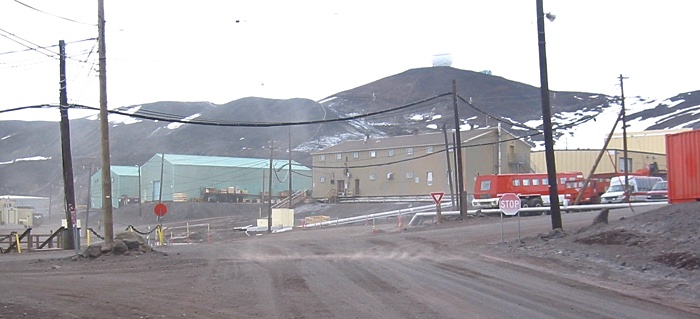
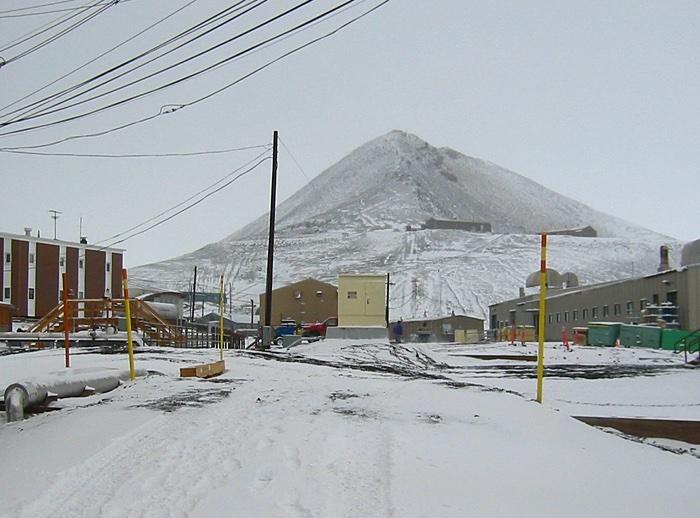
We unpacked the equipment in McMurdo that we brought with us from Onset-D, turned the issued gear back into the BFC, repacked equipment that had to return to the U.S. quickly (by plane) into one pile, repacked the equipment that didn't need to return to the U.S. quickly (by boat) into another pile, got all of the piles palletized, tagged and into McMurdo's cargo tracking system, and then hung out at the Coffee House (read "wine bar") for a few days. It took a couple of extra unscheduled days to get out of McMurdo. The weather couldn't resist messing with us just one more time. It went from blowing dust one day to blowing snow for a few days.
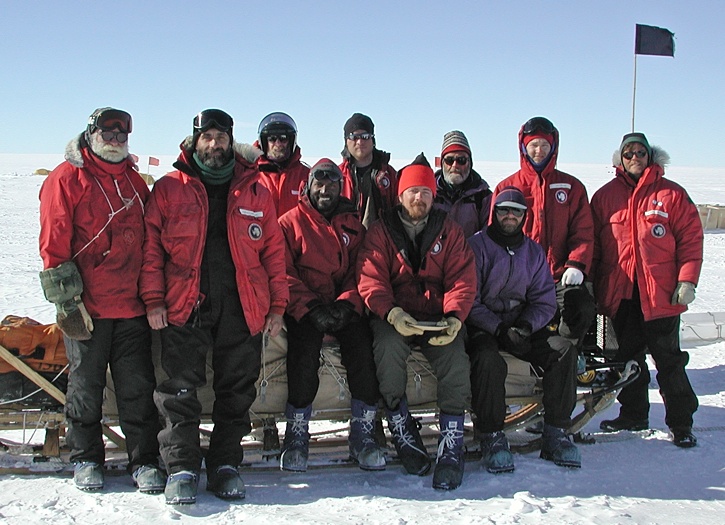
Photo by Joan Myers
Above is the required group shot. You see a lot of these kinds of pictures around McMurdo, and oddly enough everyone is dressed about the same. This was the group that went the distance. It was taken during our final days of work at Onset-D. From left to right: Don Voigt-Penn State University, Anatoly Mironov-University Of Texas at Austin, Ash Morton-British Antarctic Survey, Shridhar Anandakrishnan-Penn State University, Paul "Snuggle Muffin" Winberry-Penn State University, Matt Nolan-University Of Alaska at Fairbanks, Peter Braddock-independent mountaineer, Andy Smith-British Antarctic Survey, Leo Peters-Penn State University, and Me-IRIS/PASSCAL. That's a flag pole coming out of my head, and not an antenna. I should have Photoshopped that thing out of there.
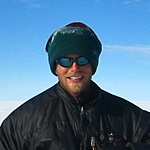
Above, left is Bruce Long. He was an independent electronics designer and came with us as far as Onset-D. On the right is Shad O'Neel. He went out with us for about the first week after we left Onset-D, and worked for UNAVCO.
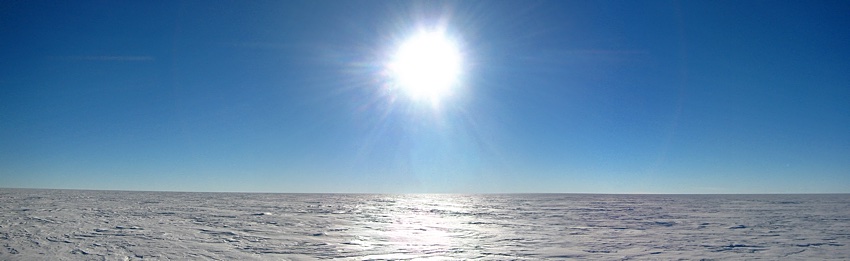
You can't live someplace for three months without feeling some sort of attachment
to it, and with Antarctica the attachment is like sticking your tongue on
a freezing cold metal object. Even though most of what I saw of Antarctica
was nothing but white and flat there was, in truth, something different to
see and experience every day, and I'll never forget any of it. While walking
across the white expanses for even short distances I gained an immense appreciation
of -- and found it impossible to keep out of my mind -- what those early explorers
must have gone through to explore, survive, and die in every part of the continent.
I'd wanted to come to Antarctica for at least a couple of decades. Little
did I think I would ever get to go, get to see so much of the continent, and
get to see it in such a unique way. Thanks to all who made it possible --
present and past.
Oh, by the way, in addition to all of the fun and excitement we also managed
to collect a lot of good data.

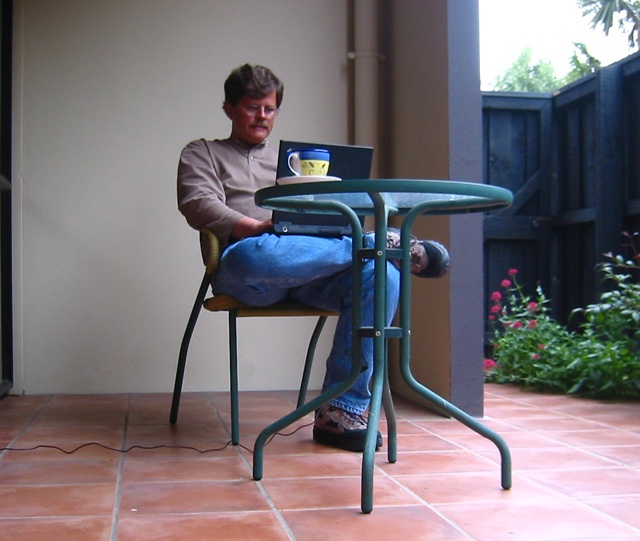
Once I was back in Christchurch, New Zealand, while on my way back home, I had time to finish hammering out the first version of these web pages with a cup of tea. How civilized can you get?
THE END
2018-03-05