


With the few days of training finished up it was time to be a tourist for
a day before catching the plane back to Venezuela and then back home. Carlos,
Marisol, and civil engineering professor Luis Ochoa picked me up in the morning
and showed me around the countryside.
The salt dome of Zipaquirá, about 40 kilometers north of Santa Fé
De Bogotá, is believed to have been formed from salt deposits 200,000,000
years old. The salt has been mined and fought over since pre-historic times.
The early natives used the salt as currency.

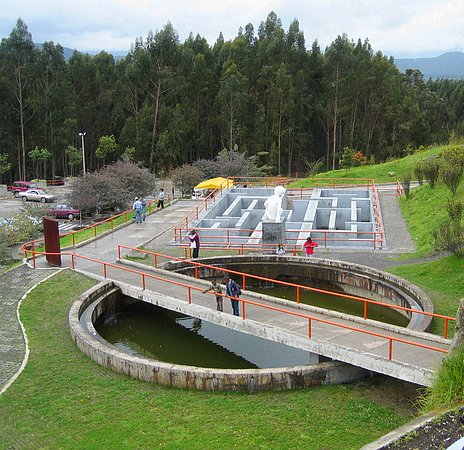
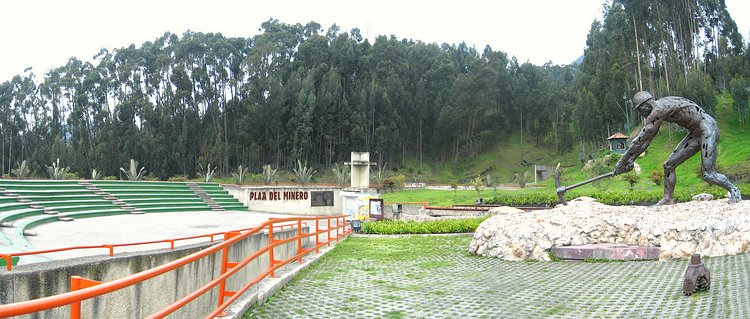
A park has been built near the entrance to the mine that leads to an underground cathedral. No mining activities are conducted here.
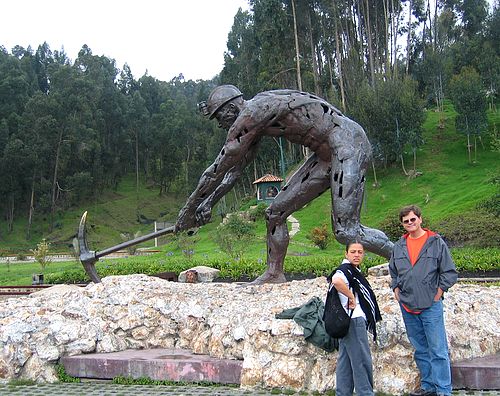
The statue was dedicated to the workers.
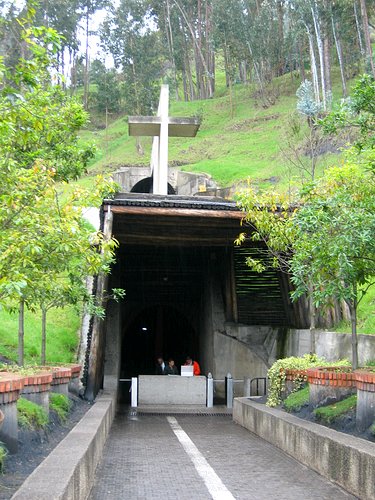
The entrance to the mine.
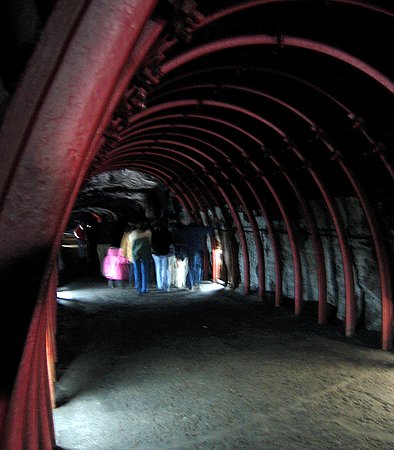
Out of the many, many kilometers of tunnels a cathedral was created by the miners and opened to the public in 1954. The old cathedral that was built in an older portion of the mine was closed over safety concerns as the condition of the mine deteriorated. The new cathedral was started in 1991 and mostly finished and opened in 1995. There is still some construction going on. Above is the tunnel near the entrance.
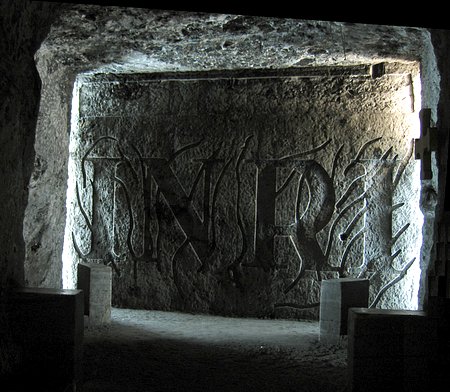
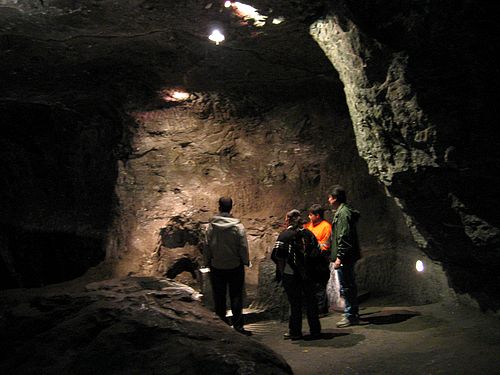
Along the passageway to the cathedral and past several caverns where the salt had been removed were the fourteen Stations Of The Cross each with different religious symbols carved into the mine walls and carved out of salt. Each station depicted a different point in the life of Jesus Christ.
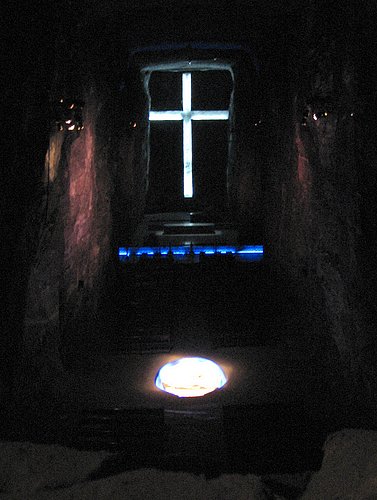
Above is the Main Hall of the Catedral de Sal at Zipaquirá. The ceiling of the cathedral is 25 meters tall and can hold 10000 people. It's big. Below is a pretty bad picture of it. My camera was on, but my brain wasn't, and I had to fiddle with these pictures a lot to make them look as bad as they do.
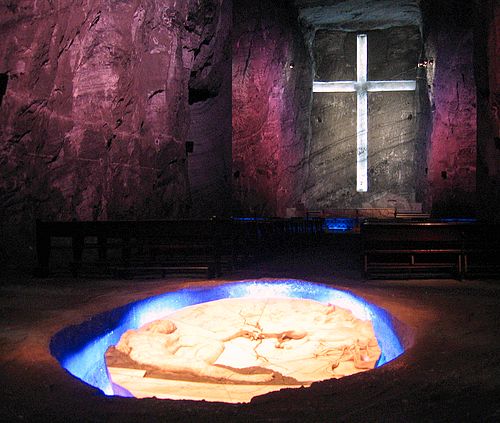
The new cathedral consisted of three naves or ships. To the front of the central nave was the monumental cross. It had a floor area of 8,550 square meters which was 2,500 more than the old one. Its location within the mine is such that it will never interfere with the operation of the salt mine.
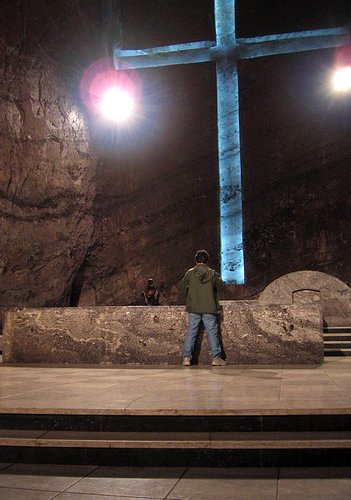
The cross is carved into the wall and illuminated from within.
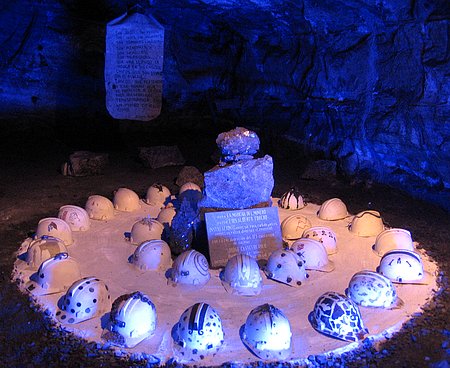
Above was a tribute to the miners that was near the cathedral.
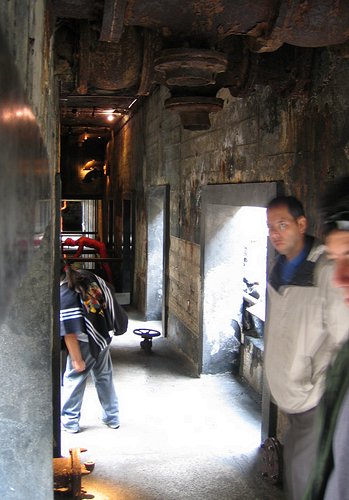
Back topside the Museo de la Salmuera is part of the park and is made out of the processing ponds and rooms that were used to extract the salt from the ore. You walk through the hallways and rooms with a guide past many different displays that depict the steps used to produce salt from the mine and the history of the mine. The production process, in a nutshell, is that the ore (rock and rock-hard salt) is crushed and mixed with water. The salt dissolves into the water and is then collected when the water is evaporated away.
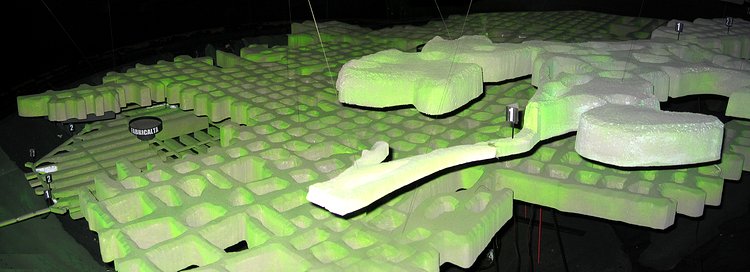
In one room of the museum was an amazing model. The walking tour of the mine to the cathedral and back took over an hour. You think you have seen quite a bit of mine. When you get to this room you find out that the whole tour covered the tiny, tiny portion of the mine denoted by the small numbered flags at the extreme left edge of the picture above. The mine is HUGE. The long tunnel from the entrance is the small green tube on the left.
2018-03-05