


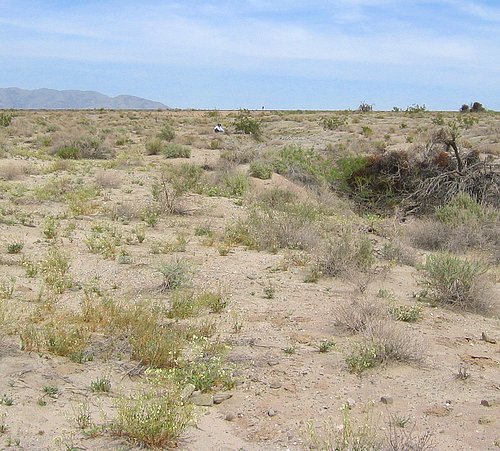
About a hundred miles from the the first station that we placed on the fault, at least it seemed like a hundred miles when you had to hand carry a couple of hundred pounds of batteries and equipment in the hot sun, we installed equipment at another site.
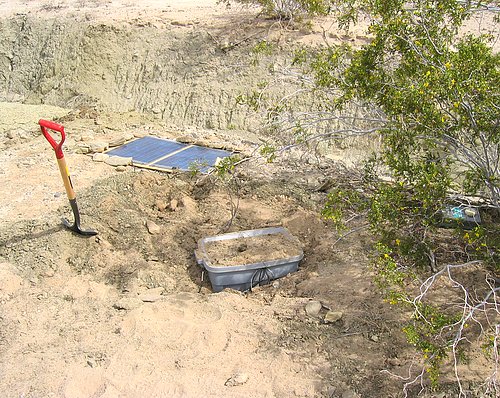
A small bush provided a bit of shade for the buried equipment for part of the desert day. We used a plastic storage container buried in a shallow hole for the recorder and disk drive. A separate container was buried for the battery that would keep the station running during the night. Solar panels were used to charge the batteries and keep the station running. This station was a fair number of yards away from the highway, but to keep it from drawing attention to itself we placed the solar panels flat on the ground. The two sensors were directly buried in the dirt near the shovel.
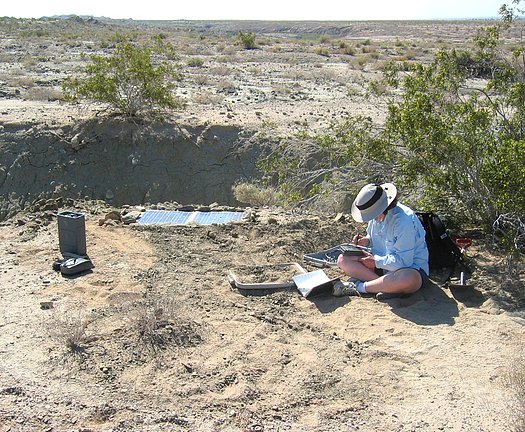
Servicing the station was just a matter of scraping a layer of dirt off of the plastic container, connecting a hand terminal to the DAS, checking out the system, swapping disk drives, and putting everything back the it was found.
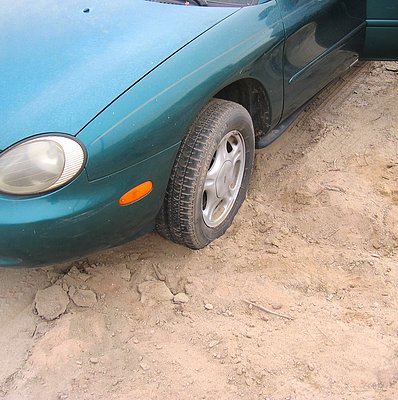
No field trip, or any trip into the desert for that matter, would be complete without getting stuck at least once. Part of the path to the desert stations involved driving down a bit of a dry riverbed. The sand in the bottom of our riverbed more closely resembled dust which made it pretty easy to get stuck. A little bit of working with the jack and moving dirt around and we were on our way back to town after a long, hot day.
2018-03-05