


Our first station installation away from home (Grottaminarda) was in the hillside village of Sant'Andrea Di Conza which was about 35 kilometers away and was just inside the border of Campánia.

This area was near the epicenter of the 1980 Irpina earthquake. Sant'Andrea sustained some damage, but it was not as bad as the damage that the towns down in the valley to the north sustained that Sant'Andrea overlooked. The more solid the ground is that a town is built on the less damage there will usually be. Solid ground, like rock solid, passes seismic waves through it without much movement. On the other hand, ground that is made up of loose soil, rocks, gravel, and/or sand can actually amplify the seismic waves which will cause an increase in damage. At a magnitude of 7.2 the Irpina earthquake was large enough tocause a bunch of damage. The dirt in the valley just added to it.
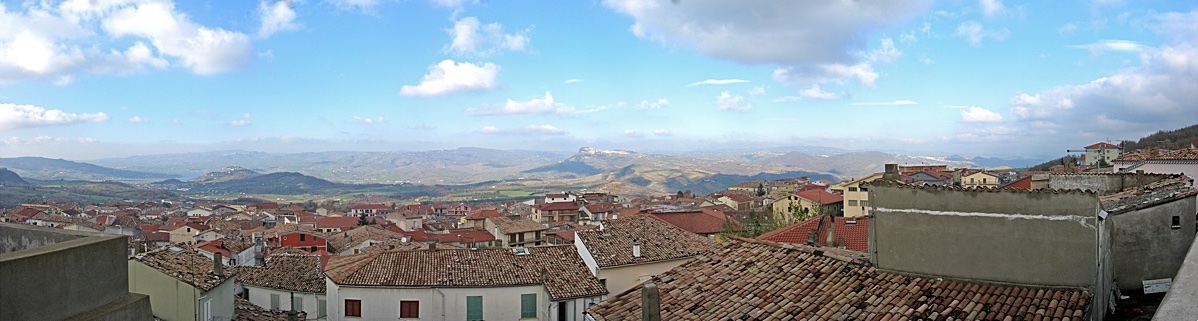
Above is a picture taken from Sant'Andrea looking towards Conza Della Campánia
down in the valley where most of the damage was in this part of Italy. Generally
speaking the tops and sides of hills and mountains are pretty stable, solid
ground. Over the eons sediments have washed down from the hills and collected
in the valley which make the earthquake damage worse there.
Italians are like hawks. They like to perch their towns on the highest points
around. A lot of hills had towns on top of them. This was, of course, done
for defensive reasons in ancient times. Part of the town of Conza Della Campánia
is on top of the hill on the left, and the town of Cairano, which was much
prettier to see in person than it is in this picture, is on top of the hill
on the right.
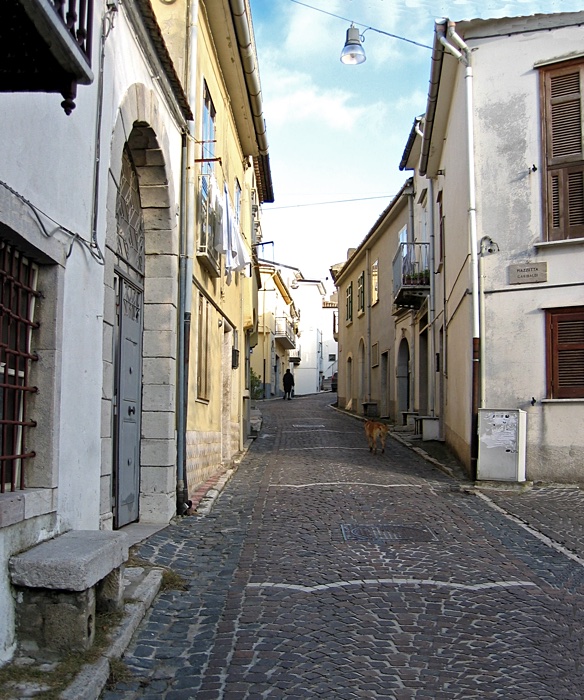
Our station was placed at one of the public buildings in town that among other things contained the local police station, and the public library. Just in case you drop by you take Via Garibaldi, in the picture above, to get up to the building from the main road. Drive slowly both because it is a two-way one-lane road through town, and because it is quite pretty. The whole town was very picturesque, and if you really do go there be sure to stop by the Ristorante Pizzeria Del Sole on the west end of town for lunch or dinner. Great food! Nice people. They also have a couple of rooms for rent if you want to stay a while.
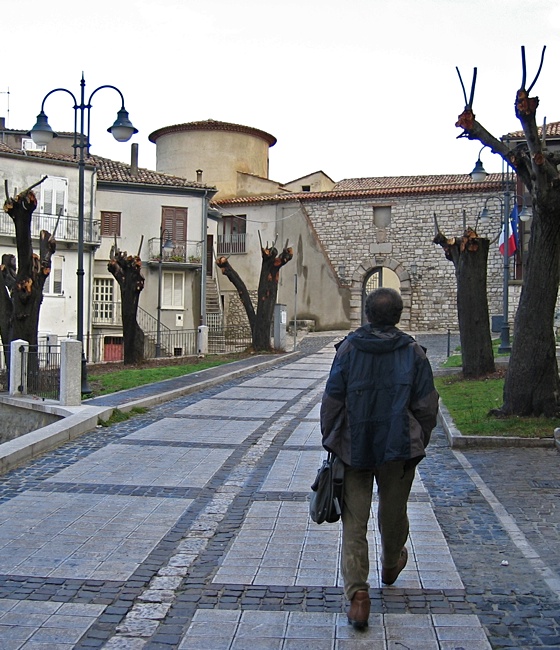
Above is the end of Via Garibaldi and the building, which was -- surprise -- part of the local castle. It wasn't the municipio (city hall), that was down the road that Nano is walking by, but several municipal offices were there.
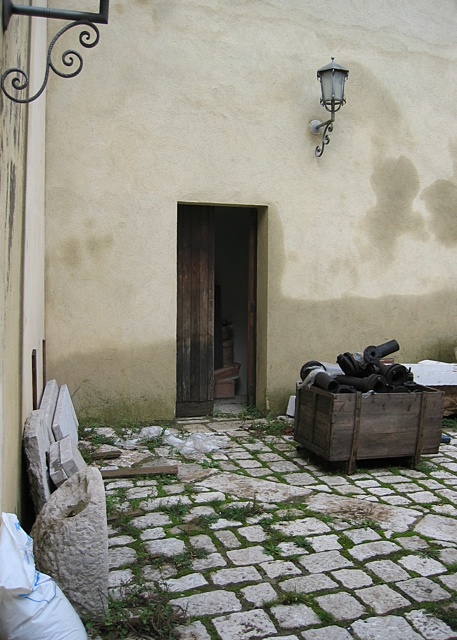
The outside entrance to the rooms under the building was in the courtyard. The rooms below the building were used as torture chambers back in the olden days. Really.
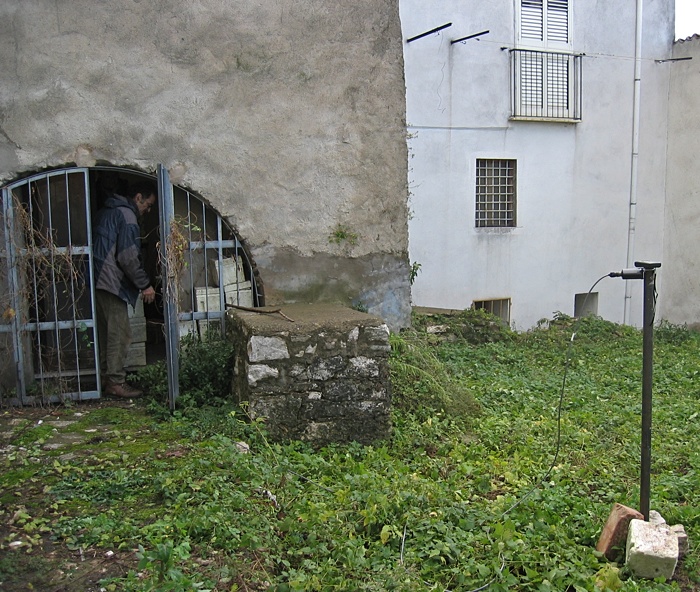
Behind the building we pounded a pole into the ground away from the building in a small courtyard and mounted the GPS antenna on it. The cable for the GPS was run back into the building through a doorway. The woodwork of the doorway was so well made that there was no crack small enough to run even the small diameter cable through. We had to leave the door slightly ajar and seal it up with duct tape, which, by the way, can be purchased in Italy. You just have to look for "American Tape."
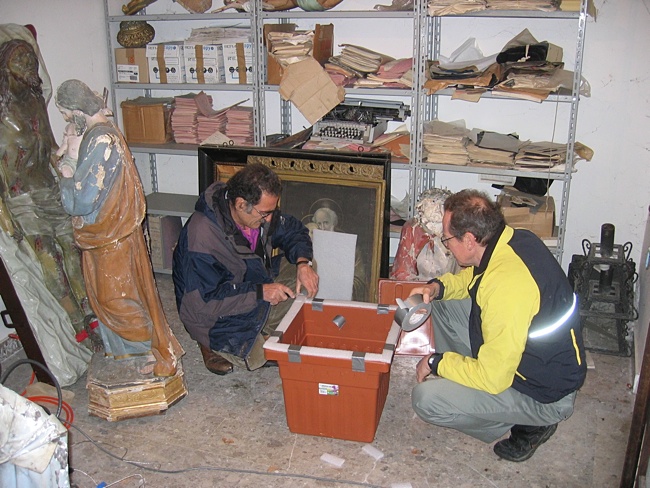
The station was placed on the floor of a small storage room near the door to the outside. The floor was made of (what else in Italy?) marble, and it seemed quite solid. Quite often when deploying stations in buildings the solid rock or concrete floors will actually have hollow spots under them which make them unsuitable for the placing of long-period sensors. Above Nano and John are taping a foam rubber 'gasket' to the edge of a plastic flower pot sensor cover to make a tight seal between the pot and the floor. This was done to keep air currents from reaching the sensor.
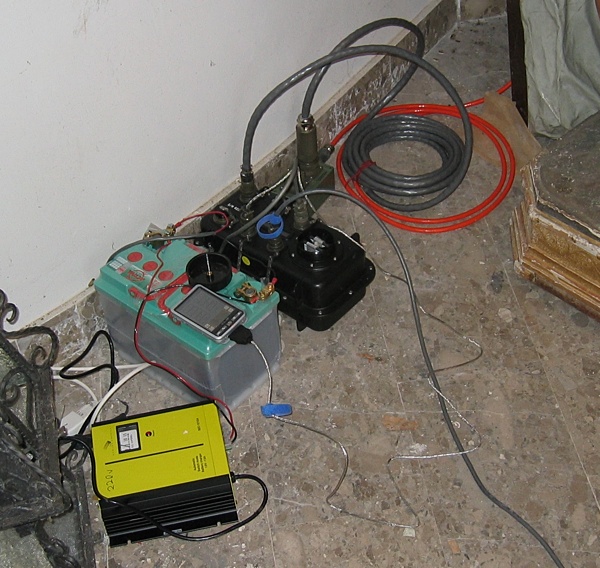
An electrical outlet was right by the doorway so this station had a battery charger to keep it going. The battery is used to keep the station running during power outages, and to help "filter" the electricity coming from the battery charger to keep electrical noise from getting into the recorded data.
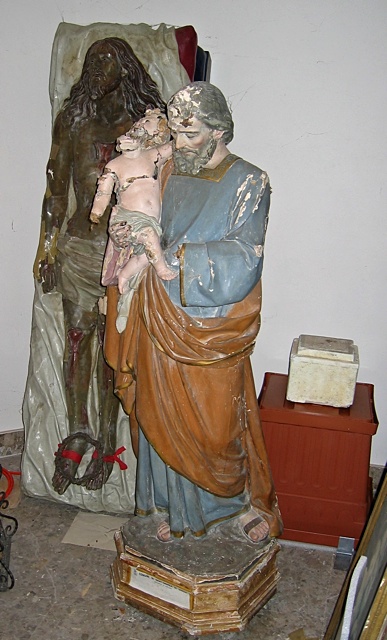
We left the sensor in the good hands of baby Jesus and Joseph.
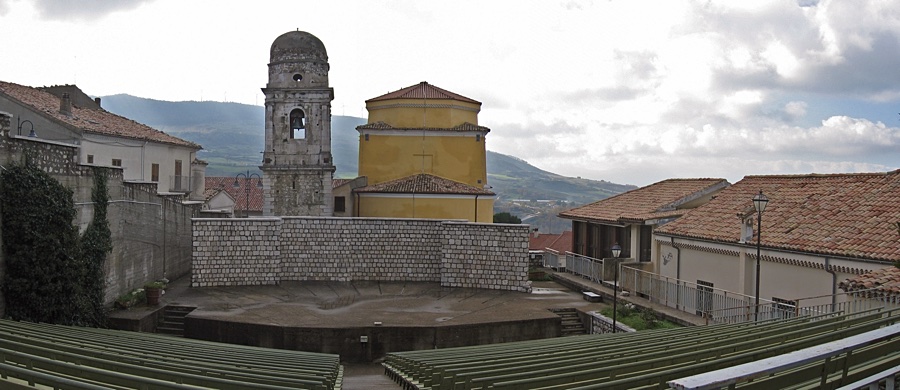
Up behind the building where we put the station was a small park and a teatro all'aperto (open-air theater), which I could see being used quite often during the warmer months. The campanile of the Chiesa Di San Michele is in the background of the picture above. The building where the station was installed is the white building on the right.
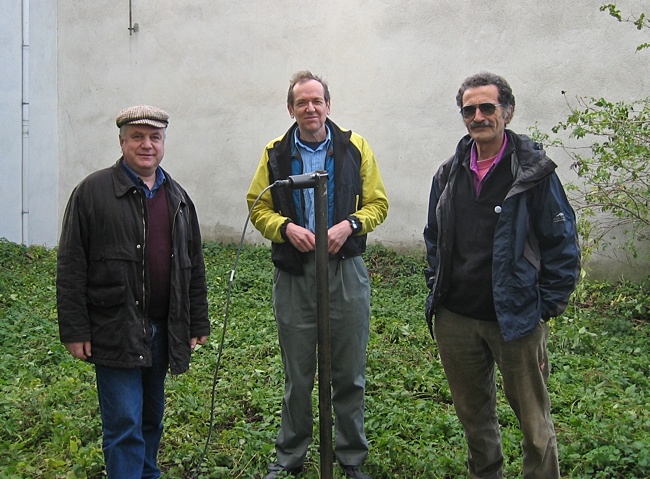
Above is Donato Cassese, along with John and Nano. Donato showed John and I around the grounds while the others were finishing up last minute details after we finished installing the station.
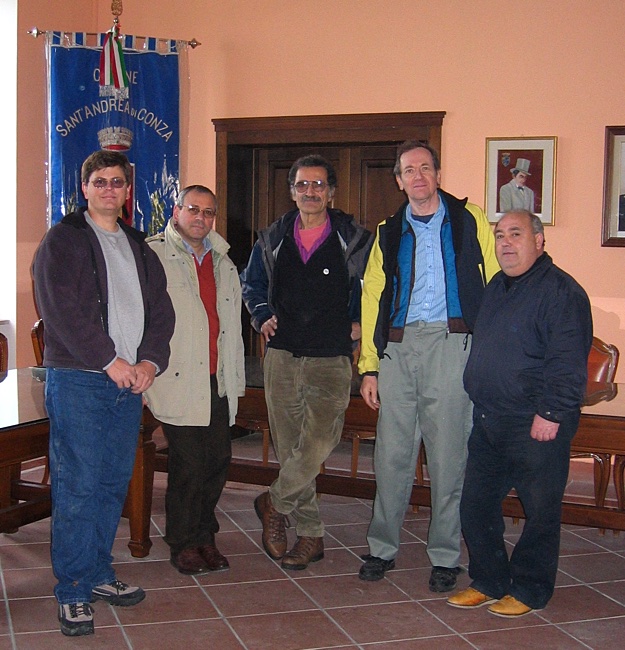
Before we left we, of course, had to stop for the obligatory group photo. Pictured above from left to right is me, city engineer Pasquale Roselli, Nano, John, and geometra Ermenegildo Gottardi in the meeting room.
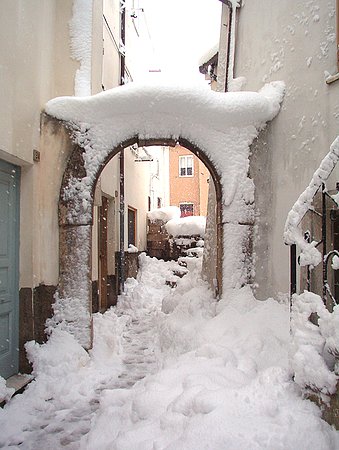
Picture by Donato Cassese.
It does snow in Italy in the winter, and not just up north in the Alps. This picture was sent to me by Donato after our installation trip to Sant'Andrea Di Conza. Nice.
2018-03-05