


We visited Campana, Calábria twice. Two days in a row. Two very different days in a row.
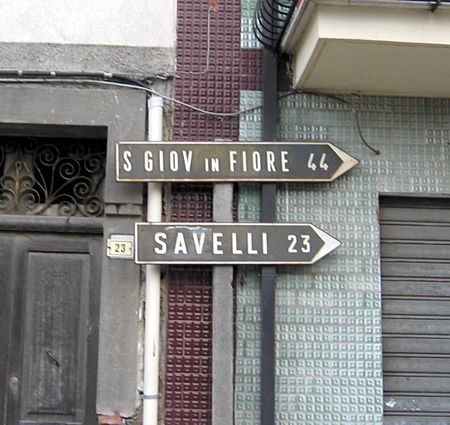
Campana is just down the road from Savelli. The road between Savelli and
Campana was the longest, twistiest road I have ever been on. I would bet
that there was not even 200 meters of straight road in the whole 23,000 meters.
I knew I should have brought my Ferrari. It was fun.

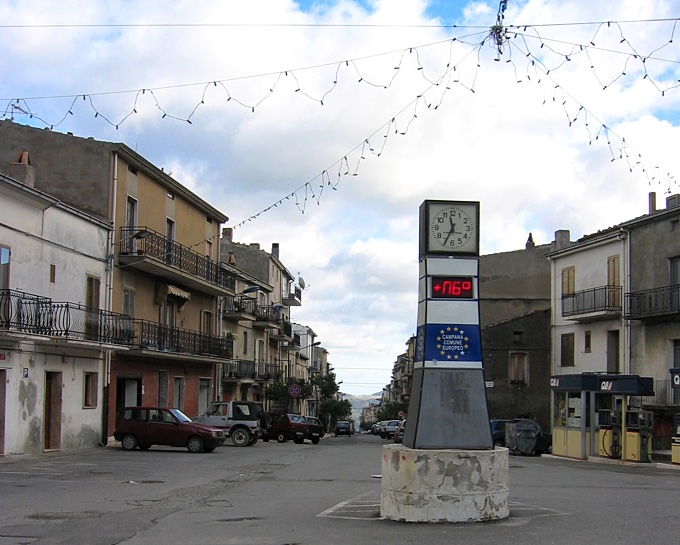
The time in Campana -- Kalasarna in ancient days -- was always 11:35, which I did not feel was a bad idea. The town was quite nice and everyone was very friendly.
Nano and I came to Campana looking for Father Don Salvatore Spataro, the local priest. After asking enough people for directions we ended up at the priest's house. Nano rang the doorbell, but no one was home.
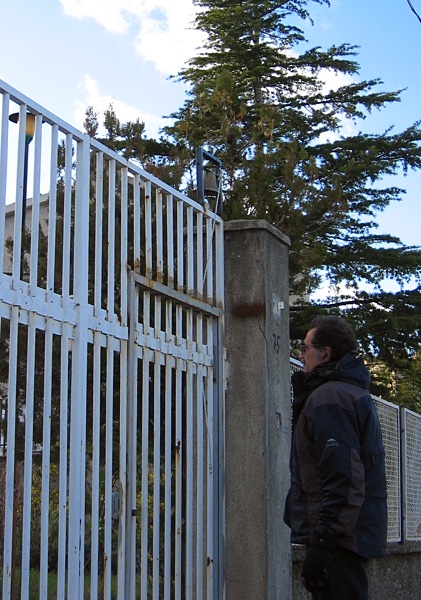
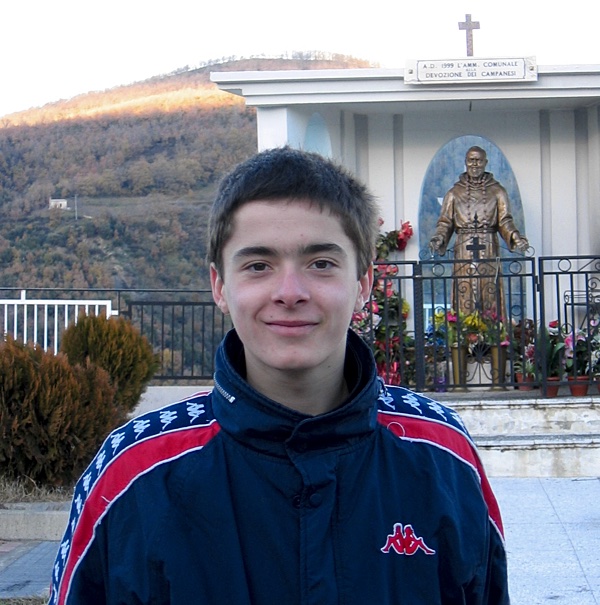
Across the street from the priest's house was a shrine to Padre Pio, I think. There we found a local resident by the name of Stefano. He offered to take us around the area to try and find Father Spataro.
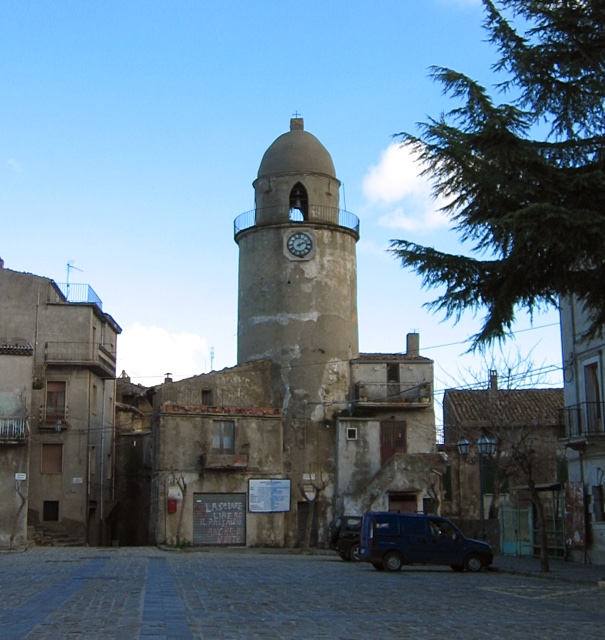
This tower was at the edge of the piazza where it looked like the old section of town met the really old section of town. The tower was at the beginning of the really old section.
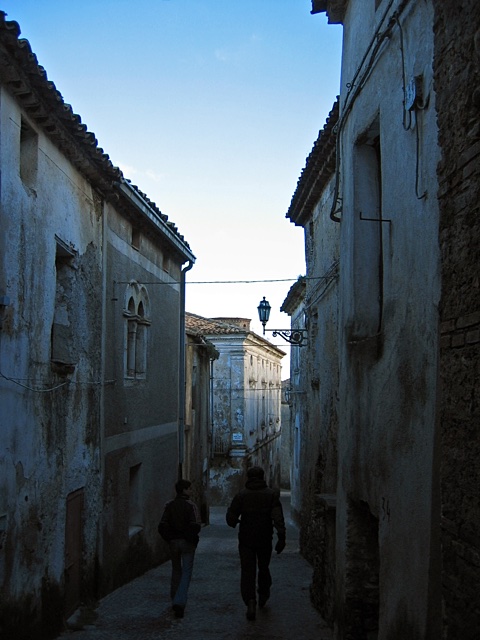
The roadway from the piazza into the really old section of town -- on the left side of the picture above -- was quite a walk. I do not think our Lancia would have fit down it. Looking down the side streets was like looking straight into the past, except for the occasional satellite TV antenna.
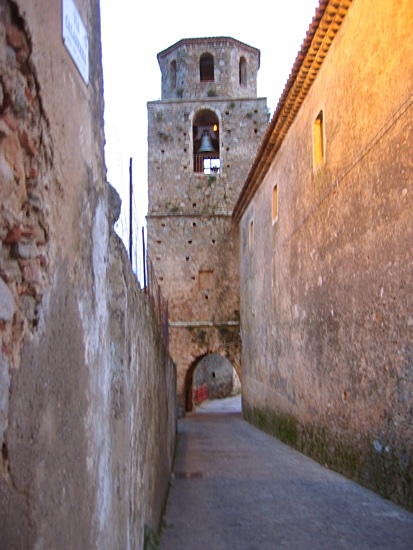
The bell tower of the Chiesa Santa Maria Assunta marked the end of the habitable section of town. The church, whose wall is on the right in the picture below, was built in the XIII secolo (13th century).
Beyond the church was a large house which (possibly) at some point had been occupied by royalty. Stefano was not sure when or who. The scaffolding in the building represented a restoration project that had been paid for, but, as you can see, was never finished or even really started. It was some kind of scam by the company that was paid the money. I think this happened in the 1970's.
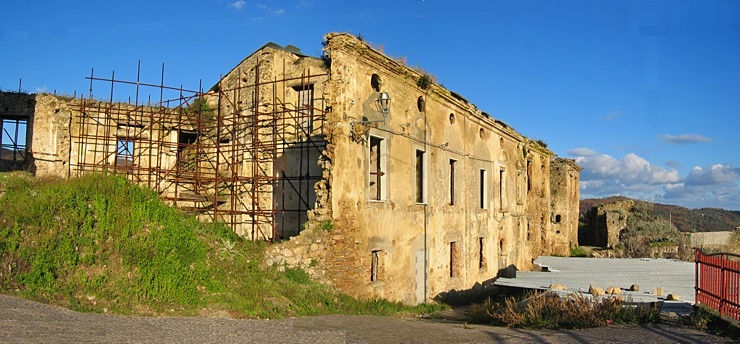
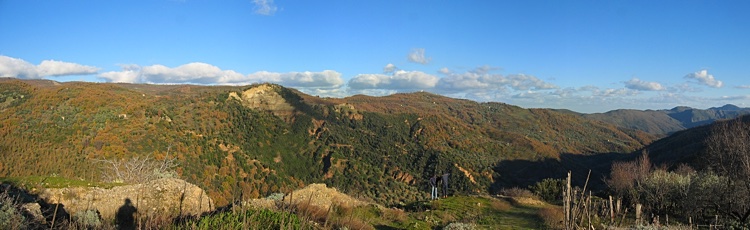
At the end of the point of land that Campana was on was a long, wide, and deep canyon which proved to be an asset to Campana. Anyone trying to invade Campana from the east, which was usually where foreign invaders came from -- the sea -- had to make it up to the town from the valley below.
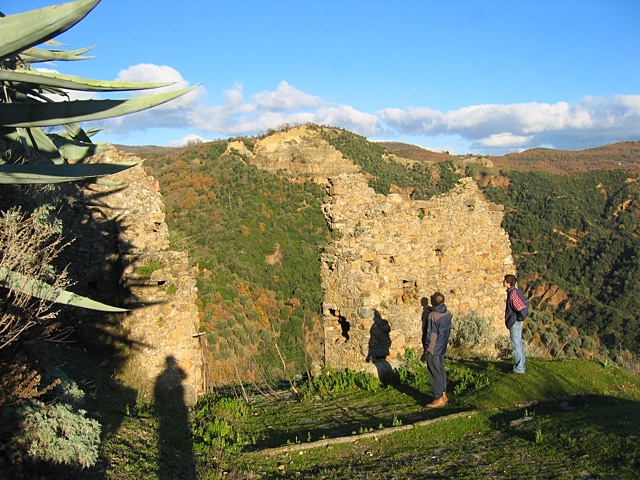
The picture below is a bit difficult figure out, but the vertical pile of rocks on the left, that my shadow is on, and the pile of rocks on the right, that Nano and Stefano are standing in front of, are on either side of a path. The trees between the rocks and the exposed rock near the top of the mountain peak are actually on the other side of the canyon. The ground falls away off the right side of the picture and also straight ahead into the picture. The two walls of rock held a gate in ancient times. This gate either was or is called the Doors To Eternal Bliss. That would only be if you were making your way downhill.
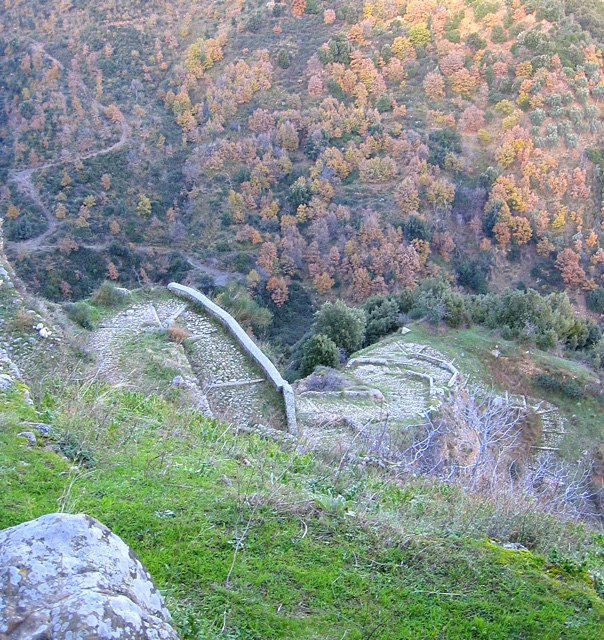
The path leading up to the gate from the river at the bottom of the canyon looked about as straight as the road that we traveled to get to Campana. To prevent invaders from reaching the town the Doors to Eternal Bliss were simply closed.
After driving to all four of the churches in Campana, and walking all of the way to the Doors To Eternal Bliss we never did find Father Spataro. He was out of town, and we were not able to wait too long since we did not want to travel the really windy roads at night. It did not really matter to us, though. Stefano -- we never did find out his family name -- gave us quite an amazing tour of the town.
2014-08-03