


I'm glad we were just passing through and didn't have to go down that way.
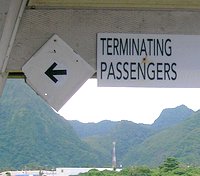
After finishing up the station in Fiti'uta, Matt and I flew away from Ta'u, a little late, and after almost having to leave some of our luggage behind. Anything we left would have been sent to Pago the next day. Normally that wouldn't have been a big problem, but we weren't going be in Pago the next day, but were just going to be passing through and on to Apia, Samoa this day. That too wouldn't have been a big problem, and the airline still could have gotten our stuff to us the next day in Apia, except that we were also just going to be passing through Apia on our way to the island of Savai'i. There wasn't a lot of stuff that I could have left. Most of the over 50 or so allowable pounds I had were the tools that I needed to do my job and get the stations installed in Samoa. The size of the plane didn't make this the usual 'pay a little bit more and we'll let you take it all'-type of situation. When they said the plane was full they kind of meant it. We managed to throw out a few things like scientific papers (Matt) and extra long and heavy solar panel cables (me) and get what we needed on the plane with us.
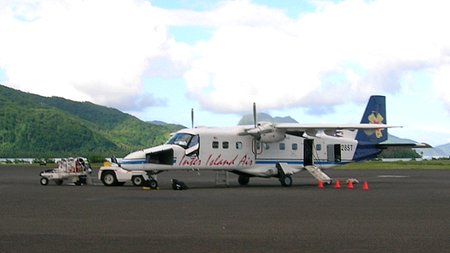
When we got to Pago we quickly met with Stanley in front of the airport to pull a few pieces of equipment out of some boxes we had left at Moki's house and that he had brought to the airport in his pickup, get out tickets, grab our stuff, and make it on to the plane below for the trip to Apia.
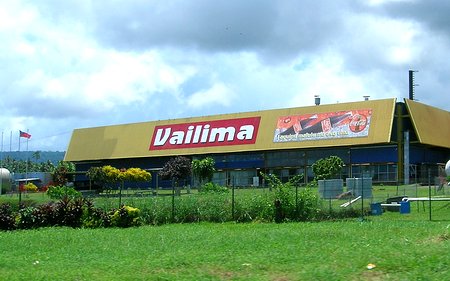
So this was where the center of the universe was. The Vailima factory, the only one, was just west of Apia, Samoa. I wonder if they had a tour...and free samples?
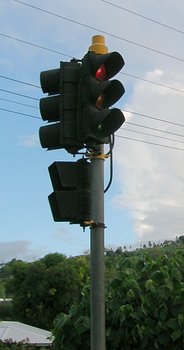
Holy smokes! I hadn't seen one of these things in a couple of weeks. American Samoa has no traffic lights. I would have forgotten what they were for, except for the fact that there were a couple of intersections over there that could have used one.
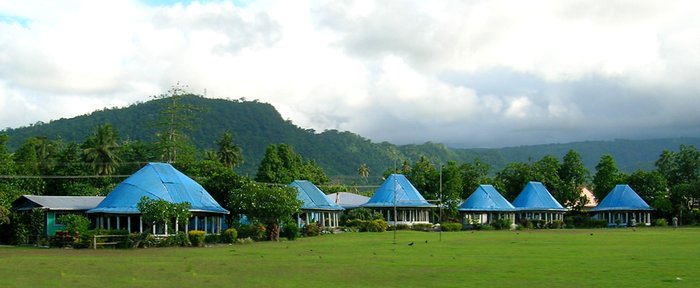
Below was the village of Lepea on the west end of Apia. The picture shows about 1/3 of the blue roofed fales that surrounded this playing field. I don't know if there was some significance to this place, with all of the roofs being the same, or if everyone in town just got together and decided to do the same thing. It was a pretty combination of colors.
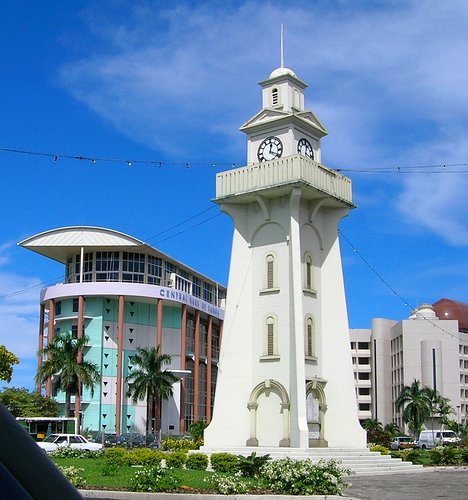
Below was the Clock Tower which represented the center of Apia. It was originally erected as a monument to those Samoans that died during WWI. I read somewhere that the city was originally defined as the land encompassed by a semi-circle with a radius of five miles from this tower. In the background was the Central Bank of Samoa to the left, and the government building to the right of the tower. I warned everyone about the danger of putting the central bank right next to a building full of politicians.
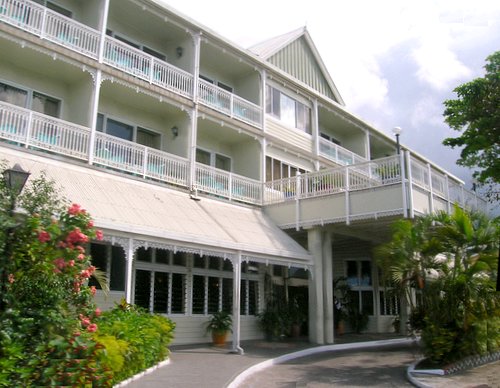
Aggie Grey's Hotel in Apia was across the street from Apia Harbor. Starting as a snack bar during WWII this place grew into a world famous hotel. It's prices also grew to world famous levels.
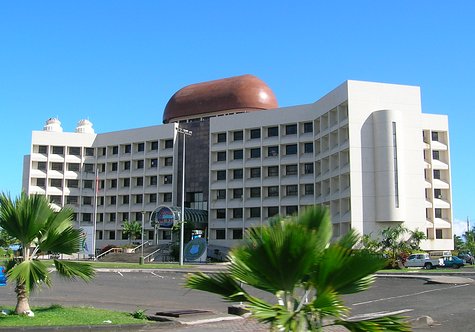
The Government building which was funded by China. The style was not very well liked so the fale-like structure was added at the last minute to help make it look at least somewhat Samoan.
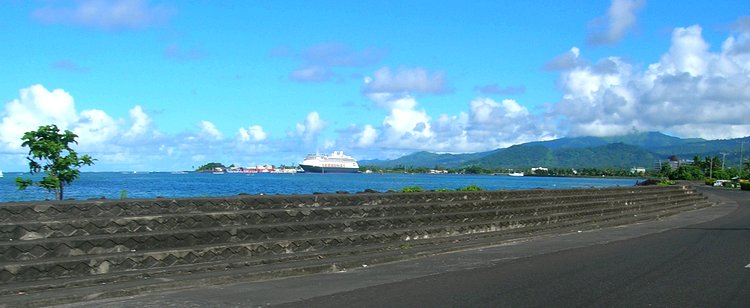
Cruise ships?? Below was the Apia Deep Sea Wharf on the east side of Apia Harbor.
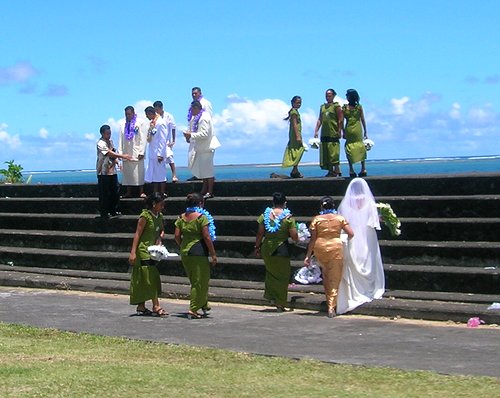
A wedding! It looked pretty traditional to me for a country of the Pacific.
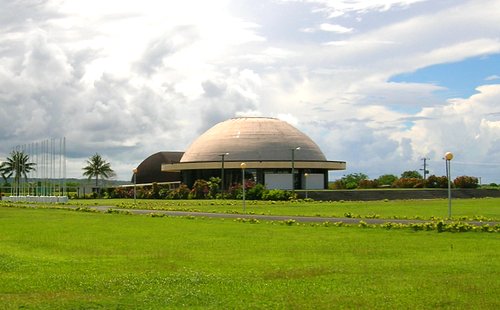
This was the Fale Fono (Parliament House) that we passed each time we went to Shaun's office.
2014-08-03