


Because we are a trusting species, or maybe it's instead because we know each other really well, a global network of seismic stations were built starting in the 1970's. The purpose of the network was to detect unannounced, and hopefully not unplanned, nuclear explosions. Large nuclear explosions in the ground make the ground shake. The network, known as the Global Seismic Network, had about 120 stations all over the globe in 2005. One of those stations was on the island of Savai'i. AFI was for Afiamalu which was the name of the village.
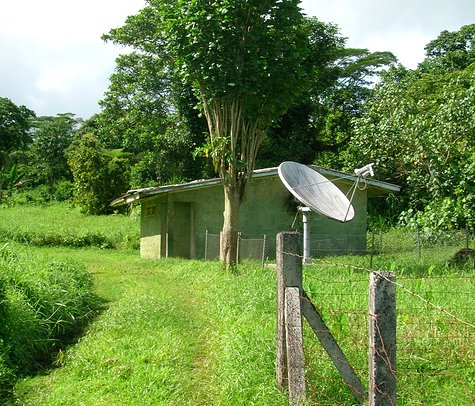
The station was part of the Federation of Digital Broad-Band Seismograph Networks portion of the GSN. A lot of the GSN stations are part of other networks. The station began operation in May of 1981. The health of the station was monitored by the Albuquerque Seismic Laboratory at Kirkland Air Force Base which was just up the interstate and past a few armed guards from where I lived.
The digitizer is the black item on the top rack in the picture below. It was an older model made by the same company, Quanterra, that made the digitizers that we were installing. The analog signal coming from the sensor was sampled at a rate of 40 samples per second. The data was recorded on-site in two forms and backed up. The data was also sent by satellite and Internet connections to the Data Management Center in Seattle, Washington. The DMC is also part of IRIS like PASSCAL.
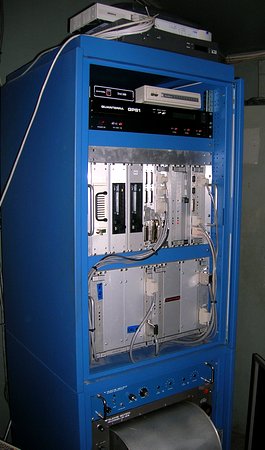
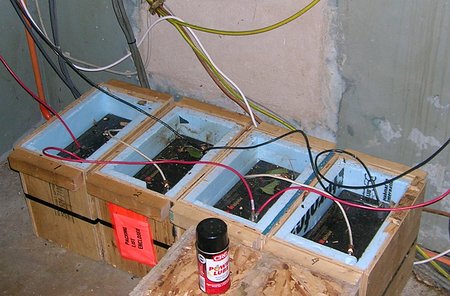
In the event of a power outage the station was able to continue to operate for a while on battery power. Having a diesel generator at the station would have made too much noise (vibration).
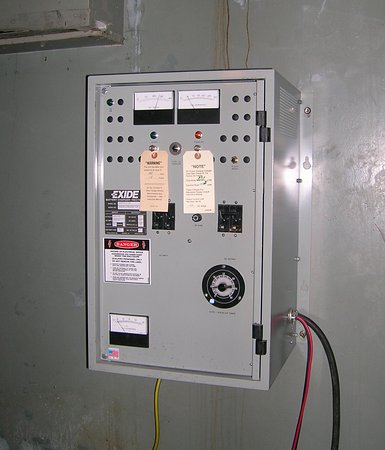
Below was the power distribution and battery charging system. There was at least two of everything important needed to keep the station recording data...except for this unit.
The sensor vault -- slightly larger than the ones we were installing -- looked like a World War II bunker, but I think it was built just for this station. The vault was about 150 feet from the control building.
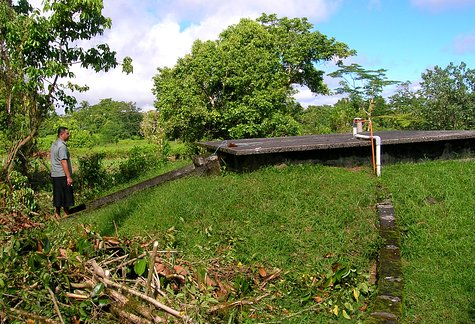
Inside the vault was a room with a main pier that had three Styrofoam boxes sitting on it.
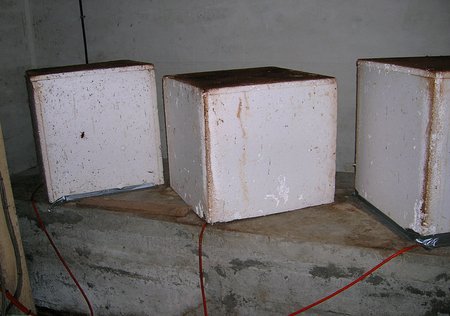
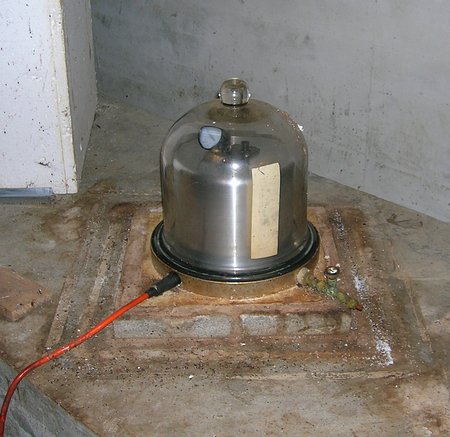
Under each box was one element of a Streckeisen STS-1. Each element was under glass and there was a vacuum drawn on the glass. I'd guess it was to provide extra thermal insulation. The station -- like the ones we were installing, only bigger -- measured vibrations in three directions. Up/down, north/south and easy/west. Our sensors measured everything in one package. Below was the element for just one direction. By measuring the movement of the earth in the three directions, by having at least three stations spread around a bit, and by using a bit of math you can figure out where an earthquake, or a large explosion, has occurred.
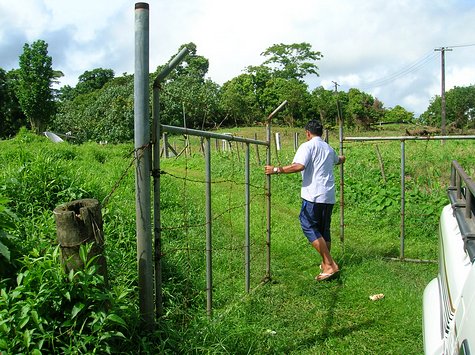
The station was surrounded mostly by taro fields.
2014-07-24