


Ernest Shackleton. The poor devil went through an awful lot to fulfill his dream of reaching the South Pole, which he never did accomplish.
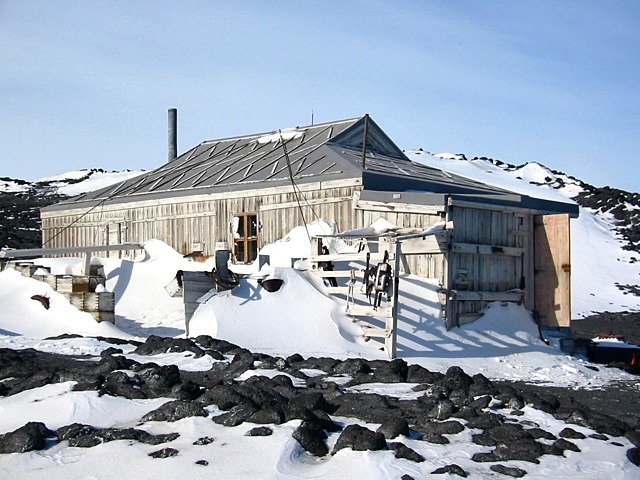
Above is his hut which was built in 1908 to support his first scientific expedition where he was in charge, "Nimrod", which was, of course, to be a run on the South Pole, which failed, but came to within 160 kilometers of the pole. Apparently, the South Pole was a rather popular tourist destination back in those days. If you compare this hut to Scott's other two huts it's quite obvious that Scott had a much better architect and contractor.
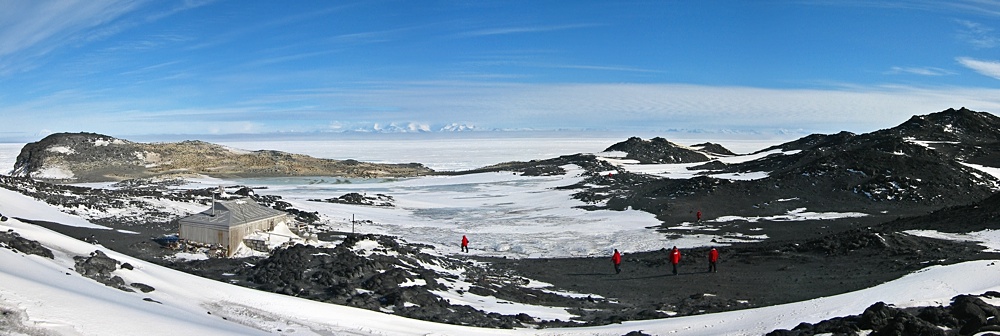
Blue Lake in front of Shackleton's Hut at Cape Royds. Maybe. I couldn't make out from maps if this was the right body of water or not. The Transantarctic Mountains are in the background across the ice shelf. That I'm sure of. Cape Royds is about 35 kilometers from McMurdo.
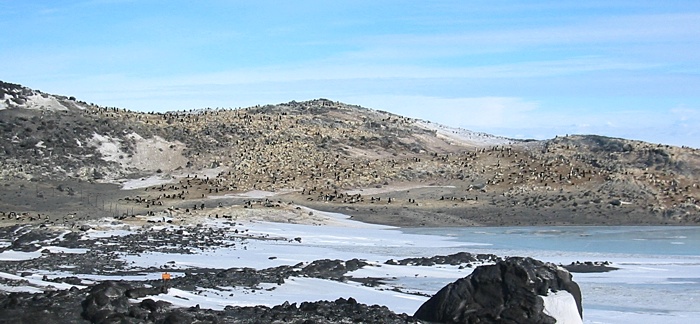
The tan-colored hill on the left in the picture of Blue Lake, Flagstaff Point, was populated with Antarctica's favorite bird -- penguins -- seen in the picture above. Later in the season the Ad?lie penguins here, and in other rookeries, began abandoning their eggs and heading north to open water. The 2002-2003 Summer was a bit colder than normal and the sea ice failed to break up around Ross Island. The penguins couldn't stay, because they couldn't get to where the fish were, so they had to leave. The same thing happened in the 2001-2002 season.
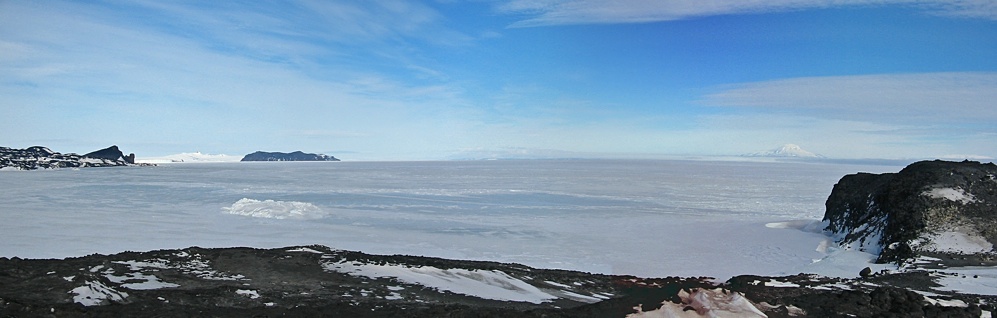
Above is a picture looking south from the hill south of Shackleton's hut. A small iceberg from another season is trapped in the ice in the foreground. Inaccessible Island and Tent Island are in the distance above the iceberg (from this angle they run together). I'm not sure how Inaccessible Island got its name, but as we went by on our Ski-Doo's you could see that the island came straight out of the water. There was no discernible place to land a boat.
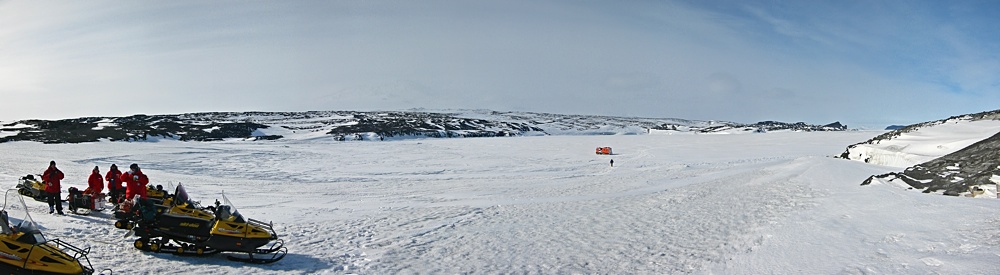
Backdoor Bay which was appropriately named since it was over the hill behind the hut.
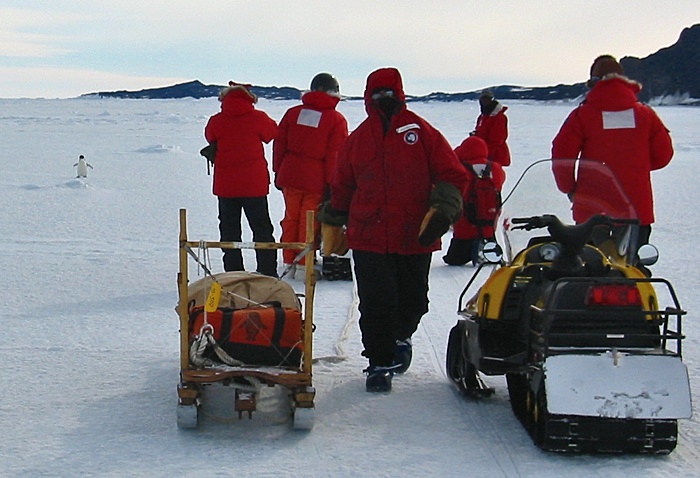
A lone Adélie penguin was a show stopper along the route to Cape Royds. He wandered across the 'road', then kept coming closer to us to get a better look. He finally turned and left.
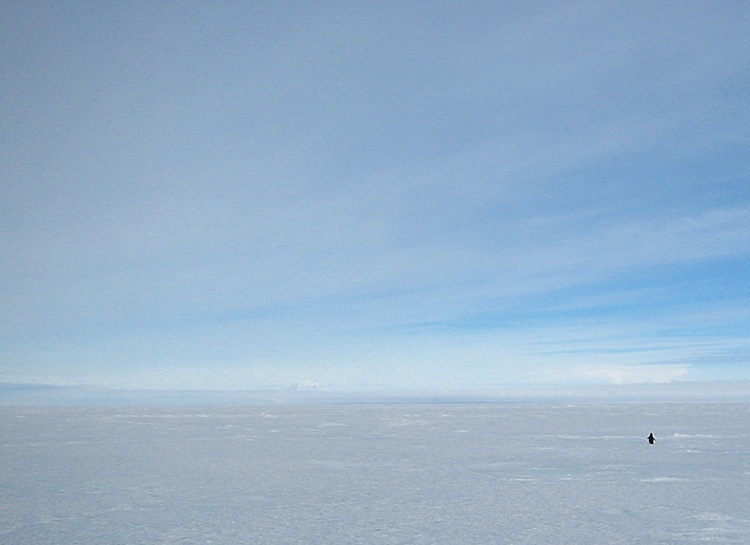
I sure hope he knew where he was going, because there was no water in that
direction, but chances are he did not know that. It happens.
All of the historic sites in Antarctica are maintained by the Antarctic Heritage
Trust.
2018-03-05