


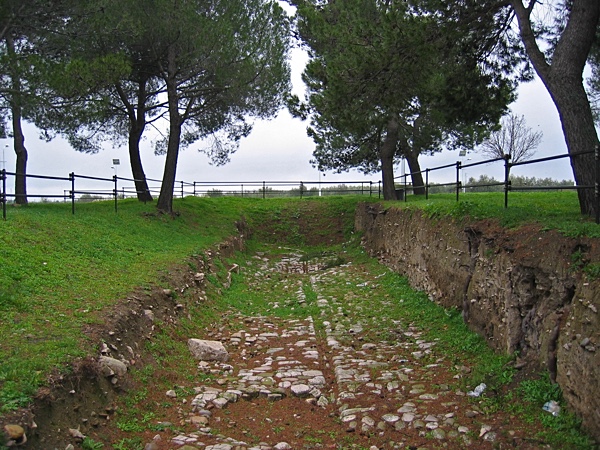
Venosa, Basilicata has been around for quite some time. It was originally a settlement of the Lucanians (an ancient Italic tribe), and was taken by the Romans after the Samnite Wars in 291 B.C. It was the birthplace of the Roman poet Quintus Horatius Flaccus (65-8 B.C.) -- known in the English-speaking world as Horace -- who left it in about 50 B.C. Back then the town was known as Venusia and was an important garrison town along the Roman Appia Way which was the main road from Rome to Brindisi, P?glia and on from there to Greece. The last part of the trip being by water, of course. Above is an excavated section of the Appia Way that was in Venosa's archeological park.
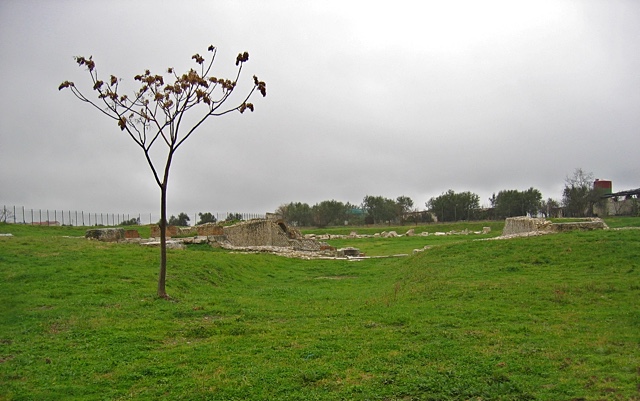
Venosa'a archeological park contains just about one of everything ancient. There are remains of a Roman bath and resort complex that was built by wealthy Roman absentee landowners which included a large amphitheater with enough seating for 10,000 people.
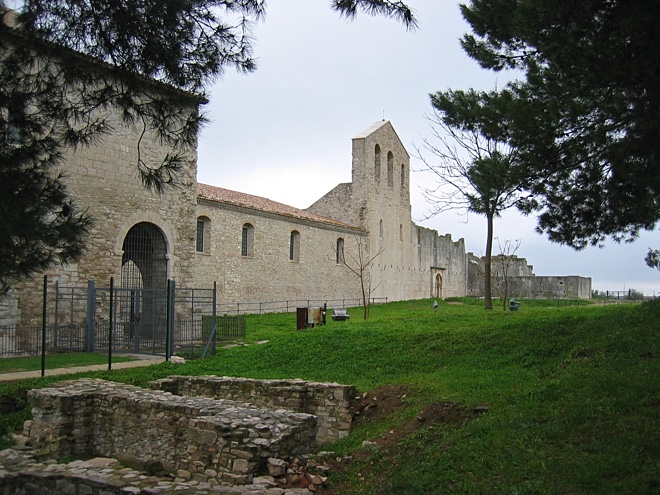
At one end of the archeological park are the ruins of the Abbazia Della Trinit? (Abbey Of The Holy Trinity), a complex of churches whose construction was started in 1046 A.D. by Benedictine monks on the site of a older Roman temple. Inside the nave lies the tomb of the Norman crusader Robert Giscard. Behind the older church, shown in the picture above, is the Chiesa Nuova which was begun around 1100. It was a large construction project that was too ambitious to be properly finished. Only the lower part of the walls and the apse were completed, incorporating fragments from the Roman ruins.
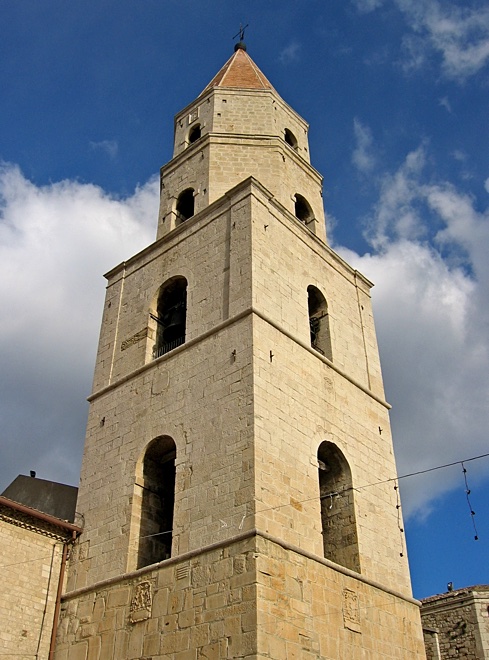
The Cattedrale Di Santa Andrea was just across the street from the municipio where the station was installed.
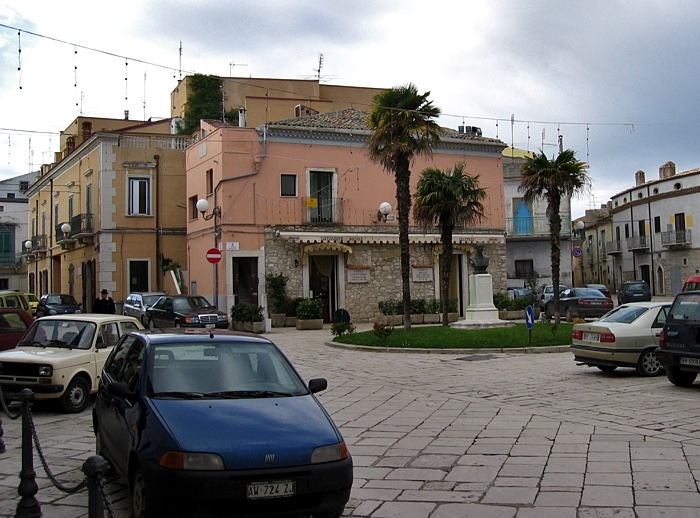
I don't know what the palm trees were for. It was definitely not warm and tropical-like the first day that we were there.
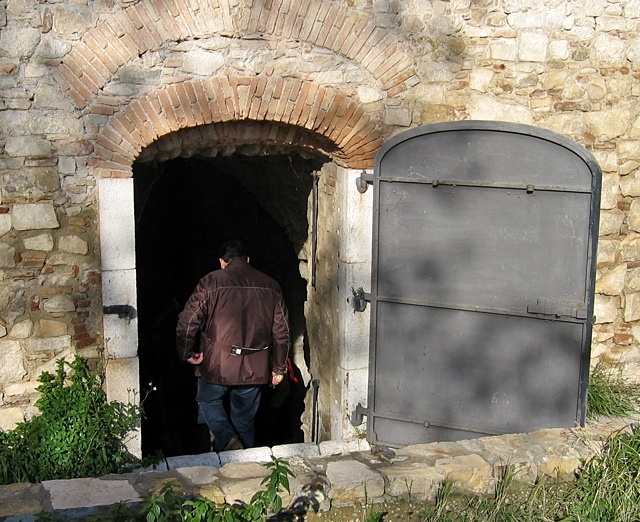
The municipio building just happened to have a spare wine cellar.
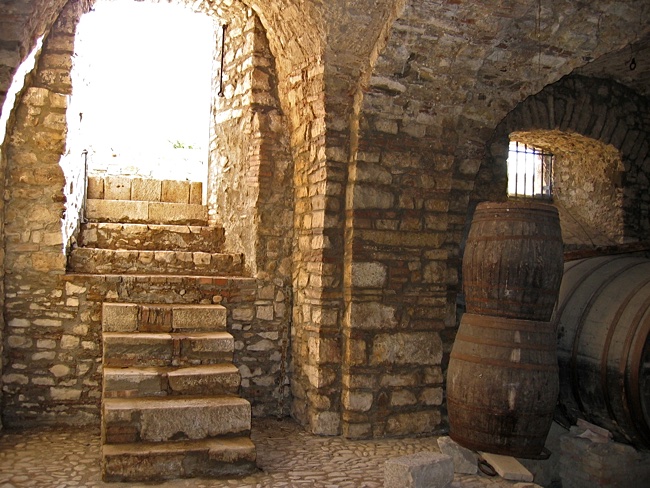
The whole building had been restored, but there were still what appeared to be blocked off doorways in the rock walls of the cellar. None of them are visible in the picture above.
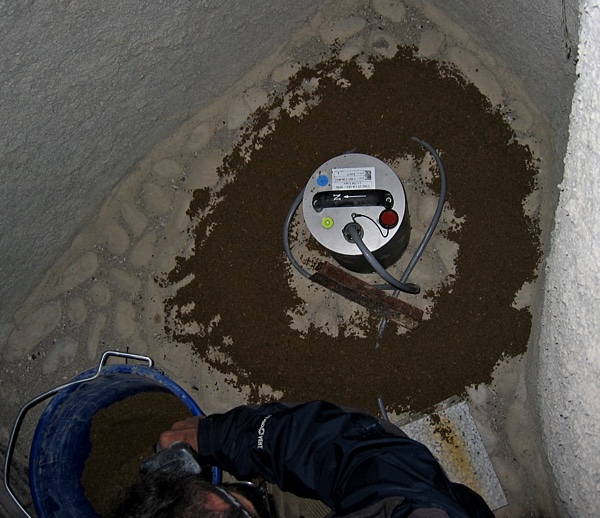
Getting the sensor to point exactly north and be level was a bit of a trick. The floor was made of rocks held in place with mortar. Nano had to keep moving the sensor around until he found three rocks that would cooperate. At the same time, of course, the sensor had to be kept pointing north. A ring of sand was placed around the sensor to form a seal with the flowerpot. A piece of iron that we found outside was laid on top of the sensor cable to keep in in place.
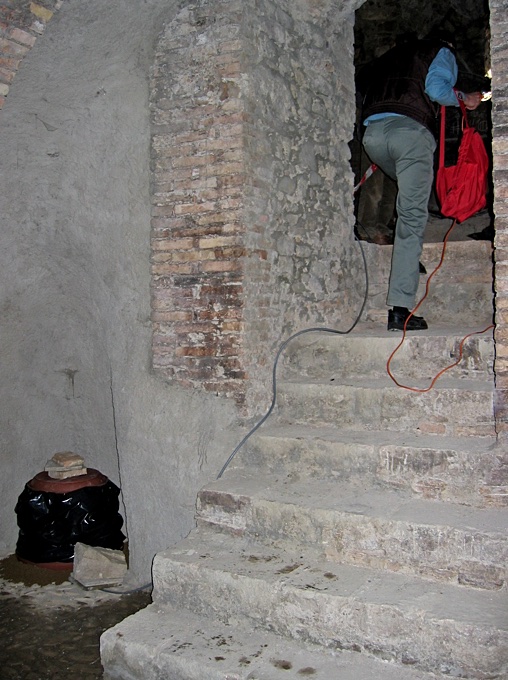
The sensor was in a lower room down from where the entrance to the wine cellar was.
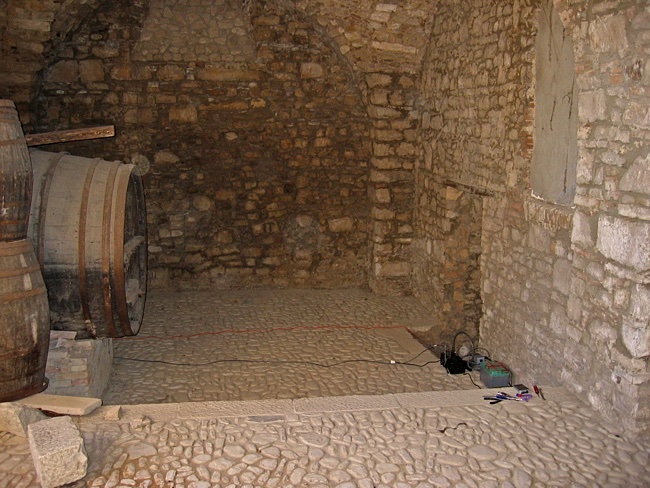
Our equipment had the whole place to itself. The station was powered from a power outlet that was on the wall off the left side of the picture above. The GPS antenna cable also ran out through a window that was on that wall. All of the wine casks were empty here too. Dang.
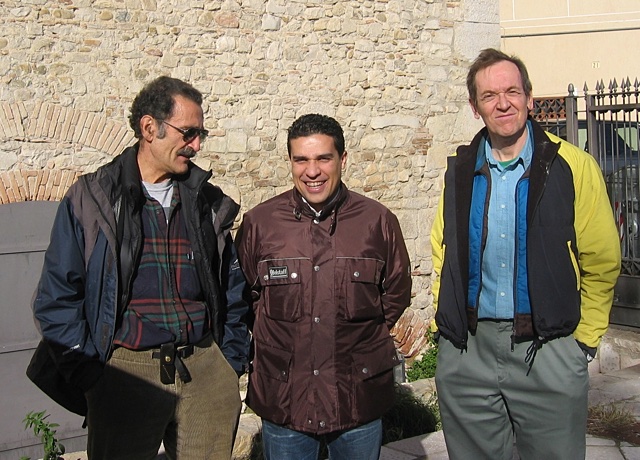
A geologist for the city of Venosa, Giovanni Bruno, was our contact. He knew a good place in town to eat, but we were "in a hurry" and did not get to have lunch that day. Next experiment, perhaps.
2018-03-05