


We needed a site for a station near the east coast of Italy. We looked at the map, came across a phone number in a travel book that I brought with me to Italy, and made an appointment to visit Castel Del Monte. We had been there earlier in the project when we installed the station at Minervino, but did not consider putting a station there at that time.
Emperor Frederick II of Hohenstaufen (1194-1250) ordered the castle built in the year 1240 A.D. What is not clear is if there was a castle or some other building already there in 1240. A navigational reference from that time (navigation by boat, that is) mentioned a building on the same hill that could be seen from the Mar Adriático (Adriatic Sea) and that could be used as a point of reference, but nothing else is known. Frederick never visited the castle. He died before it was completed. That is too bad. I think he would have been impressed.
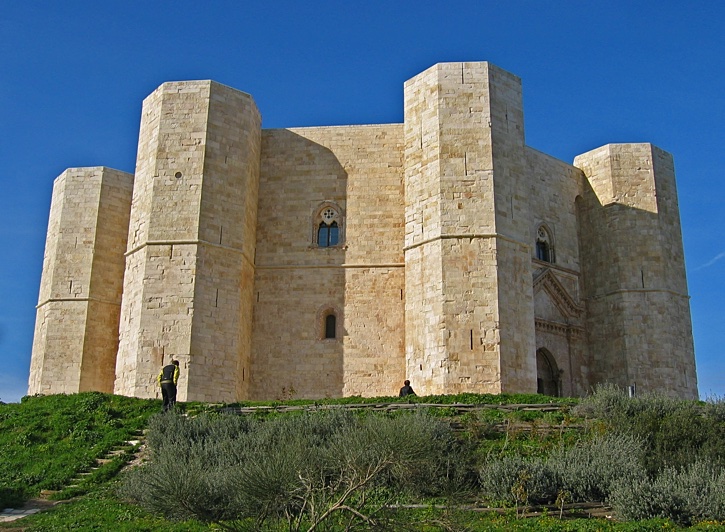
The castle is very tall, but still has only two floors.
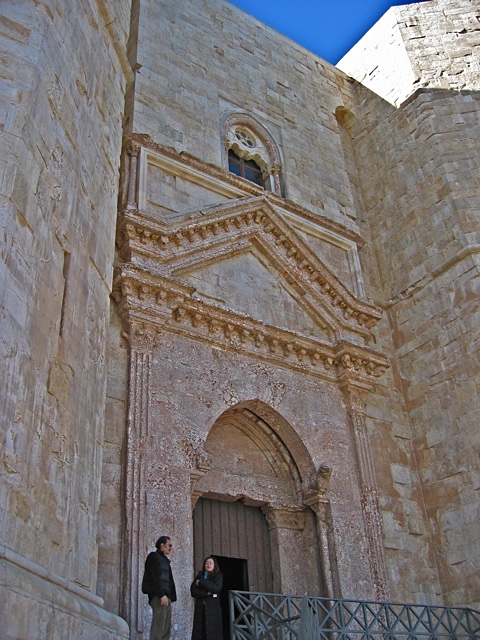
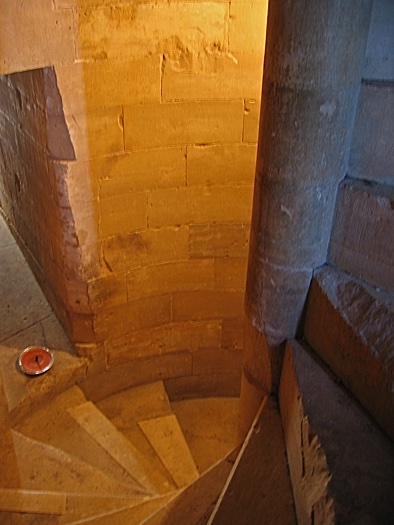
It is generally agreed that the castle was not built as a fortress, and, in fact, was mostly used as a jail. Below is a picture of one of the spiral staircases inside one of the eight towers. Picture yourself in the year 1300 coming down the staircase defending the castle with your shield on your left arm, and your sword in your right hand. The spiral direction is wrong. You would not be able to take a swing at the enemy with your sword without hitting the center of the stairs.
We met up with one of the staff tour guides, Dominica DiRocco, who was the person we had talked to on the phone the day before. We were treated to one heck of a tour. Believe me it was not the standard self-guided tour. Below is obviously a picture of the roof of the castle. Only one tower, number six, has access to the roof.
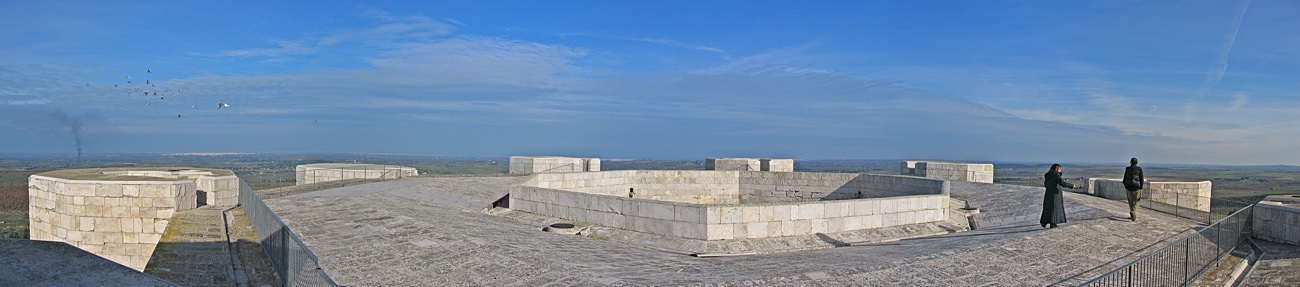
One thing you started to notice as you walked around on the roof is how the whole roof was designed to collect water. The summer months can be quite dry in Púglia. The main portion of the roof had a peak like a gabled roof with troughs along the length of each section like gutters All of the troughs were sloped down to a couple of holes for the water to drain into.
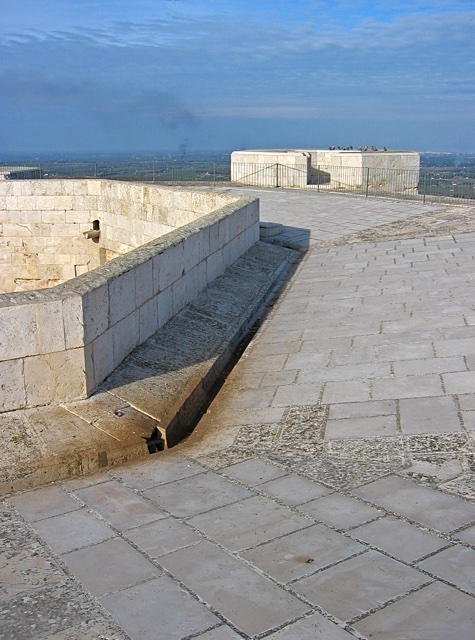
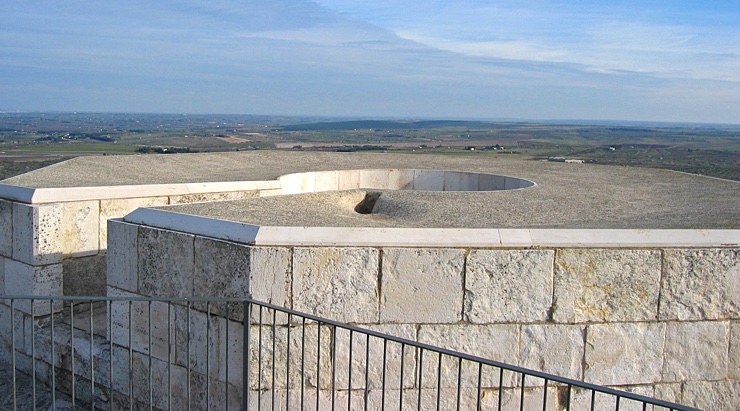
Even the tops of all of the towers were shaped to collect water. Below is tower one. The surface was depressed all of the way around the middle of the surface and gently sloped down to the drain hole in the middle of the picture.
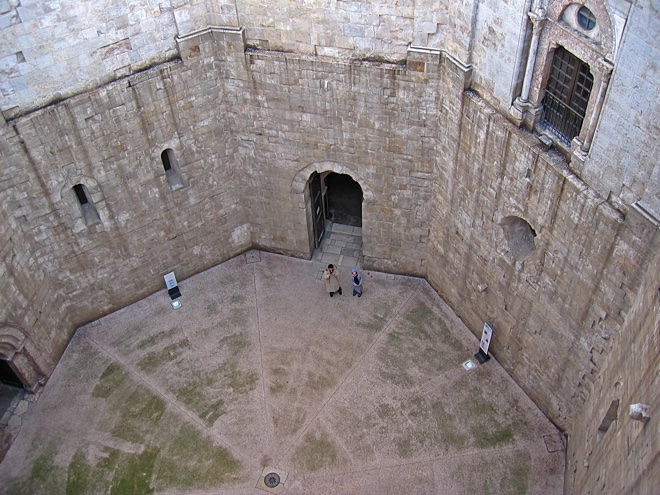
Looking down into the courtyard. There is some story about there having been a "tub" of some kind that was set up in the courtyard for the collection of water, but I could not make any sense out of the story from the web pages that I tried to translate.
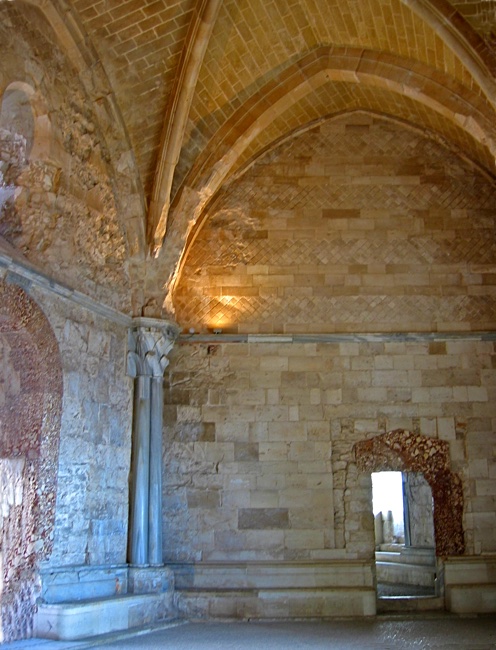
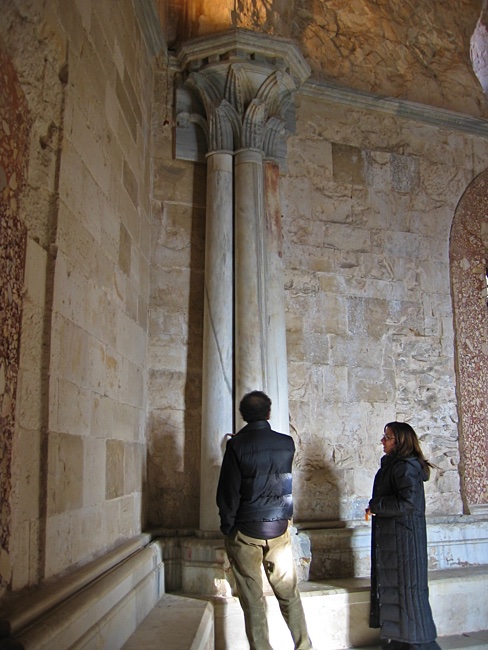
On the second floor the roof was ornamentally held up by compound marble columns. These were the only parts of the castle that were made of materials that did not come from the area.
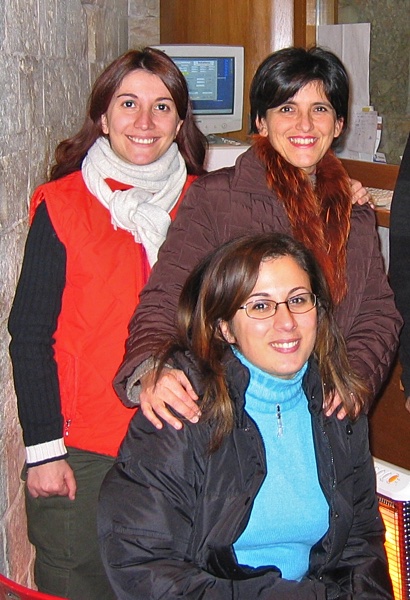
Some of the staff that worked in the ticket booth, the gift shop, and that were also tour guides at Castel del Monte had to drive to work from as far as 100 kilometers away from towns such as Andria and Castellaneta. Below are Rafella Notarpietro, Mariangela Fucci, and Dominica seated. They all tried like crazy to get us permission to install a station at the castle, but it just was not meant to be with the short amount of time that we had.
2018-03-03