


We just could not stay away from this place. We were in the area on a service run to the Centro Ricerche Bonomo station and decided to stop in at the castle so Chad Holmes, a grad student from Columbia University that joined us after New Year's, could see what it looked like. This time we took the self-guided tour in order to see all of the stuff we just drifted by when Dominica gave us the grand tour.
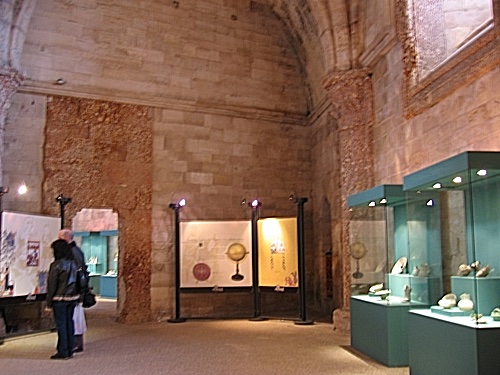
Below are pictures of the clothing of the day. The first picture is one of the castle guards, and the second is the queen and king. These statues were quite short, which may actually be correct. People in Italy back in the old days, and probably people everywhere back then, really were quite short.
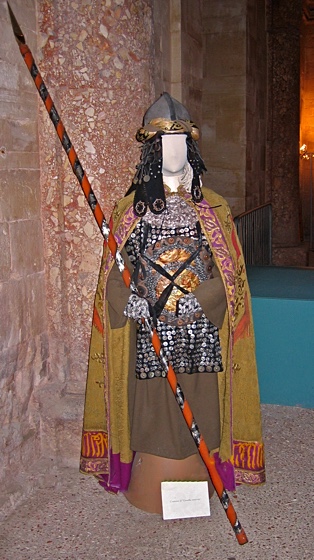
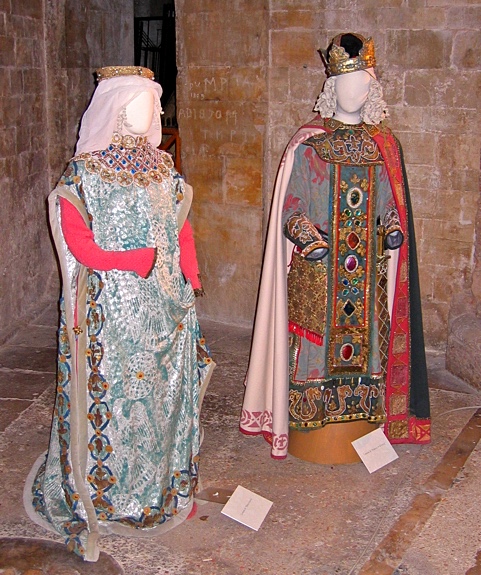
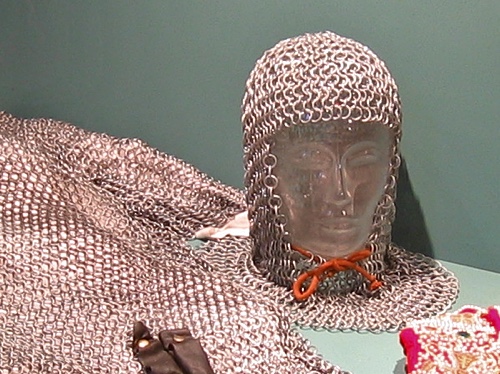
More articles of clothing.
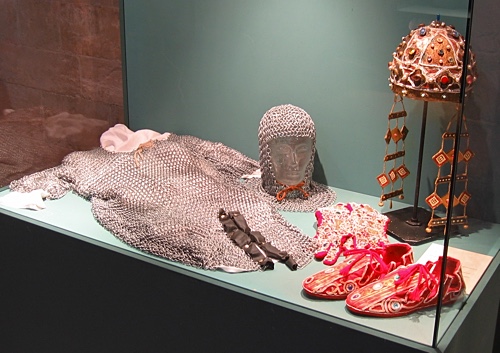
It is pretty amazing how something like this chainmail could have been made in the 1200's. It was impressive.
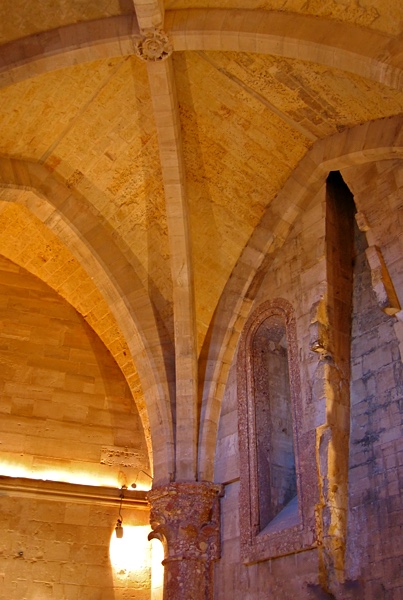
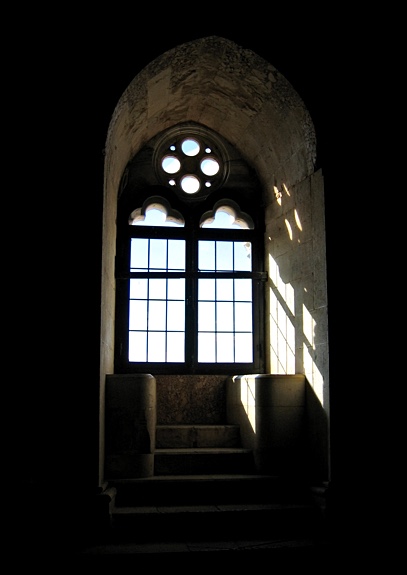
The architecture was beautiful. The odd shape of the rooms (trapezoids) made roofing the rooms a bit difficult. It was solved by splitting the roofing into a central square and then two triangles on either side of the square with the sides of the room forming one side of the triangles. The use of the ribs in the roof were new to architecture in this part of the world. On the right is one of the gemel windows in one of the rooms on the second floor.
On the left below is just a shot from inside the courtyard. On the right is a picture of the remains of one of the four large fireplaces. All of the curved pieces that curved out away from the main wall are missing.
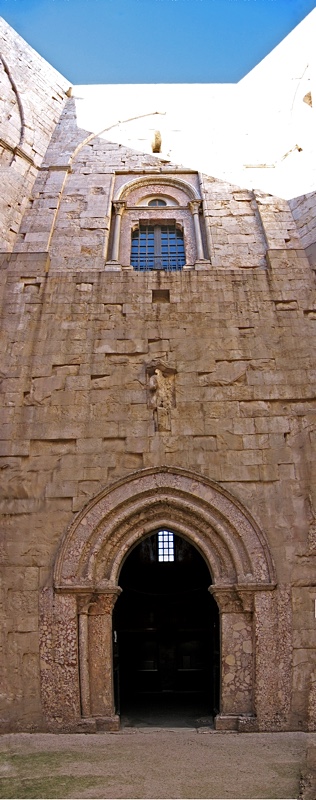
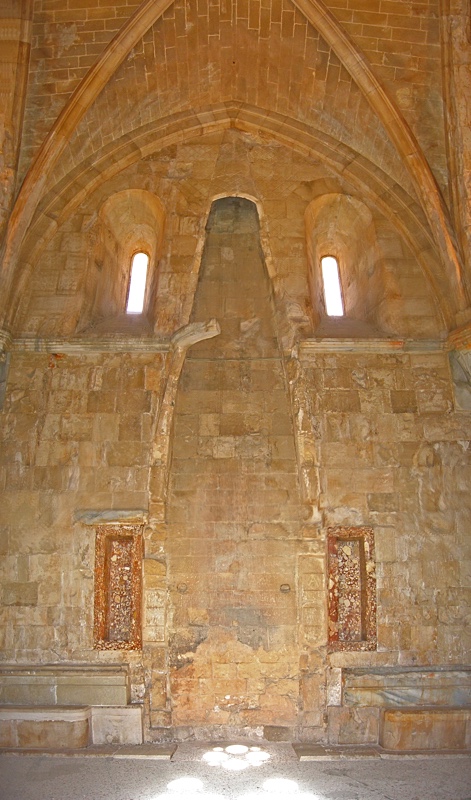
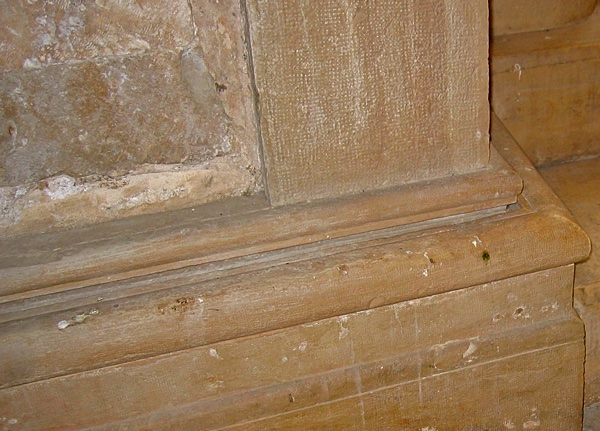
In keeping with the theme of the roof, having everything possible to do with collecting water that was shown on the previous Castel Del Monte page, the same kinds of things were done inside the castle. When the castle was new the walls where surfaced with marble. Over the centuries the marble fell off of the walls and/or was removed by looters. The two pictures below show a portion of one wall in one of the rooms on the second piano (floor). The marble slabs would have been where the bare limestone blocks are now.
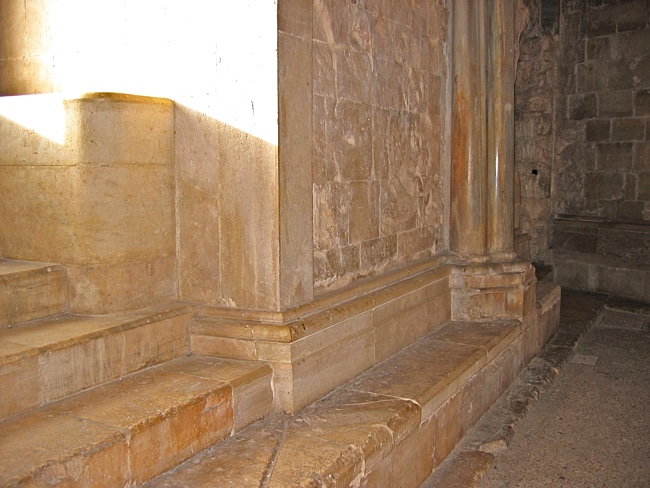
Running all of the way around the room below where the marble was were channels that were used to collect condensation which would trickle down the cool marble on warm, humid evenings and mornings. The channels then directed the collected water to the drains.
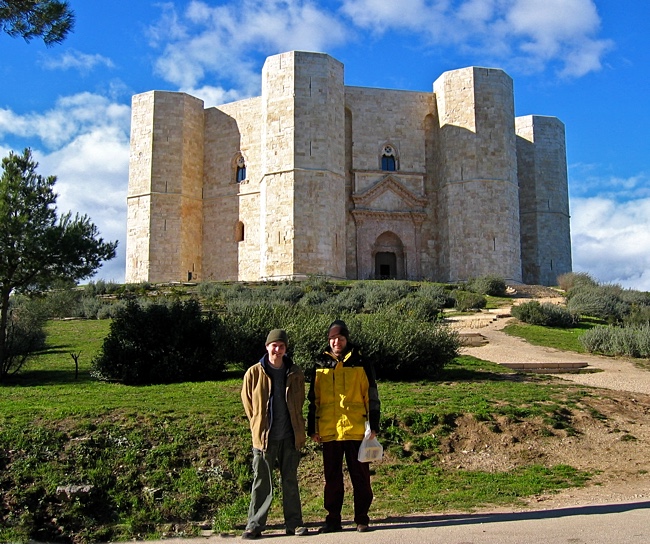
Below are Chad and Alberto "Einstein" Frepoli after our tour. Alberto worked for INGV and came down to Grottaminarda the last week that I was there to learn the ropes. He also, being Italian, knew a lot of interesting tidbits about the history of the the places that we visited.
2018-03-03