



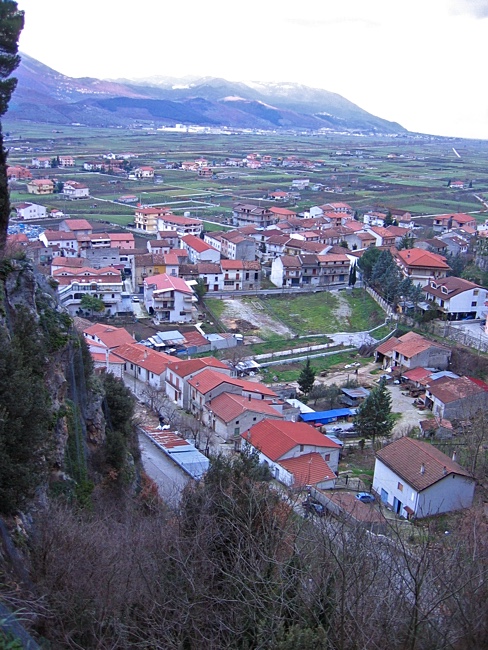
At the northern tip of the Valle Di Diano, which is the last stretch of the autostrade A3 in Campánia heading for Cosenza, is the town of Polla, Campánia. As you drove through the Valle Di Diano it looked like a flat, ancient lake bed surrounded by mountains, which is because it was. The picture below is of the Valle Di Diano with the Monti Della Maddalena range on the border of Campánia and Basilicata. It was taken from the station in Polla.
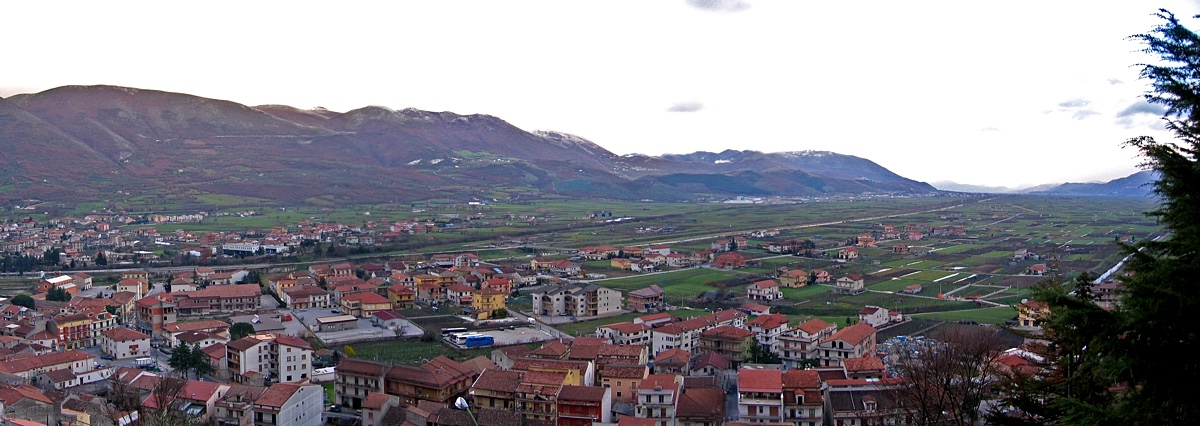
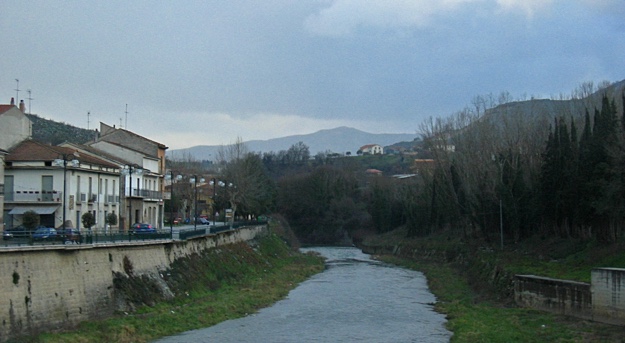
Polla is partly on the side of the Monti Alburni range, which makes up part of the northern portion of the Parco Nazionale Del Cilento, just as the mountains begin to rise from the Fiume Tánagro (Tánagro River) which splits Polla. Even before the year 1000 B.C. the area was inhabited by shepherds who left traces of their passage in the numerous caves on the slopes of the mountains in the area. The first village was established during the times of the Lucani in the 4th century B.C. who were replaced by the Romans, who were replaced by the Byzantines, who did not leave much evidence of their occupation. The Greeks, however, did establish several villages in the area.
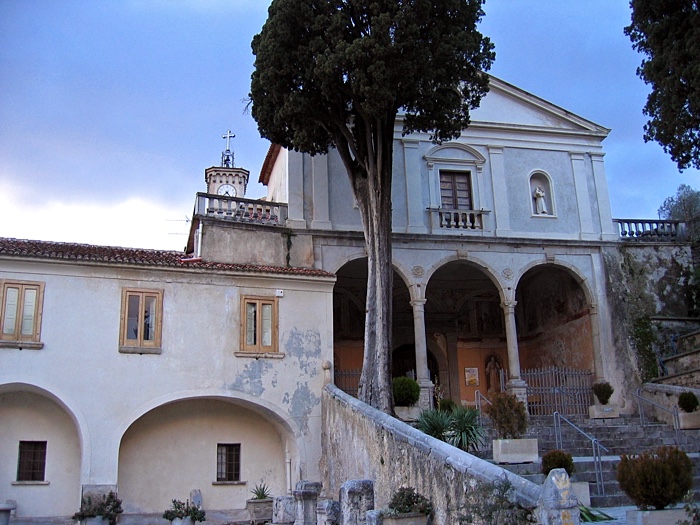
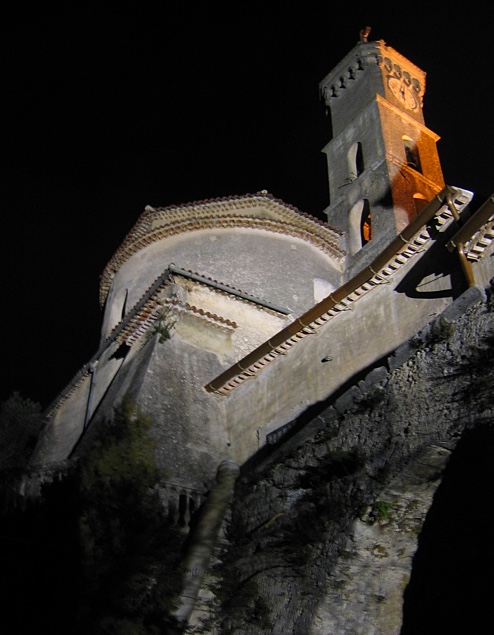
A short drive and up a bit in elevation from the river was the Convento San Antonio. The origins of the convent predate the modern building which was first erected by the Franciscans in 1541.
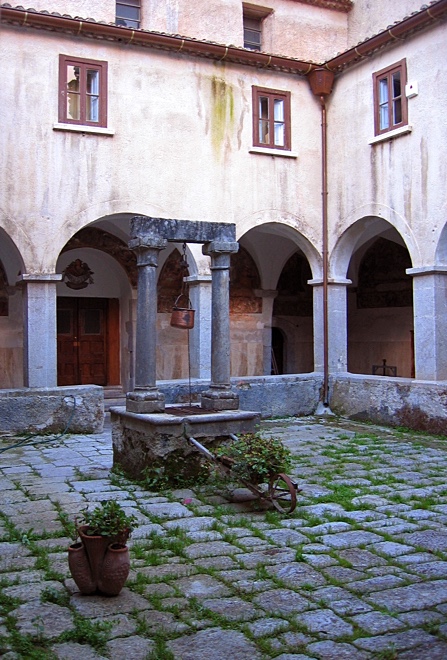
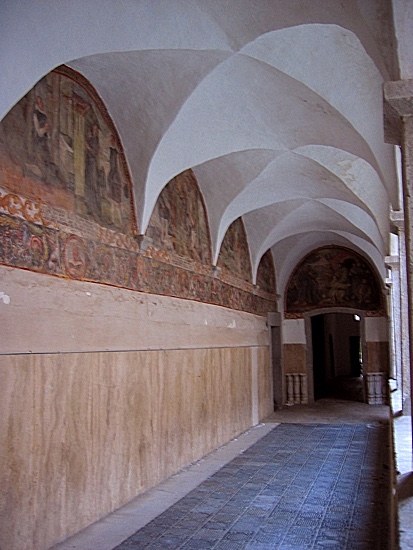
Surrounding the cloister were many well-preserved frescos.
Out the back door of the convent a path continued away from the building to a small garden.
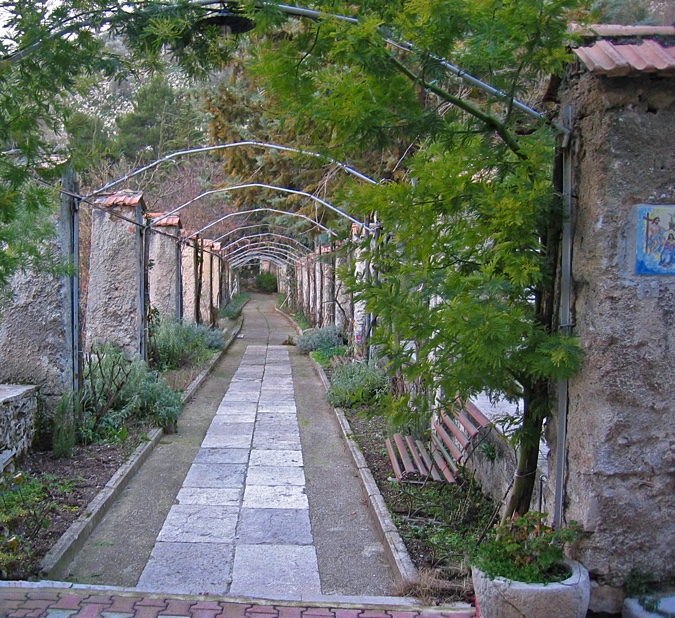
At the garden you made a right turn and went through a gate and on to the remains of a path that hugged the side of the mountain. To one side of the path the ground went straight up, and to the other side the ground went straight down.
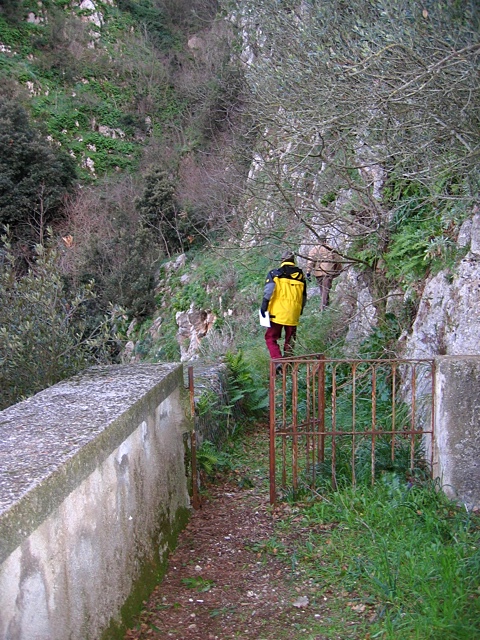
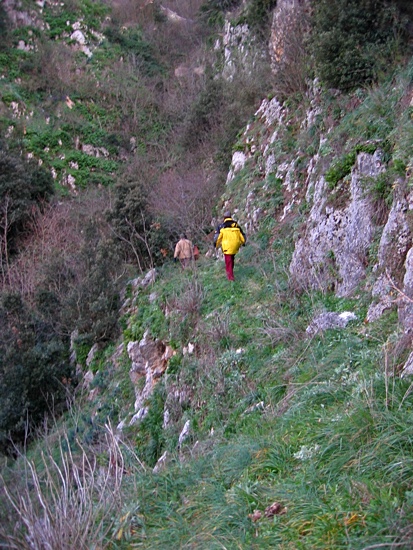
It was not a very great distance to the floor of the valley on the straight down side, but it was high enough to have caused a really nasty headache when you woke up dead after falling off the edge. There were a couple of places along the path where falling could have been easily arranged.
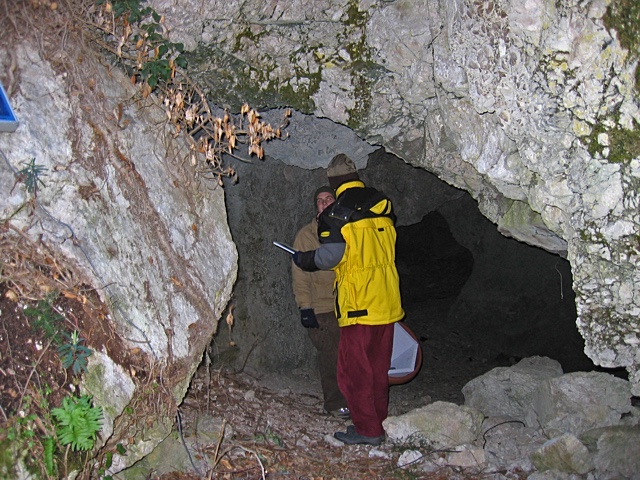
Not at the end of the path -- it continued on -- we arrived at the entrance to a rather large cave.
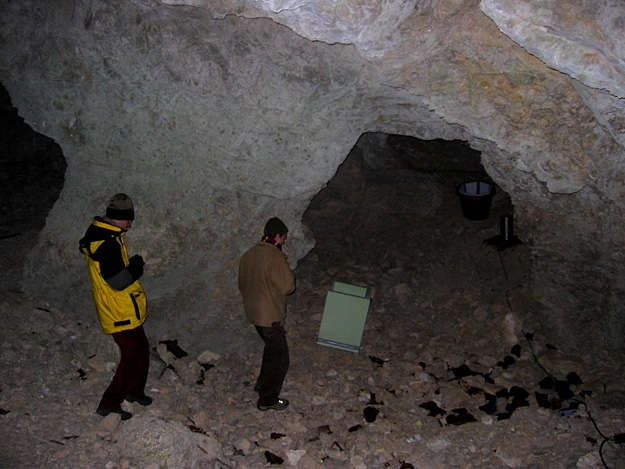
The main chamber at the entrance of the cave was about 15-20 meters in diameter. Several tunnels took off from there. A couple of them went back into the mountain farther than we had time to explore. Even though they look like dead bats laying on the floor of the cave in the picture below they were actually just old rusted cans. We did not come to the site just to collect the data that had been recorded thus far, but to also enlarge the chiseled out flat spot that the sensor was sitting on and to replace the insulating foam box with a more sturdy insulated flowerpot. It all took a while.
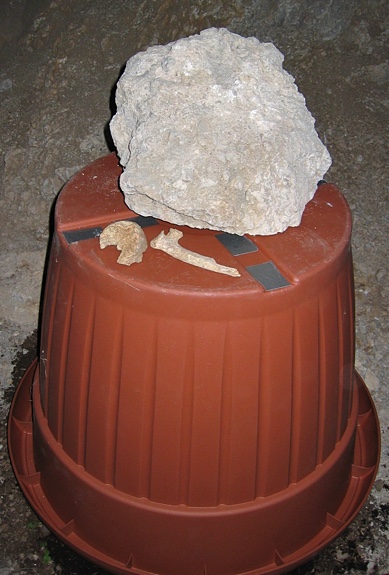
The cave was just creepy enough to make digging up the skull and leg bone of some small animal an appropriate find. I placed them on top of the sensor flowerpot before we left to help ward off evil spirits in case there were any.
By the time we finished for the day it was, as was usually the case, dark.
2018-03-03