


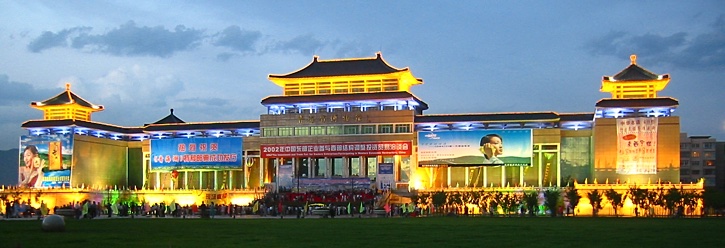
After a few days in Beijing our whole operation moved west to the city of Xining, the capital of Qinghai province. Above is a picture of the provincial museum that stood at the north end of Xining Square where every evening several thousand people gathered to dance, sing, fly kites, and practice English. It was a very nice place to go for a walk after dinner.
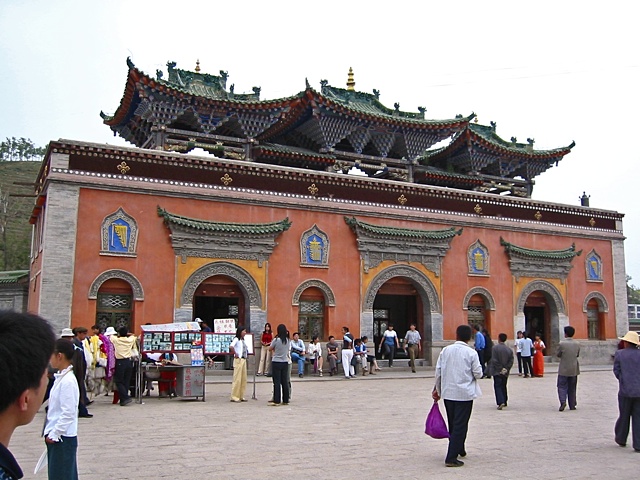
In the mountains southwest of Xining , in the town of Amdo, was the Kumbum (or Ta'er) Monastery. The monastery is one of the six great centers of the Yellow Hat Sect (Gelugpa Sect) of Tibetan Buddhism. The monastery was founded in 1560 with the first buildings being constructed in 1411. Above is a picture of the gift shop. I think it was build in the 1970's. I bet you thought it was old, huh?
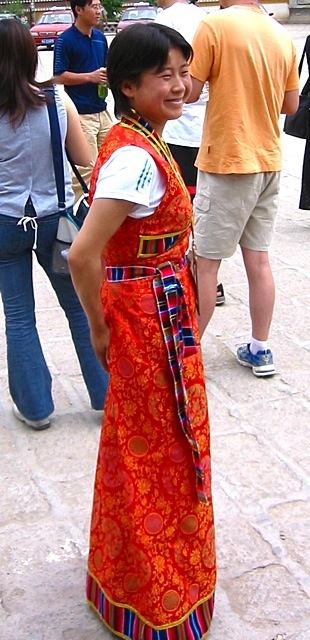
Above is a picture of one of the tour guides. Many people in the this part
of the country really were dressed in very colorful clothing like the girl
above -- just like in the movies.

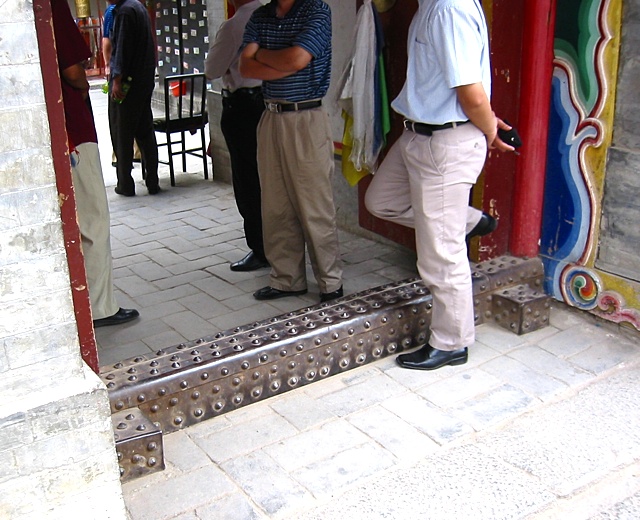
It was a sign of disrespect to step on the threshold at the entrance to buildings. If you forgot and stood with one of your feet on it while listening to the tour guide one of the monks walking about would come over and remind you.
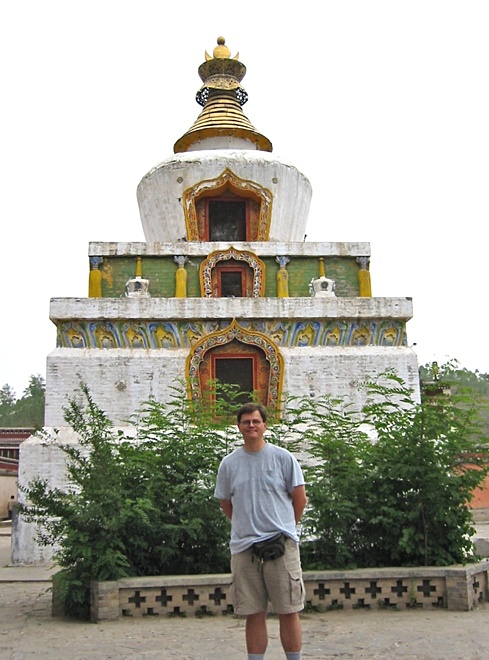
Above is a picture of the Peace Pagoda that was built in 1942. I guess it didn't work very well.
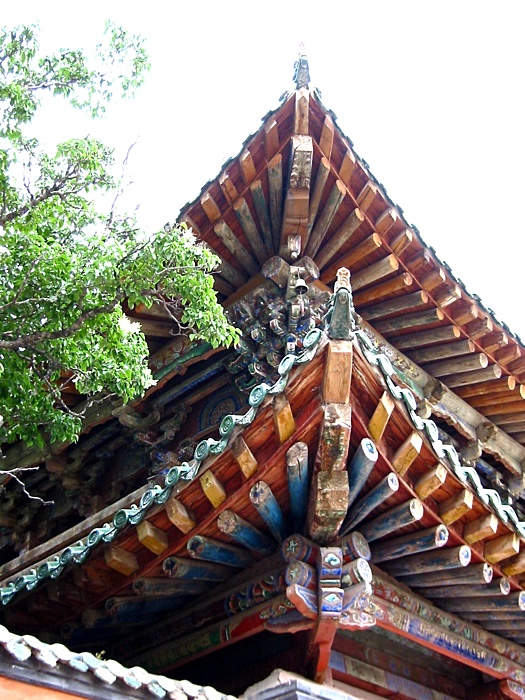
The classic curved roof ends on buildings in China is what is known as the Han (dynasty) style of building. The number of parts involved in building these types of roofs is somewhat unbelievable. Whew!
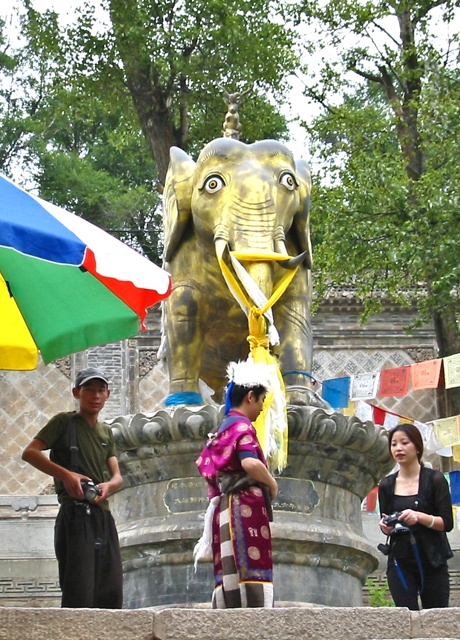
The golden elephant above was donated by a wealthy businessman as repayment for a prayer for prosperity he made while visiting the monastery.
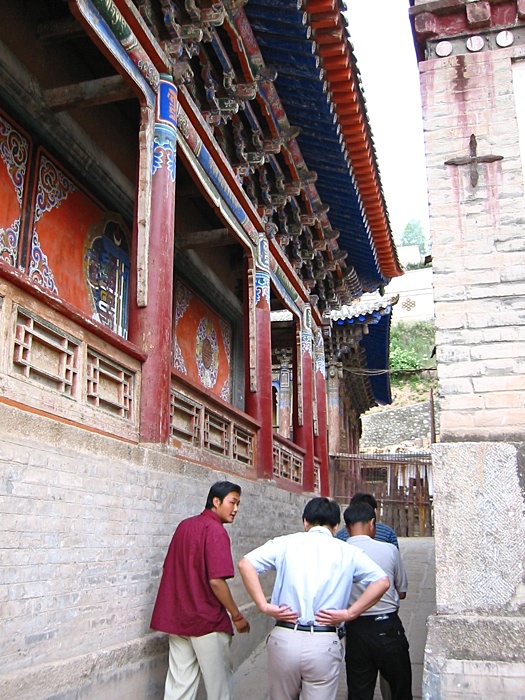
There were over 100 buildings at the monastery covering over 240 hectares (about 600 acres).
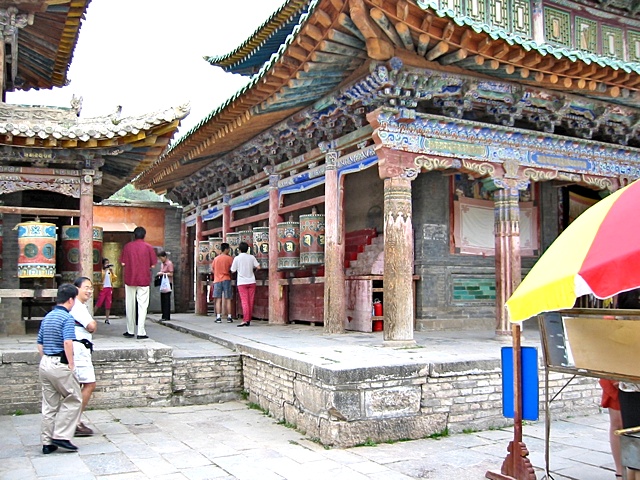
Not surprisingly there were many prayer wheels. A prayer is inscribed on a prayer wheel. The idea is that when the wheel is spun it is the same as reciting the prayer.
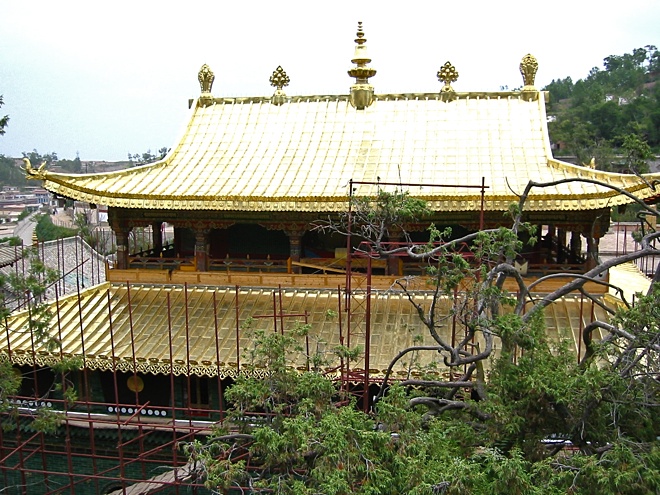
One of the temples which was being restored had a roof containing 320 kilograms of gold.
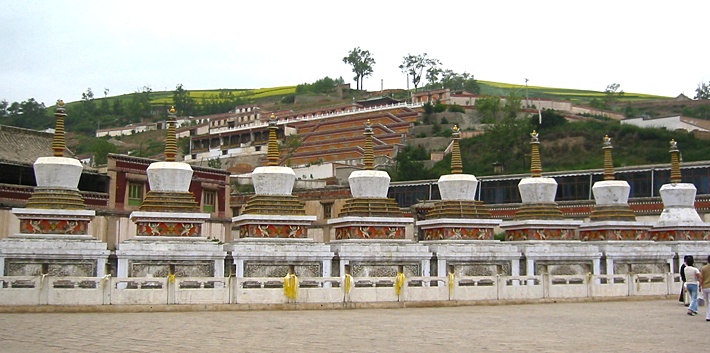
The Eight Stupas near the entrance to the monastery represented the eight stages of Buddha's life, from birth, through his creation of Buddhism, to his death.
2018-03-05