


Whatever gets laid out -- and doesn't get stolen or eaten -- has to be picked back up.
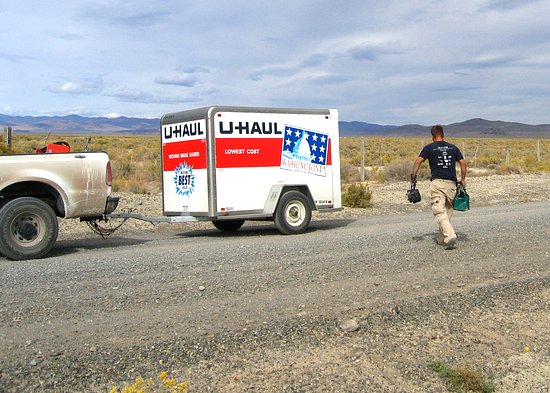
Since the systems were only out for a couple of days we were able to just put the stations in heavy plastic bags and bury them. The dirt was so dry and powdery that most of the time you were able to just grab the plastic sticking out of the ground and pull the whole bag out to recover everything.
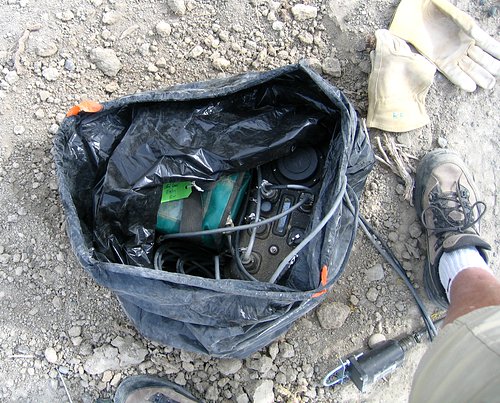
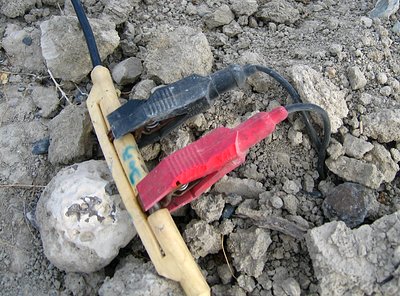
It's kind of hard to see in this picture, but in the couple of days the instruments were out someone seemed to take a liking to the taste of the of the red sensor clips. Just the red ones. I figured it was a small mouse of some kind. They didn't eat very much.
Below is Matt Cobel of USGS on the left and Aaron Hirsch from University Of Nevada at Las Vegas (UNLV) rolling up the cables. Aaron and a couple of others from UNLV were volunteered to help with this project. That seems to happen to them a lot.
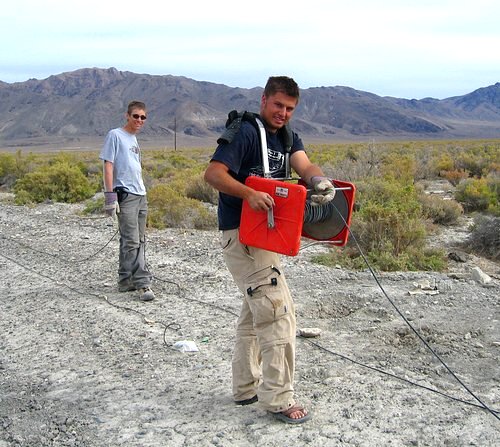
Dr. Mingjun Liu of USGS was helping on the left. 1000 feet of cable times 24 required a lot of handle cranking. The cable was piled up by a second person to make the cranking easier.
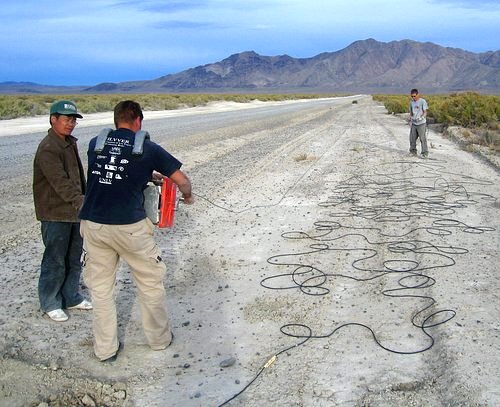
Picking up the stations went pretty quickly.
2018-02-08