


Taking up a full shelf in the PASSCAL warehouse were a bunch of boxes that we shipped that I had never seen moved or even opened. They turned out to be some older equipment that was used to allow one recorder to cover a lot of distance, which we had plenty of in northern Nevada.
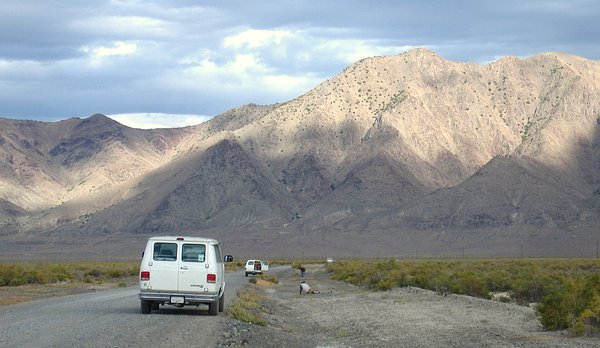
In the boxes were reels of cable that stretched about 1000 feet. The cable was laid out by simply walking. Below is Ewenet walking the walk
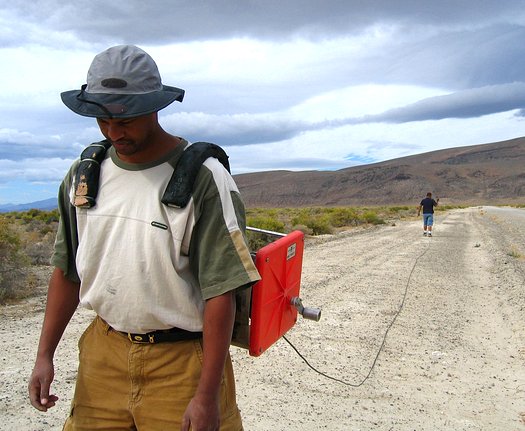
Each cable had three sets of equally spaced "takeouts" along their length where "things" could be connected.
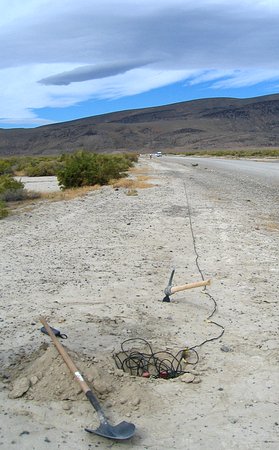
The things that we connected were strings of six 4.5Hz geophones that ended in alligator clips that were made just for connecting to the takeouts.
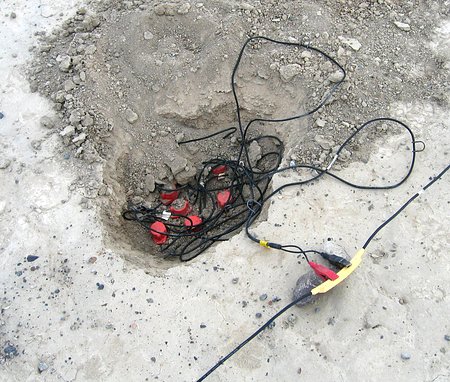
The far end of the cable connected to our standard Ref Tek model 130 three-channel recorders. Each takeout of the cable was connected to one of the three recorder channels. This system made it possible for one recorder to cover a thousand feet of a deployment line. Clever.
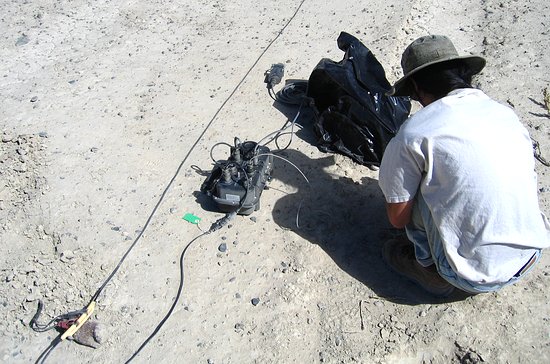
I thought I'd get a little exercise. I, and everybody else that was there that day, ended up working the whole 4.5 miles -- and then some -- that the 24 cables covered laying out cables, installing geophones, starting recorders, taking GPS readings, and doing anything else that came up. It's what we do.
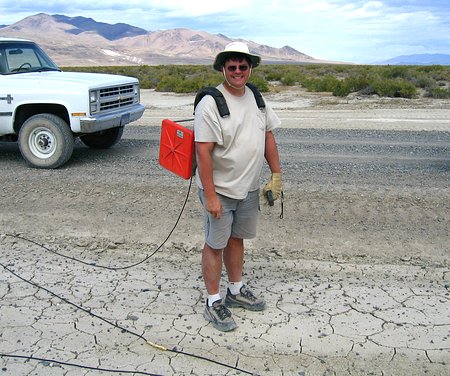
Walking, a lot, and getting the cables where they belonged was only part of the fun. Four holes had to be dug for each cable. One for each group of sensors, and one for the recorder and its batteries. When that was finished the sensors had to be untangled from themselves then pushed into the dirt and leveled. Once that was done the two people installing the sensors would coordinate through hand signals with the person getting the recorder running. Once it was verified that the geophones were functioning they were covered up, the recorder was started and buried, and everyone moved down a thousand feet to repeat the process. The ground was just hard enough to make a pick axe necessary for digging. That merely added to the excitement.
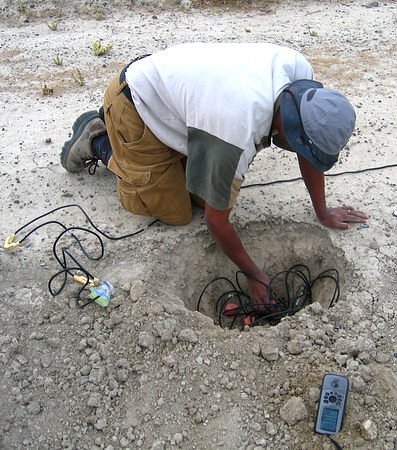
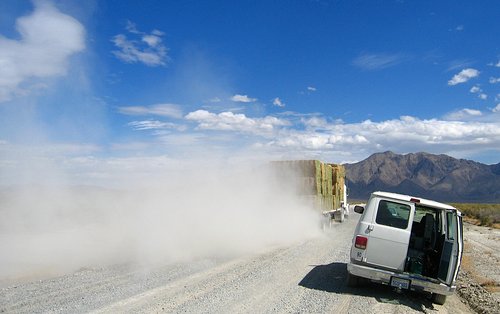
The instruments were deployed right next to the road. The hot, dusty road. Luckily the wind kept most of the dust off of us. At least it wasn't raining.
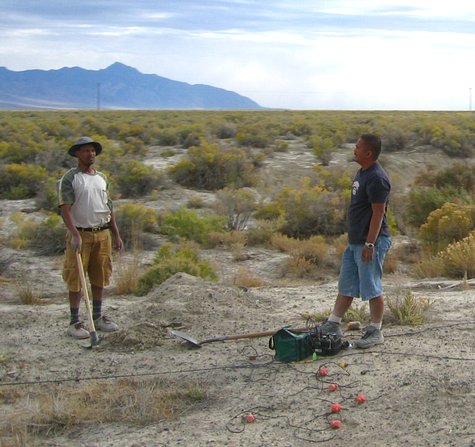
Below Ewenet and Mario were taking a break while digging the larger hole for the recorder and its battery. The distance between everything -- the sensors and the recorders -- was such that it was a long way to walk, but a pain in the neck to get yourself and all of the tools into the truck, drive a few seconds, get out of the truck, get back in the truck, etc. Between the truck and the four of us we had a bit of a system where someone would run up the line with the truck laying out equipment while the rest of us would distribute the equipment where it belonged, dig holes, and get things set up and connected.
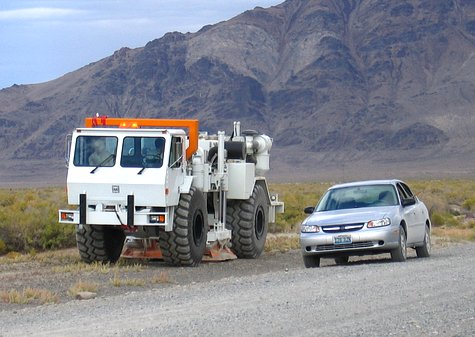
In addition to the large explosions the other source of seismic noise for this experiment was not my rental car on the right, but the vehicle on the left. Trucked all of the way from Texas its purpose in life was to shake the ground at any speed from very low frequencies to hundreds of cycles per second.
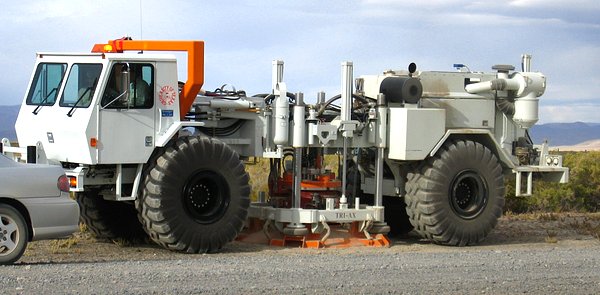
The truck was all hydraulically operated. The orange "foot" on the ground was the part that did the shaking.
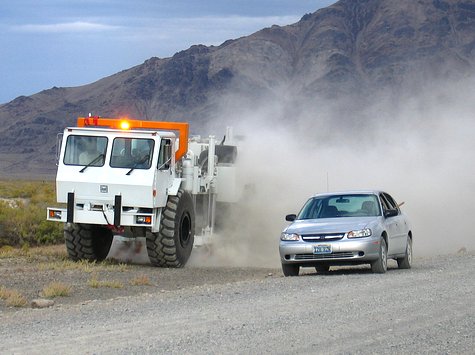
When it was operating it kicked up quite a cloud. The frequency"sweeps" started out at a very low frequency that shook you and all of the plants in the area and that slowly climbed in frequency. A sweep lasted about 20 seconds. When everything at one location was finished the orange foot was lifted and the truck moved about 500 feet down the deployment line to repeat the process. I hope Hertz doesn't notice my rental car there.
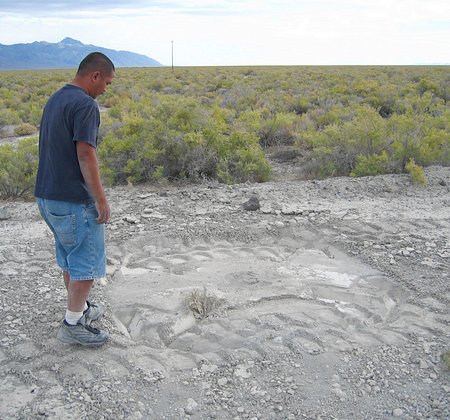
The foot left quite an impression.
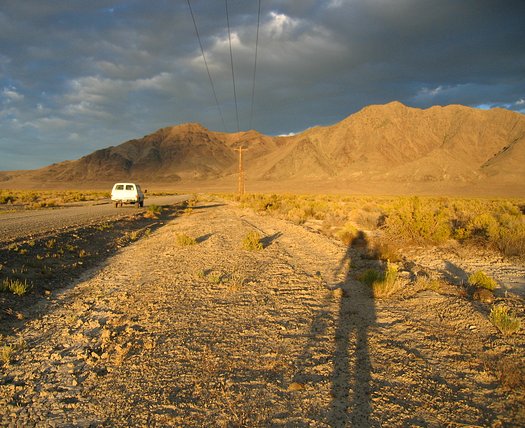
It took from morning until night to get all of the cabled systems deployed, but we managed to finish up just as the sun went down. Below I'm walking out the last cable. This was a long day.
2018-02-08