


The flight down from Honolulu took about five and a half hours. When we arrived it was dark and raining. Friends of Matt's picked us up and hauled us just down the road from the airport to the Pago Airport Inn. Wesley and Ruth kept the place running. It's a pretty good place to catch your breath after your flight down, and a good place to get ready for your flight out, except you have to check out about six or seven hours early.
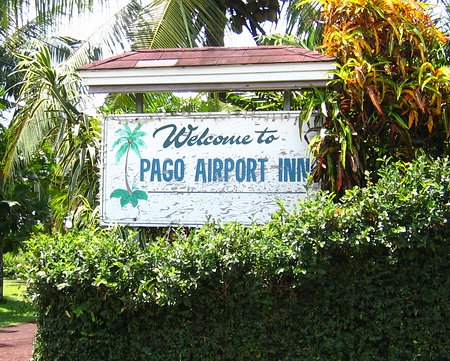
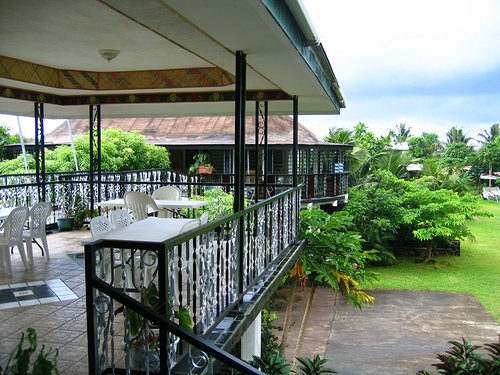
The inn had an attached restaurant for a good breakfast before heading out for the day.
Tutuila is the largest island in American Samoa. It had things like the international airport, small shopping malls, the vast majority of the territory's population, beaches, mountains and traffic jams. You couldn't ask for much more than that.
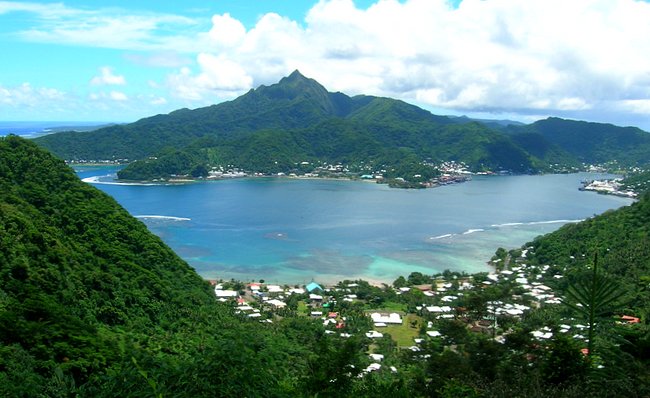
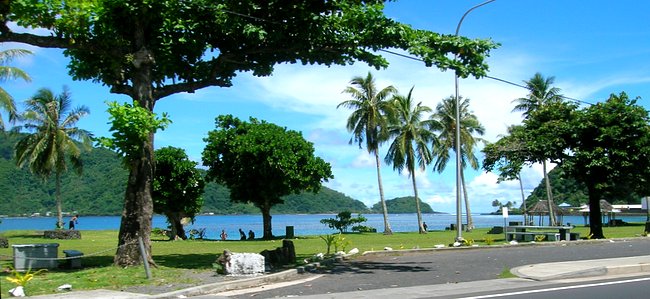
Below is a picture of Pago Pago Harbor. Matafao Peak, the highest point on Tutuila at 2142 feet,is in the background. The village of Aua is in the foreground. Across the harbor, left to right, is the town of Faga'alu in the outer part of the harbor, Tulutulu Point where there is a bit of a building blank spot sticking out into the harbor, the towns of Puna'oa Valley then Utulei straight across the harbor, Goat Island Point, Fagatogo, a bit of a blank spot then Pago Pago at the back of the harbor. Coming this way from Pago Pago are the two famous tuna canneries in the towns of Anua and Atu'u. There was no bridge or anything across the harbor, so to get from one side to the other you had to drive all of the way to the back of the bay and then all of the way back out.
The whole area was referred to as "Pago Pago", even though the town of Pago Pago was just the little part in the back of the harbor. If you really wanted to sound like a local you just referred to it as Pago. Pago, by the way, was pronounced something like pongo. All g's in Samoan have an ng-sound. Using this will definitely make you sound less like a tourist when speaking.
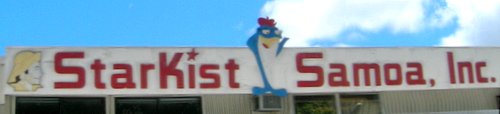
Up to one-third of the U.S. consumption of canned tuna came from the two canneries in Pago Pago. One cannery was owned by Star-Kist, and the other by Chicken Of The Sea. They were famous for their controversy. The workers doing the dirty work were paid less than U.S. federal minimum wage. Most of them came from independent Samoa and Tonga for the usual reason -- less than U.S. federal minimum wage was still much more than they could make at home. The canneries also got special breaks on duties. They didn't have to pay any duty on the tuna "imported" to the U.S. (it's a territory -- why would they have to pay any duty anyway?? Silly politicians.)
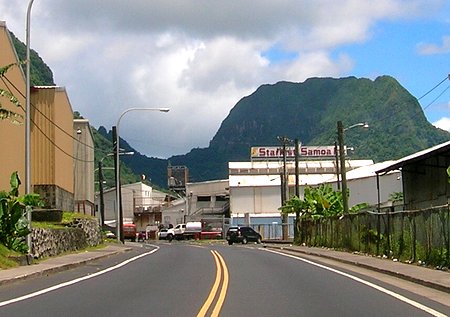
Below is Rainmaker Mountain and the beginning of cannery row.
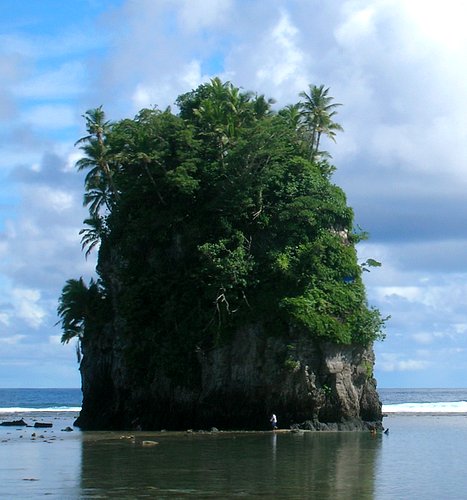
Fatu Rock (Flowerpot Rock) was near the west shore of the entrance to the harbor. There was, of course, a Romeo and Juliet-like legend of adult-prevented love that went along with this location.
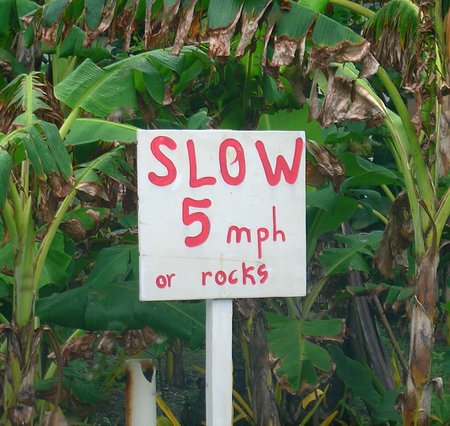
The folks in the islands seemed to take a more direct approach to traffic regulation than I'd ever seen before. Good on 'em. I never saw anyone speeding in this area. The people in both American Samoa and Samoa seemed to be pretty good drivers. Usually everything moved along at a nice, steady, and sane pace. Another thing I noticed was how often they used their turn signals. Almost all of the time. Drivers where I lived in New Mexico had yet to reach this level of Motor Vehicle IQ.
November was the start of the beginning of the rainy season. We had to pause every so often during the weeks we were there for a shower, which at times looked much more like a deluge, which were probably nothing compared to rains that came down once the rainy season really got going. There were only a couple of days when we really couldn't get much done as weather systems would pass through the islands. Not that it was cool even when it was raining or anything, but when it wasn't raining it was really HOT and HUMID. You usually started sweating about five minutes before you started drying off after a shower.
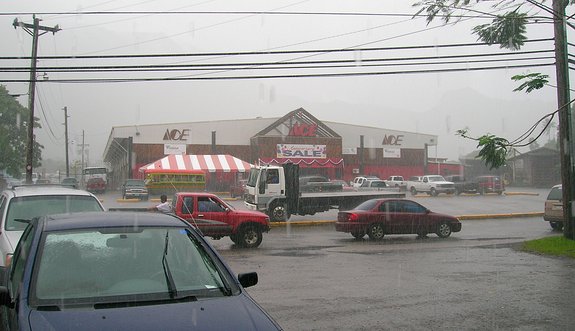
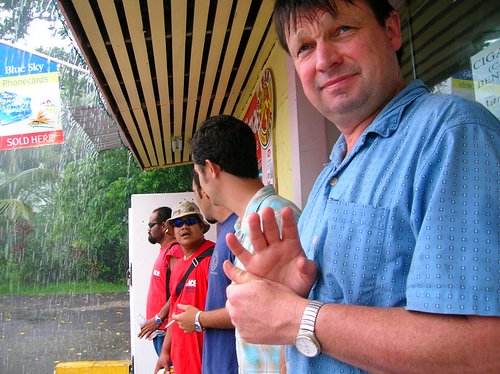
If we'd have ran to the car we would have gotten pretty wet, so we just hung around outside this store for a while one day. The rain slowed down, but we still got wet when we made a break for it..
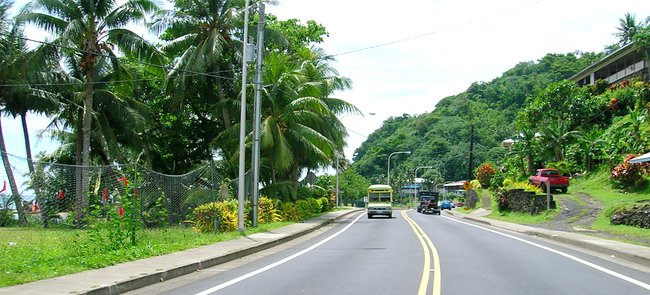
Below was part of the main/only highway on Tutuila in the town of Faga'alu on the west side of Pago Pago Harbor. Most of the island was like this. A narrow strip of flat land with enough space for some beach, some road, some houses, and some steep hillsides. The southwestern part of the island was the only area that had any large flat bits. This main road ran about 3/4 of the way around the island. The towns along the north shore of the island that this road could not get to were accessible by going over the mountains or by boat.
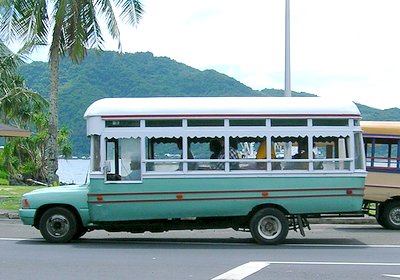
There were a lot of small buses on Tutuila and throughout American Samoa and Samoa. Some had music blasting out of them as they went by and some didn't. What none of them had, that I could see, were places to put your stuff while you were riding. There were no racks on the top, sides, or on the back, so they were nothing like, for example, jeepneys, in the Philippines. Some did seem to have a kind of a trunk (or boot) in the back that was accessed from the outside where items could be placed, but that was all I saw. All of that perfectly good surface area gone to waste.
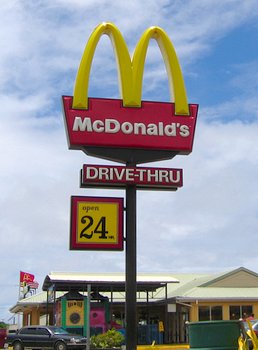
Of course there was a McDonald's -- it was America.
The Pago Pago Yacht Club in Utulei was a nice place to go for a beer if you felt the need to listen to loud white people blah blahing. The park and beach next to the club filled up with happy Samoans on the weekends.

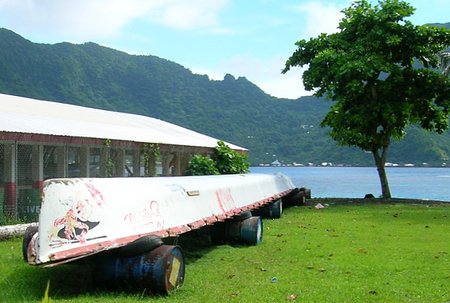
Scattered around the harbor, usually in sheds, were traditional long boats, war canoes, or fautasi, like the one below. They are raced on April 17 from outside the harbor back to Pago Pago. The ones I saw seemed to have different organizations and corporate sponsors, but they also represent different villages. McDonald's had at least one boat. This one was next to the Pago Pago Yacht Club. If it is really made of wood they should get it in out of the sun.
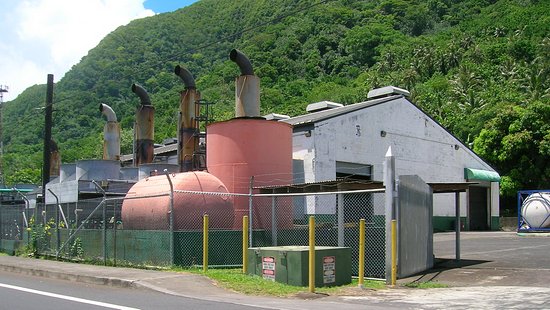
All of the power for the island came from the diesel generators in Satala on the northwest coast of the harbor.
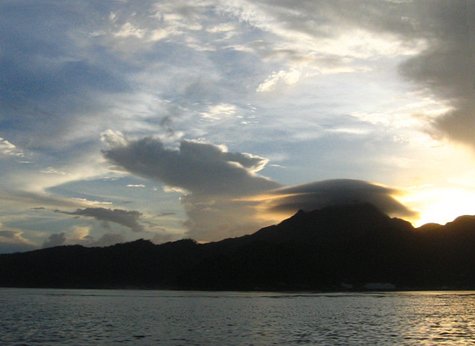
Some venticular clouds over Matafao Peak one sunset.
2018-02-08