


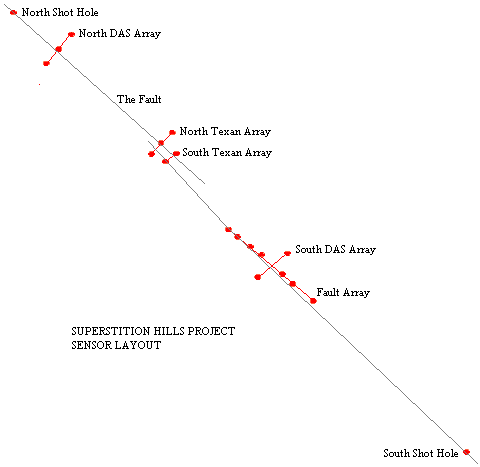
This experiment was both an active source, and passive experiment. Above is
a graphic of the sensor layout for this experiment. For the active portion,
two shot holes were drilled, and explosives were set off. All of the sensors
listed above were programmed to record the shock waves for those two shots.
One shot was at 0630, and the second one was at 0730. Following that the recording
systems in the South DAS Array, and the Fault Array were reprogrammed and
left in place for several weeks to record any tremors during that time. This
map is to scale (the points were plotted from GPS measurements), and the distance
between the North Shot Hole and the South Shot Hole was about 8 kilometers.
The north and south DAS arrays were both lines of 21 DASs, the two Texan arrays
were about 175 sensors total, and the Fault Array was 7 DASs. The two Texan
arrays were placed in an area where the fault was split into two lines which
ran parallel to each other.
The main point of this experiment was to get an idea of the cross-sectional
structure of the fault by placing sensors perpendicular to it, then setting
off two explosions on the fault. The shock waves from the explosions travel
through the ground at different speeds at varying distances on either side
of the fault. Theoretically, the closer to the fault the slower the shock
waves travel, mostly because the ground closer to the fault has been "loosened"
by the earthquake that created the fault. By measuring the times that the
shock waves arrive at each sensor in an array (the time differences are actually
only milliseconds) one can get an idea of the ground's structure.
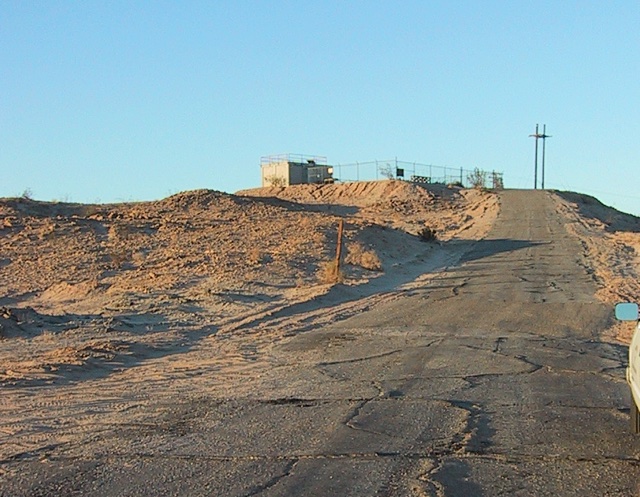
The photograph below shows a patch in the road to the left of the truck's
side-view mirror. This was an area of damage that was caused by the fault's
formation during the original earthquake.
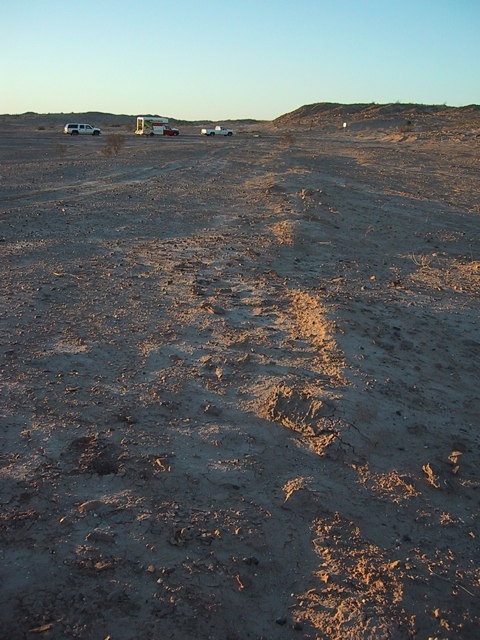
Below is a photograph of the fault heading towards the road in the photograph above.
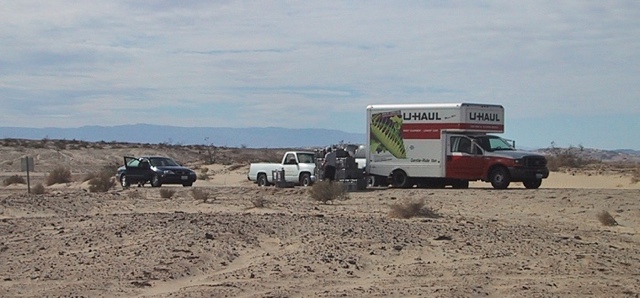
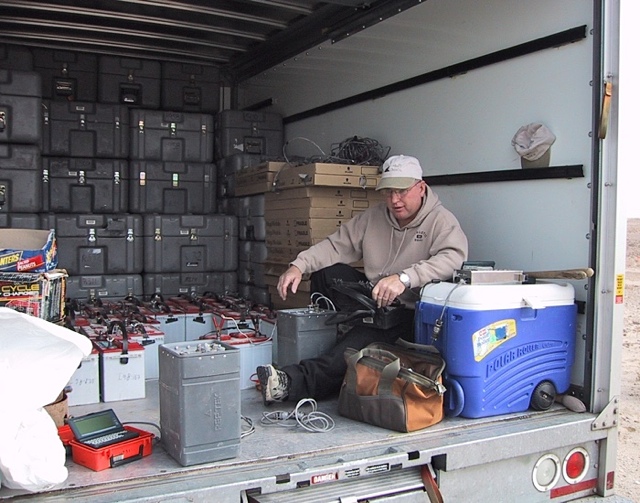
Pete in our mobile office.
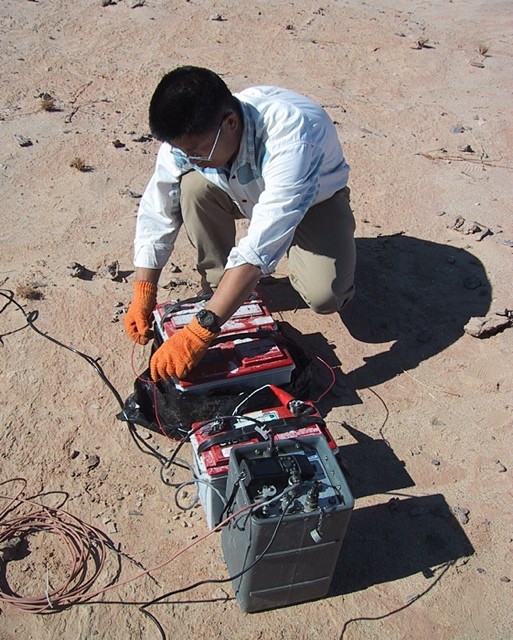
The sensors that were only going to be recording data during the explosions were only powered with batteries.
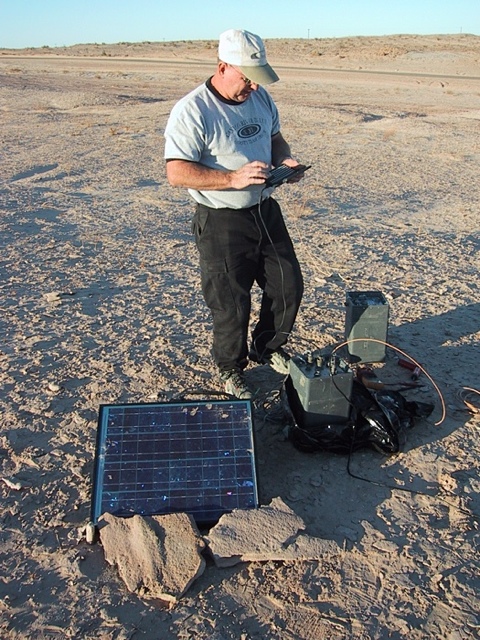
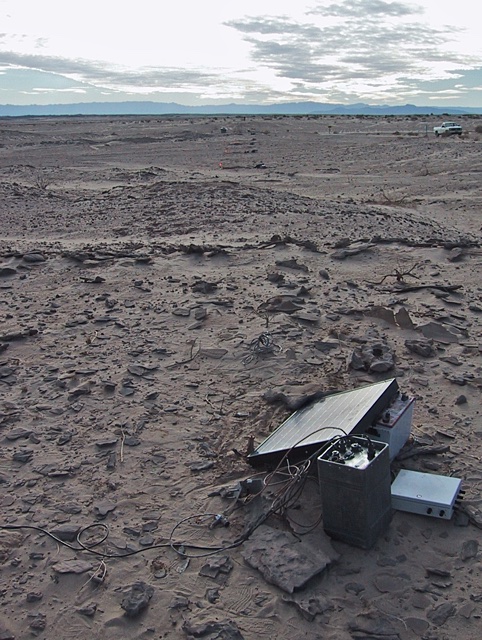
Most of the sensors that would remain in place for the few weeks after the active source portion of the experiment were powered with batteries and solar panels.
It took all of one day to get the 21 DASs of the South DAS Array set up. Once that was finished there was just enough daylight left to move the vehicles and start making measurements for placement of the North DAS Array.
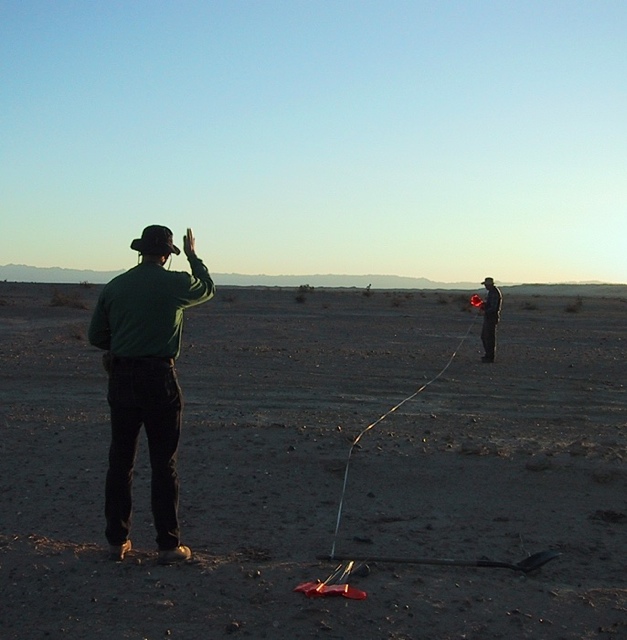
Sometimes the life of a DAS is a lonely one. It looks like it is on Mars.
2018-03-06