


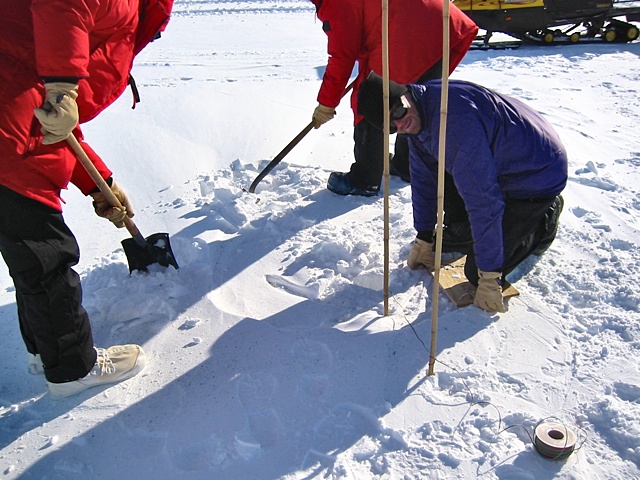
In order to get all of the energy from the explosion to stay in the ground, instead of shooting out the top of the hole, you had to plug the hole back up once the explosives were lowered to the bottom. The usual method was to fill the hole back up with snow. If it was a shallow hole then it didn't take much, but if the hole was 60 meters deep (the target depth for some portions of this experiment) it took a lot of snow and time!
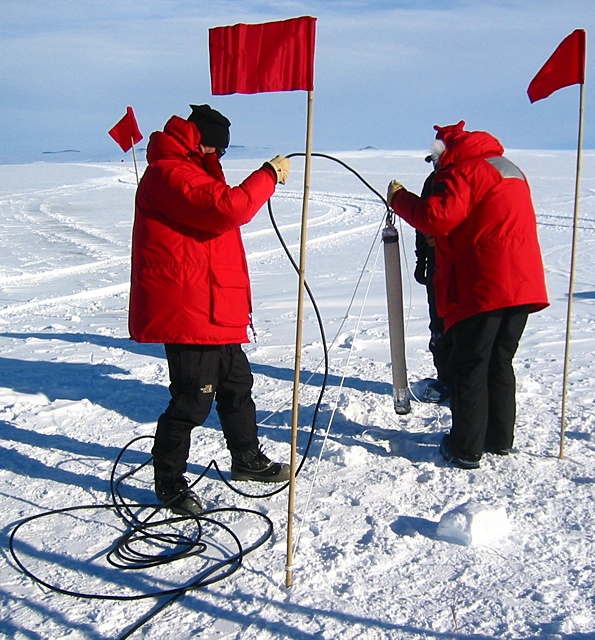
To prevent having to do all of that, and to even make it possible to reuse
the hole for more than one shot (once it's full of snow it's no longer a hole,
is it?), Don Voigt of Penn State invented the "Voigtwurst" sausage.
It was a length of large rubber hose that was placed down into the shot hole
and then pressurized with air which caused it to swell up and block off the
hole. The technical details of the Voigtwurst are being kept secret until
Don has filled out his patent paperwork.
 Actually, commercial oil companies and the like have items like this, but
they can afford to make them disposable. The Voigtwurst was designed to be
reusable with metal bits on the ends to keep the fire from getting to the
rubber.
Actually, commercial oil companies and the like have items like this, but
they can afford to make them disposable. The Voigtwurst was designed to be
reusable with metal bits on the ends to keep the fire from getting to the
rubber.
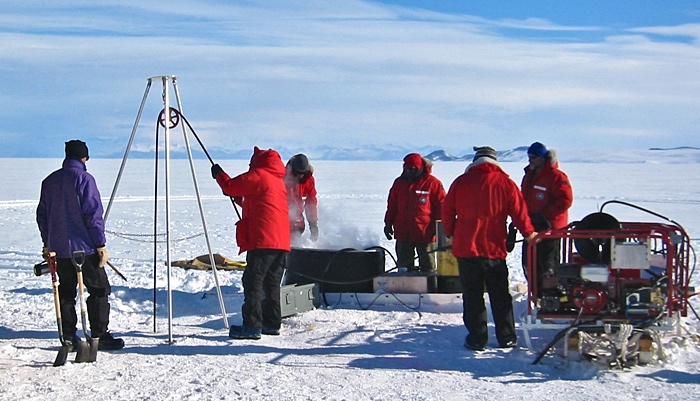
Two other items were built specifically for this experiment. Above is the hot water drill. Most of Antarctica is covered with ice thousands of meters thick, so if you need to drill a hole you can just use hot water to do it. Snow was shoveled into the black tank in the middle of the picture where the steam is rising. An initial quantity of water was heated by the unit on the right and pumped around and back into the tank to melt more snow. Adding snow to the tank and melting it continued until there was a tank full of hot water. The hot water from the tank was then redirected through the hose on the left and to a long metal spout which sprayed the hot water out of its tip. This was slowly lowered down into the ice to drill the hole.
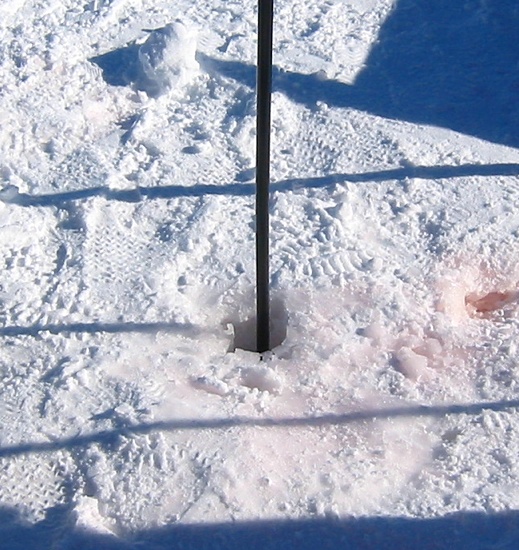
The hose was about 30 meters long, and the drill tube was about six centimeters in diameter. The depth of the holes we needed were about 20 meters. The holes usually expanded to about ten centimeters in diameter just from the heat coming off of the drill tube and hose as they went down.
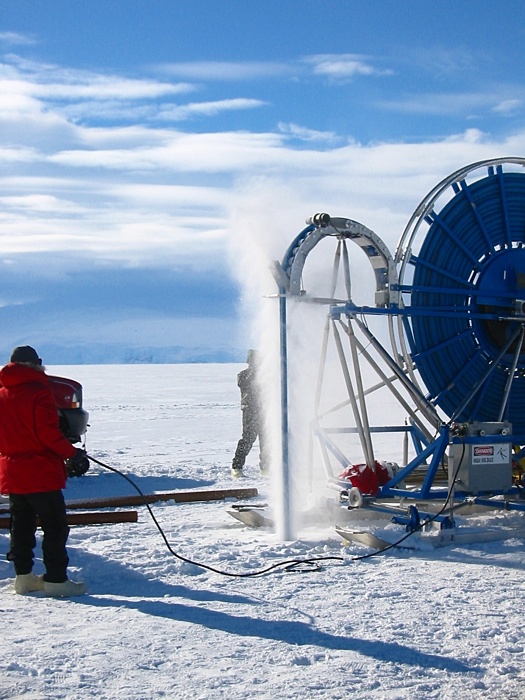
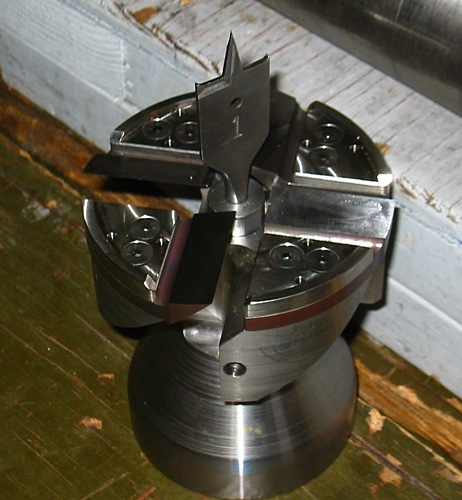
The other drill that was invented for the project was the air drill. It used a large air compressor to pump air through the coil of tubing on the right in the picture above (the Ferris wheel). On the end of the tube was a 2 meter long 'dentist's drill'. The tip of the drill spun at a high rate of speed and dug through the ice as the air used to spin the tip of the drill blew the chipped ice back up and out of the hole. The drill was designed to drill to a depth of 70-80 meters. Both drills were built by Ice Core and Drilling Services (ICDS), which again is a National Science Foundation (NSF) funded group like UNAVCO and PASSCAL. Your tax dollars hard at work...if you live in the U.S....and aren't rich and have to pay taxes.
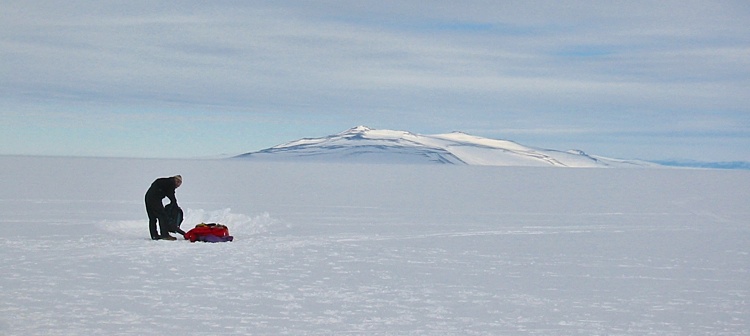
We came, we drilled, we exploded, we collected data, and we left. In the afternoon of the second day we packed everything back up and headed back to McMurdo. That's White Island in the distance above.
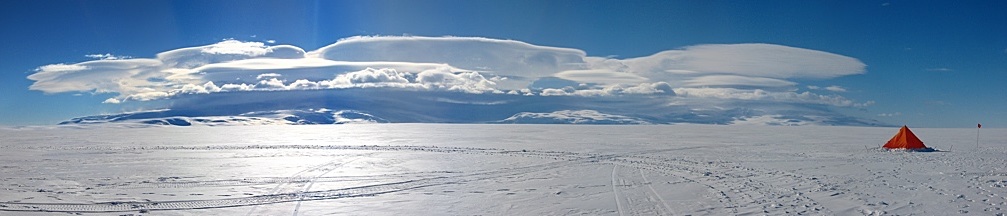
Mt. Erebus enshrouded by clouds. It's a pretty picture if you don't think about the small orange tent being our poop tent. Maybe I shouldn't have mentioned that?
2018-03-05