



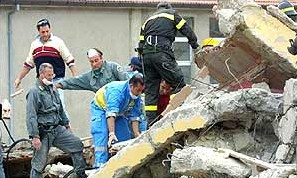
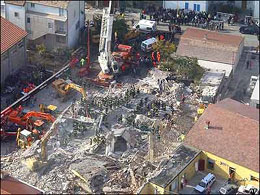
On October 31, 2002 there was a not particularly large magnitude 5.4 earthquake in the southern portion of the Molise region near the city of Campobasso. While there was not a lot of damage from the quake one village of 2000 people, San Giuliano di Púglia about 30 kilometers northeast of Campobasso, was dealt a particularly vicious blow. The village was 10 kilometers southeast of the epicenter. Most of the buildings in the village sustained some damage, but all of them remained standing, except for one. The village had an elementary school building that was built in the 1950's. At that time in its history it is possible that the village of Giuliano di Púglia was not deemed to be in an earthquake hazard zone. It is also possible that the building was built using inferior materials and sub-standard building practices. Either way the building collapsed during the earthquake and came down on top of classrooms full of children and teachers celebrating Halloween.
AP photo.
You can see that the buildings all around the school were left standing. Many children and teachers died, but still many were rescued from the rubble.
AP photo.
On December 29, 2003 there was a small earthquake in the same area as the one in October 2002 which had some of the people in San Giuliano di Púglia planning on sleeping in the streets out of fear that there would be a larger one and a repeat of the events of 2002. When there is a large enough earthquake one of the important things to try and do to aid in understanding the mechanics of it is to place instruments in the area as quickly as possible to record the aftershocks. Around noon on the 30th we got a request from INGV in Roma to install a station in the town of San Marco La Catola as soon as we could. We called our driver Salvatore, who was (also) planning on taking the day off, and by three o'clock in the afternoon we were on the road.
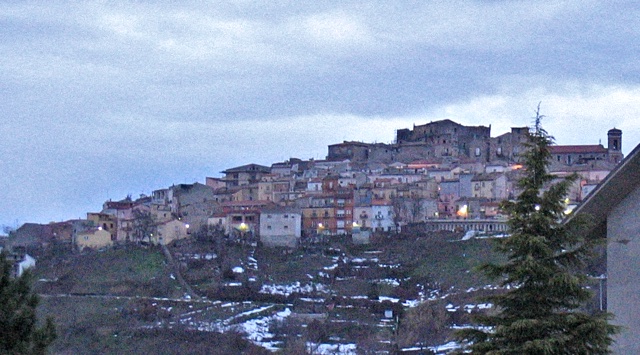
San Marco La Catola. It was getting dark by the time we got there, so the picture is not great.
On the road leading out of town to the east is the Convento Frati Cappuccini. It was built on the ruins of an ancient chapel in 1585 when the then lord of the town, Marquis Giambattista Pignatelli, asked a community of Capuchin friars to establish a base in the town. The building is not on fire. That is just over exposed Christmas lights.
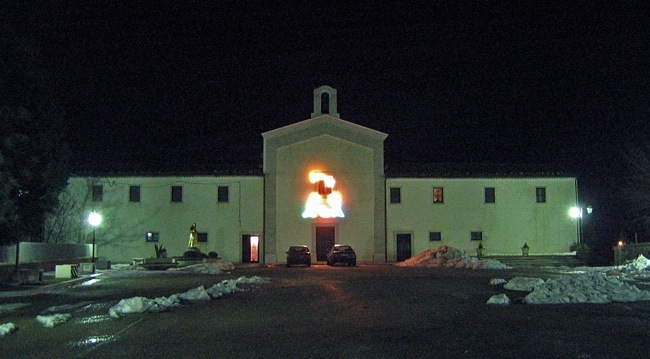
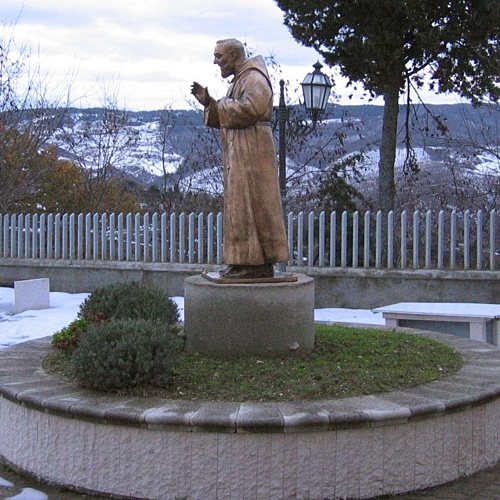
I think this is a statue of Padre Pio in the picture below who visited the the convent several times during the early part of the 1900's. You see Padre Pio pictures and statues everywhere in the parts of Italy where we were. Padre Pio was a Capuchin priest from San Giovanni Rotondo, Italy, who apparently bore the stigmata, or the wounds of the Christ for fifty years! He was very popular, and not just because of the stigmata. There are Padre Pio foundations all over the world. He died in 1968.
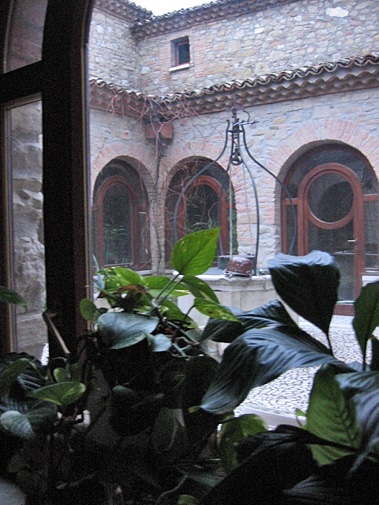
The convent was very nice inside.
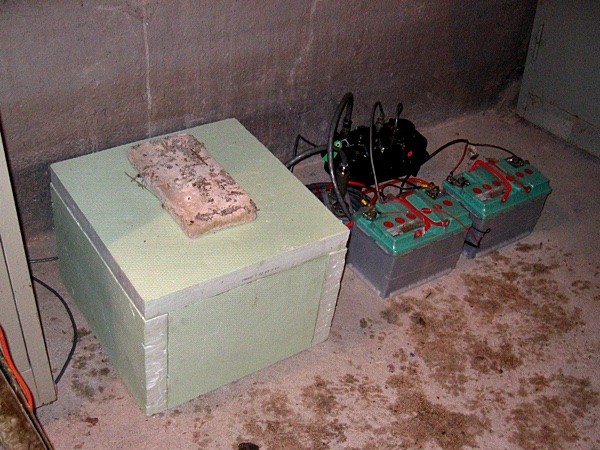
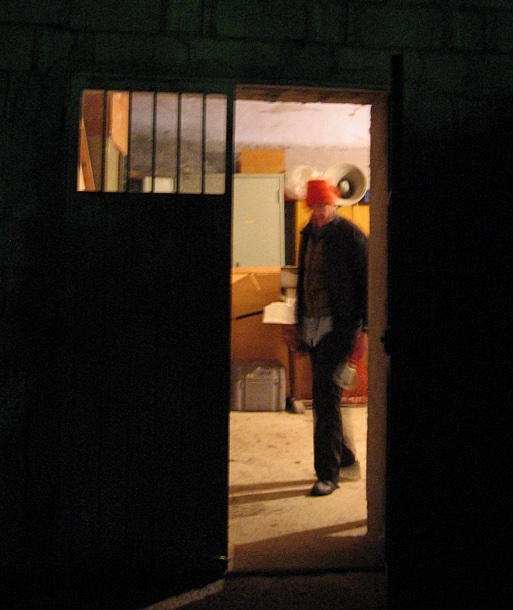
The station was placed in a storage building inside the convent grounds. It was placed on the floor of the building in the same location as a station that was there to record aftershocks following the Compobasso earthquake in 2002. There was an electrical outlet in the building, but we did not have any battery chargers left to power the site with. We also felt that installing a solar panel on the convent grounds would be a bit tacky. We left the site powered with two batteries which would easily keep it running for two or more weeks. Before then we would be able to return and install a battery charger or exchange the batteries.
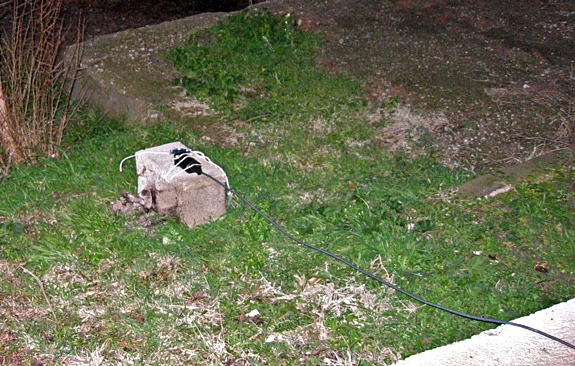
The GPS antenna was tied to a brick and placed on the ground outside near a small garden. For some reason we didn't think that was tacky. Hmmm.
By the time we finished installing the station, which was done in a record time of about 45 minutes, it was dark outside. We told the padre before we started that it would only take about one hour to install the station and I, for one, did not want to get hit by lightning for telling a lie...to a padre...and in a convent. The drive back to Grottaminarda took a little under two hours.
2018-03-05