


No visit to southern Italy would be complete, from a geophysical point-of-view anyway, without visiting the town of Pompeii and its arch nemesis the volcano Mount Vesuvius. We took a Saturday off, jumped into Salvatore's car and headed off for a day in the Nápoli area.
Of course you know the story of Pompeii. It was an ancient city of 20,000 that suffered major damage from an earthquake in 62 A.D. Rebuilding was still underway 17 years later when at about 1:00 P.M. on 24 August 79 A.D. Vesúvio blew its top. About an hour later the ash and rocks began to fall. The cooled ash came down as pumice, and the rocks came down as fast deadly rocks. The weight of the pumice and rocks collecting on the roofs caused them to collapse. About fifteen hours after the eruption began, and following a continuous rain of ash and rock, the volcano started to run out of energy. The 20 kilometer high column of ash and rock began to collapse. At different points in time it collapsed in different directions. When it fell this hot soup formed what is known as a pyroclastic surge that roared down the side of the mountain at over 100 kilometers per hour. The heat and poisonous gasses from one of surges about seventeen hours after the whole thing started probably killed everyone that was left alive in Pompeii. It cooked and buried everything in its path.
Pompeii was built on a plateau of Vesuvian lava about 30 meters above sea level. What did they expect would happen? Actually, at the time they had no idea that Vesúvio even was a volcano. The mountain had not erupted for 1500 years, and all of the other volcanoes in the area were reasonably docile and caused more entertainment than fear. The city was rediscovered by accident in 1594 and archeological digging began in 1748.
I took about 800 pictures while walking the streets of Pompeii. Below are just a few.
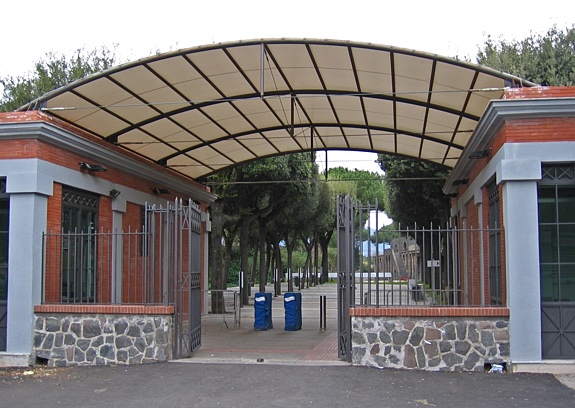
Below is the Piazza Anfiteatro entrance. There were surprisingly few people.
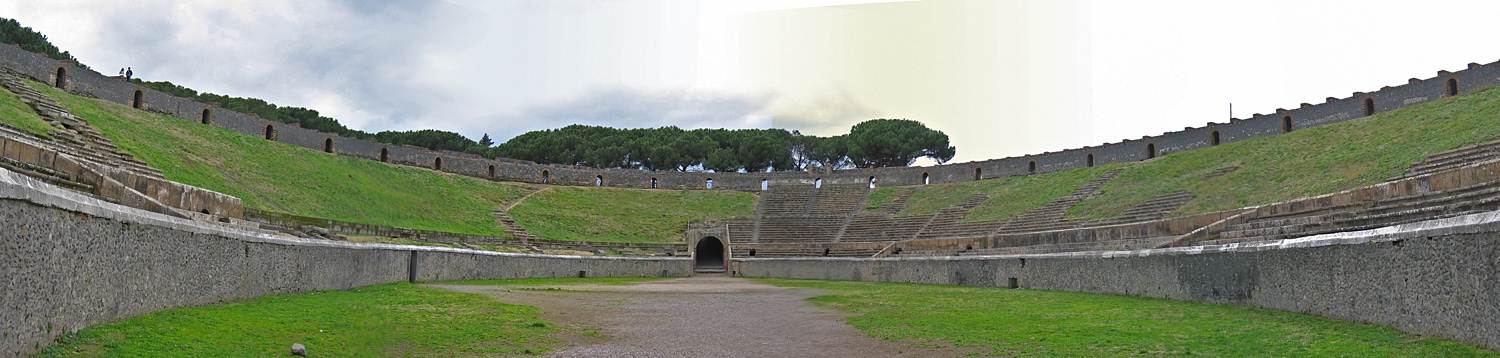
Below is the Anfiteatro which held the entire population of Pompeii in its day. Excavation of this arena took over a year.
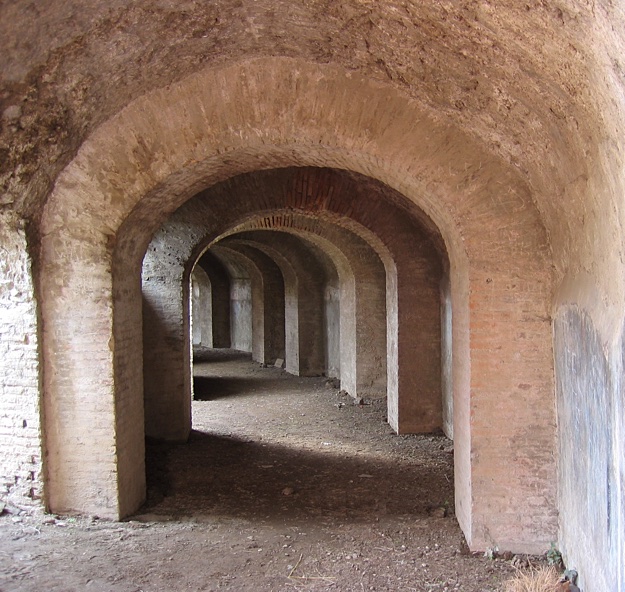
The tunnel leading down to the level of the arena of the Anfiteatro. You could almost hear the gladiators making their way through the tunnel. There were small remaining patches of frescoes that probably covered the walls and ceiling of the whole thing.
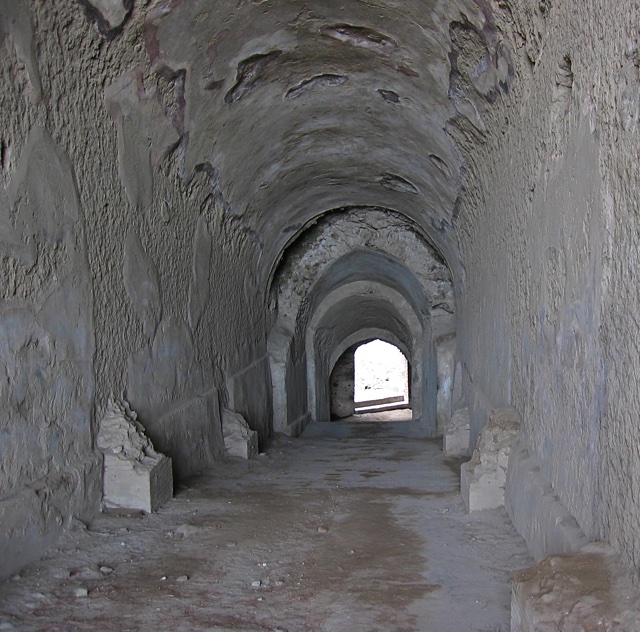
The tunnel below the seats of the Anfiteatro. This amphitheater is one of the best preserved in Italy.
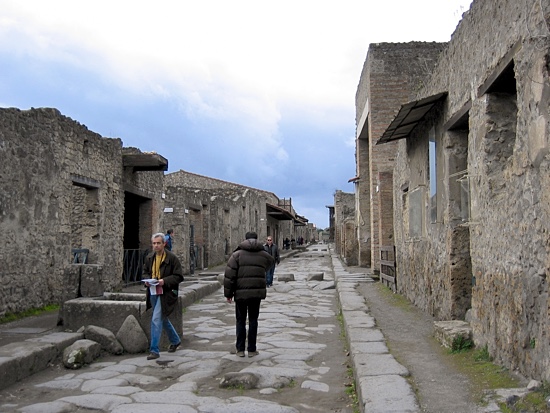
Below is Via dell'Abondanza. This was one of the main streets of Pompeii.
It was lined with many inns, and probably bars, and probably brothels. You
know those Romans.

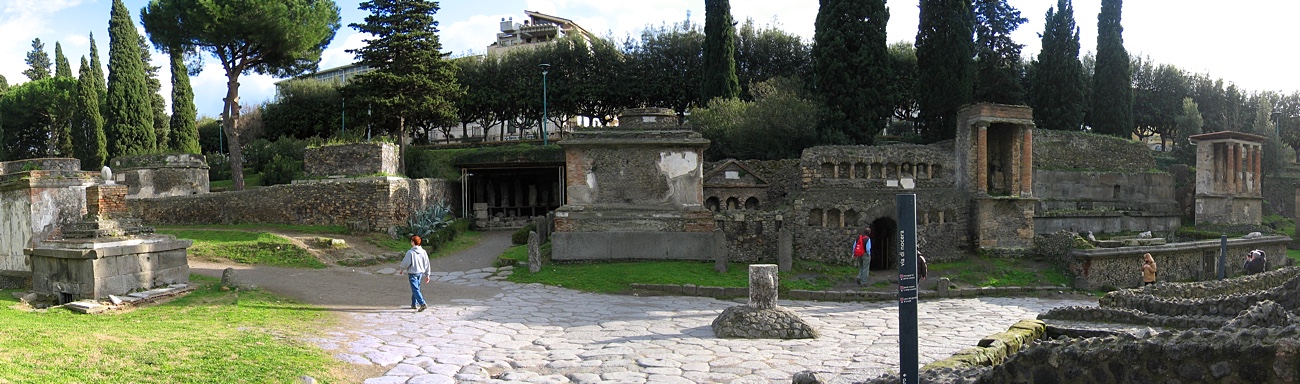
Below is the Necropoli Di Porta Nocera. It was one of the cemeteries of Pompeii. This was completely buried by the ash. So you can see how much digging had to be done.
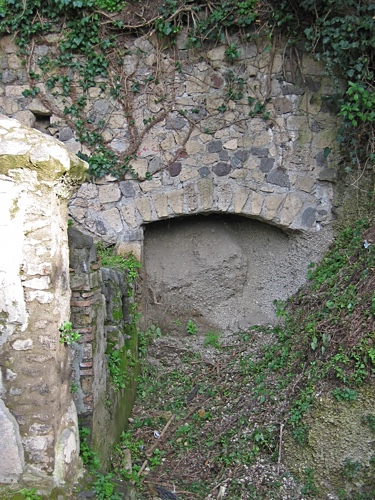
At one end of the Necropoli Di Porta Nocera you could see additional tombs that had yet to be excavated. The ground level and the walkway coming in the Piazza Anfiteatro entrance are several meters above the arch in the picture below. The whole city covers about 66 hectares. Only 45 hectares have been excavated. The rest remains buried.
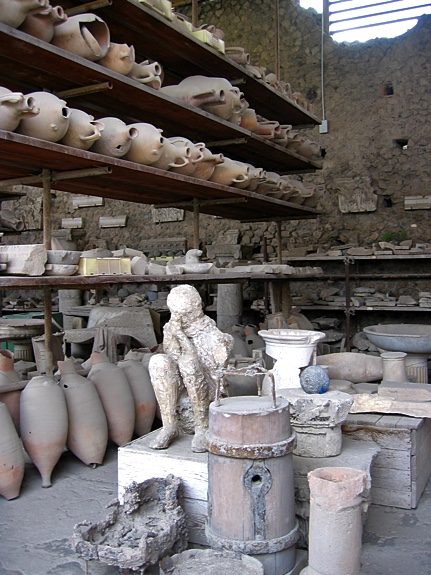
Below is the Granai Del Foro (Forum Granary) near the Tempio Di Giove (Temple Of Jupiter). It was build after the earthquake in 62 A.D. and may have not even been completed when the big one hit. It contains many shelves of archeological artifacts as well as several plaster casts of former residents, or rather the voids left behind in the solid ash by the former residents. How many of those artifacts are going to be damaged if another earthquake hits?
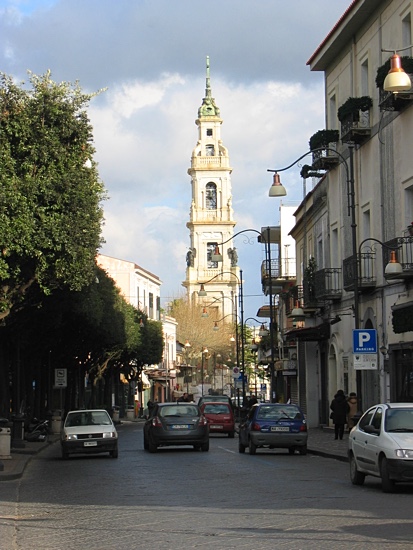
Looking east down Via Roma from the Pompeii gate.
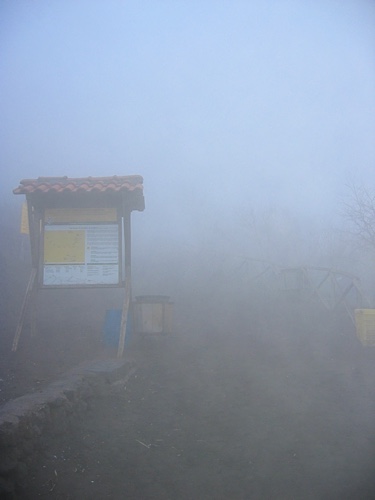
After leaving Pompeii we drove to the top of Vesúvio. The picture below was our welcome to the top of Vesúvio. We never did get a clear look at Vesúvio from Pompeii, and this would explain why. It was a nice day in Pompeii, but not at the top of the mountain. I always argued with Salvatore about what is in the picture below and whenever we ran into it. I always said that it was nuvolosita (a cloud), and he always said that it was nebbia (fog). I figured that since we drove up into this it was nuvolosita.
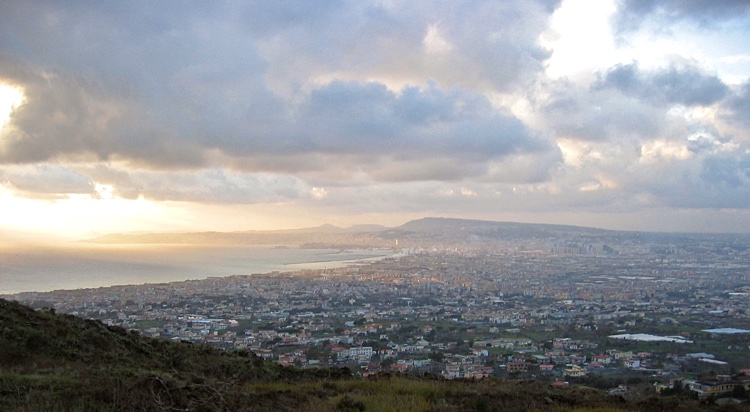
The drive back down the side of the mountain was very nice. This is the city of Nápoli and the Golfo Di Nápoli. Back in the old days there were about 30,000 people living around the base of the mountain. 5,000 of the 20,000 people in Pompeii were killed. There are now about 700,000 people living around the mountain and more than 3,500,000 if you include Nápoli. The next Pompeii may be much worse.
2018-02-08