


The Silk Road was a very important trade route during ancient times that ran from Xi'an, Shaanxi province, west along the southern edge of the Gobi Desert and Mongolia and on to places such as Baghdad and Istanbul.
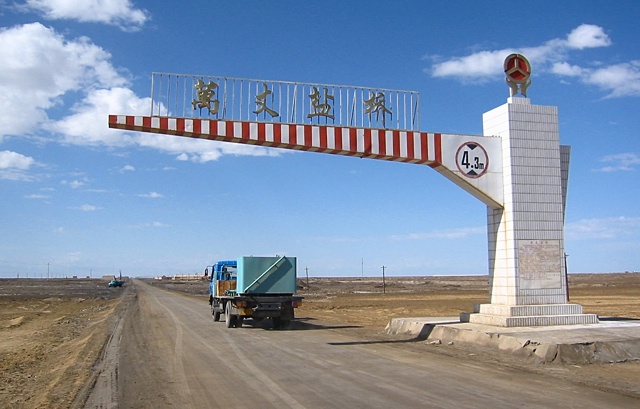
It's not on the silk road, but on the way to getting there from Golmud you pass through a region of China where it is predicted that there is enough salt to provide for China's needs for a million years. If you wanted to build a road across that area it would only make sense to build it out of salt. The Salt Bridge is that road. It is a 33 kilometer long road that stretches across the salt flats. I tasted it and it really is made of salt. The picture above was the monument that stood at the northern end of the bridge.
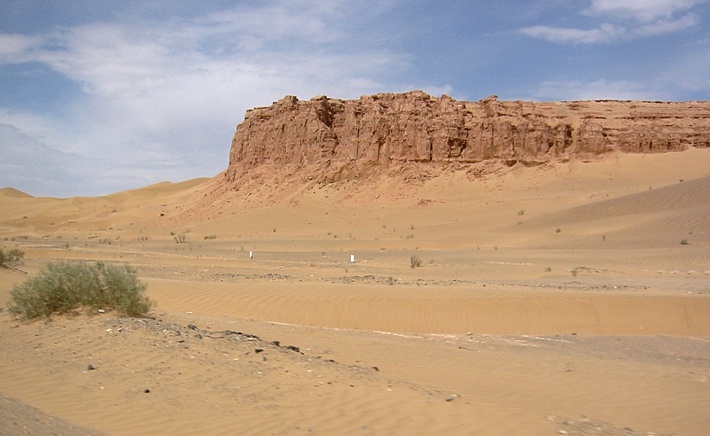
Looks like desert to me. Actually, the picture above was just the tip of the sand dune.
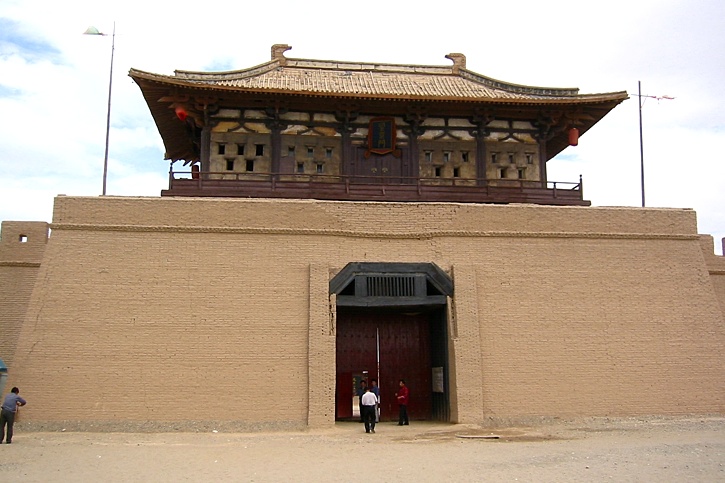
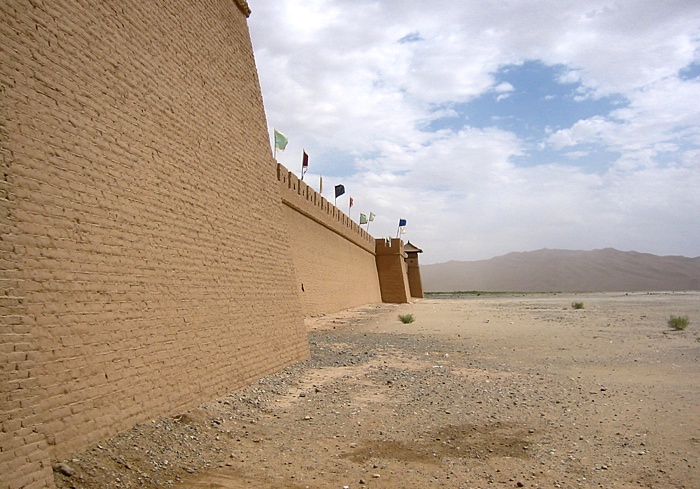
Built for a movie, and later turned into a tourist attraction, the Dunhuang
Ancient City was a re-creation of Dunhuang as it was in ancient times. The
inside contained many houses, offices, and businesses including a suspiciously
large number of bars.
 I don't know what the movie was, but from all of the pictures inside the facility,
and the fact that they built a full scale city to film it in, it must have
been an epic production.
I don't know what the movie was, but from all of the pictures inside the facility,
and the fact that they built a full scale city to film it in, it must have
been an epic production.
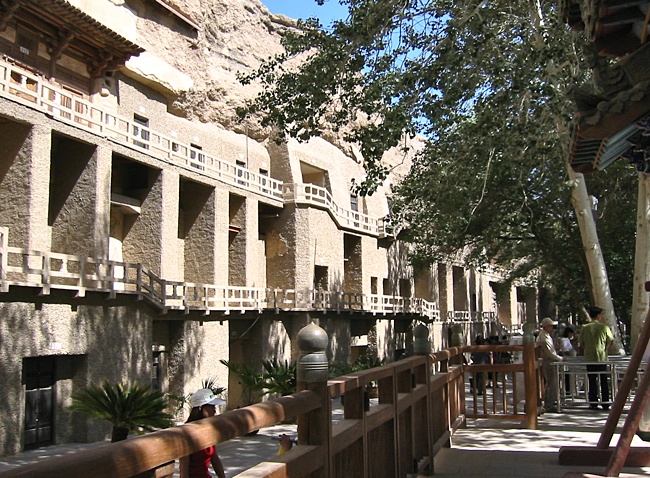
Beginning in 366 AD Buddhist monks from India, traveling the Silk Road, began carving caves in a sandstone cliff overlooking a river bed near Dunhuang. After many centuries there ended up being over 1000 caves. They range in size from a large shoebox to a large house. The squared off doorways in the picture above are a facing added to the cliff face to seal off the and protect the caves. The cliff face was on the order of a few kilometers long. The picture above is just a tiny section of it.
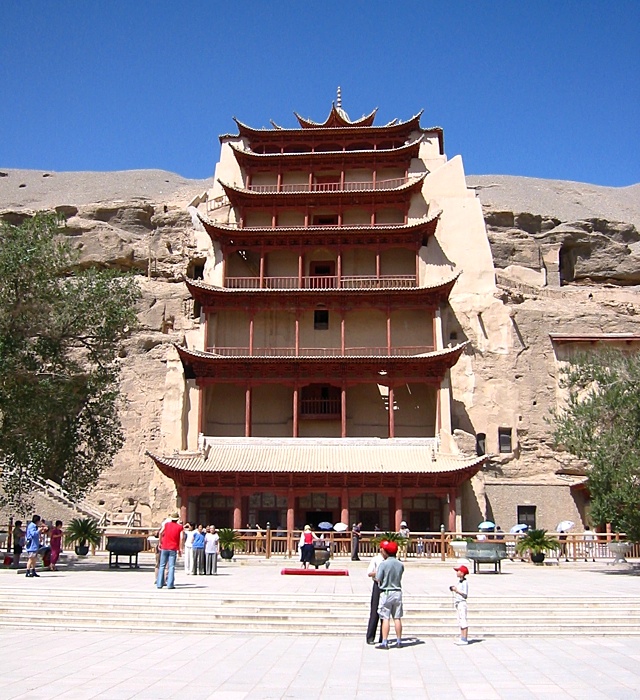
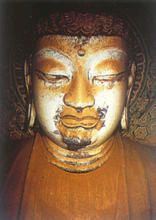
The most prominent cave was that of the 31 meter high sitting Buddha. You entered at the bottom of the facade in the picture above built to cover up the statue. Once inside you stood at Buddha's feet and looked waaay up to his head.
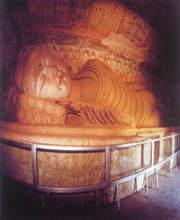
There was also another large Buddha statue in another cave. This one was 51 meters long, but was laying down.
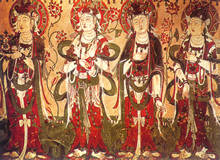
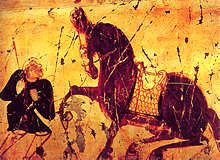
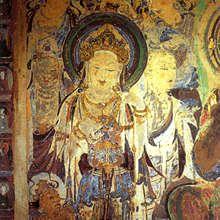
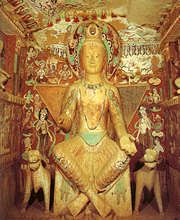
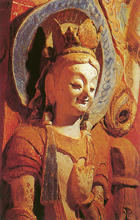
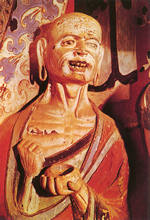
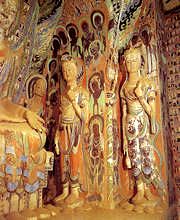
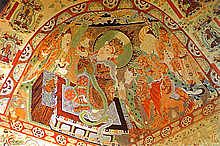
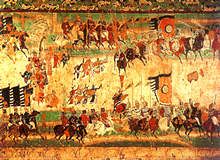
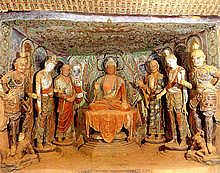
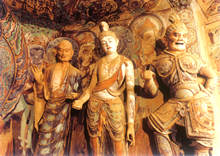
So what was in all of those caves? Countless statues and paintings depicting countless people and stories from the history of China and the Buddhist religion. Incidentally, I didn't take any of the interior pictures. Before you were allowed to tour the caves you had to leave your camera outside the gate. The art work, and the time that went into it, was amazing.
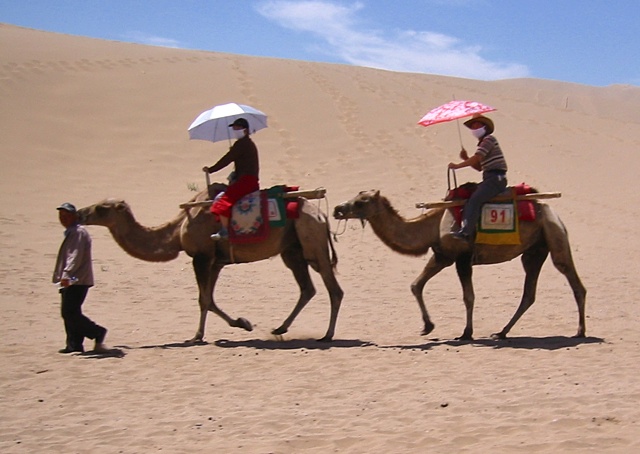
This must be the desert. In several places I saw camels being used as pack animals to haul cargo. The ones in the picture above were used for hauling tourists.
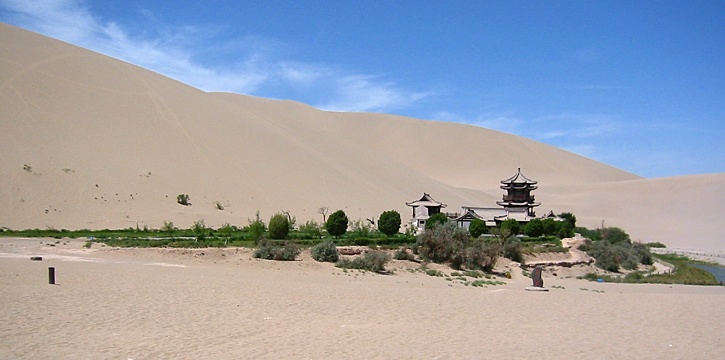
Now we're talking desert. In the middle of a circle of sand dunes in the picture above, which were nearly sand mountains, was Crescent Moon Spring. It formed a large pond in the shape of the crescent moon. It showed up about a thousand years ago and became an important stop along the Silk Road. No one can explain why the sands haven't shifted and covered up the spring. The temperature in this sand bowl was about 50C (120F) and it wasn't even very late in the day. The fancy building was actually built in the 1970's and appeared to be a resaurant.
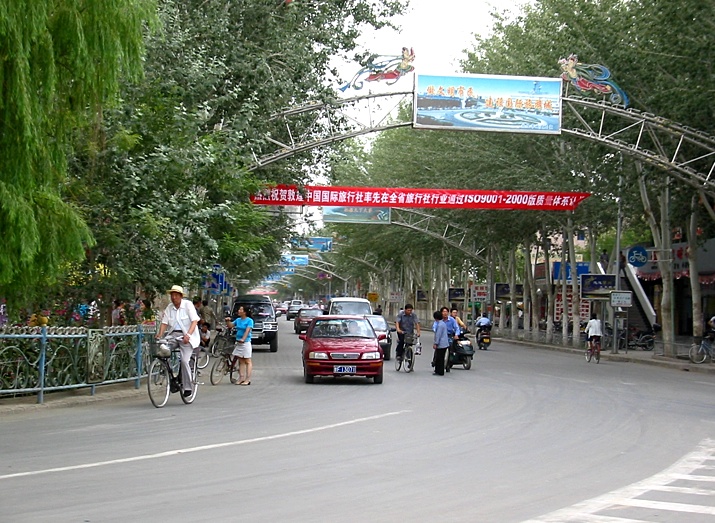
Many of the major streets in Dunhuang where very pretty. They were quite wide with wide sidewalks and tall trees separating the sidewalks from the street.
2018-03-05