


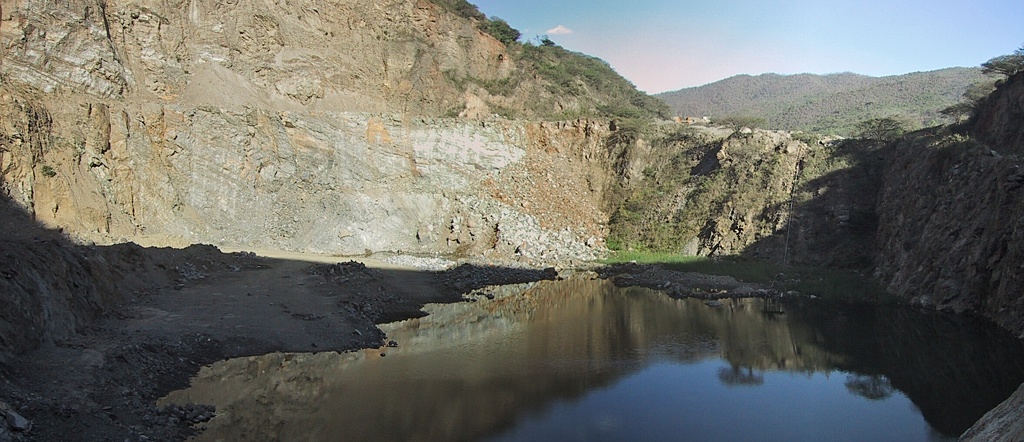
Our first test of endurance was the Cantera (Spanish for quarry) Profile deployment. The idea was to record the energy from a large explosion at the Antimano Quarry. There are two large quarries in the Caracas area. This one is in the hills to the southwest of the city. They mine limestone for the concrete industry here. Once a week or so these quarries set off large explosions to support the mining operation. The plan was to use one of the explosions as the source of shock waves since the blasts in the quarries would be larger than anything that we could produce by drilling a hole in someone's backyard.
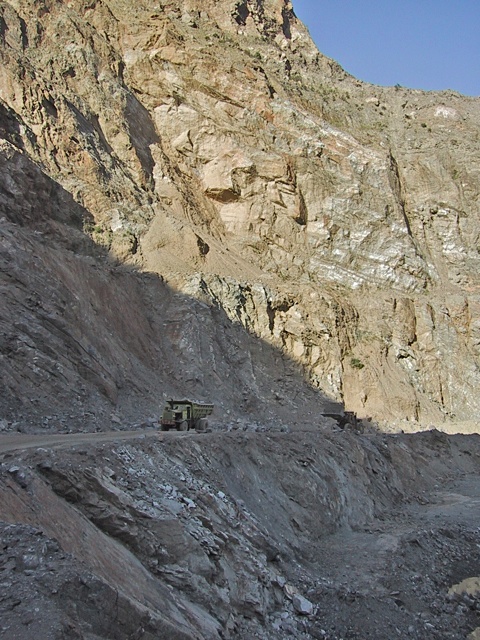
After it was established that the quarry was planning to set off an explosion (about a day before -- and there were several false alarms) the Texans were programmed for the normal time of the explosions, usually around noon or 5pm, and were deployed the next morning.
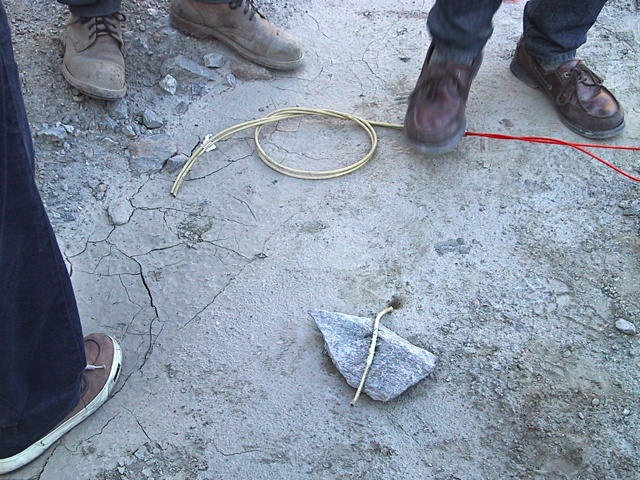
Texans are pretty precise things. You can program them to turn on and begin recording at noon the next day, and generally they will start recording at noon the next day, plus or minus a millisecond or less. At some point we were informed that once the time for a blast was set there would be about a four minute delay before the explosives would actually detonate. None of us were quite sure why there would be a delay, and we were a bit concerned that the explosion would go off outside the five minute windows that we were planning to program the Texans to use for recording. Then we arrived down in the quarry and saw the set up. Below is a picture of the detonation system. The white cord is a slow burning fuse. It is attached to a network of orange detonation cord. In the picture below we were timing how long it took a given length of the slow burning fuse, laying across the rock, to burn once it was lit with a cigarette. That piece took about a minute. The coiled up section was about four times the length of the test piece, therefore, the explosion would occur about four minutes after the fuse was lit. Now we understood why there was a delay.
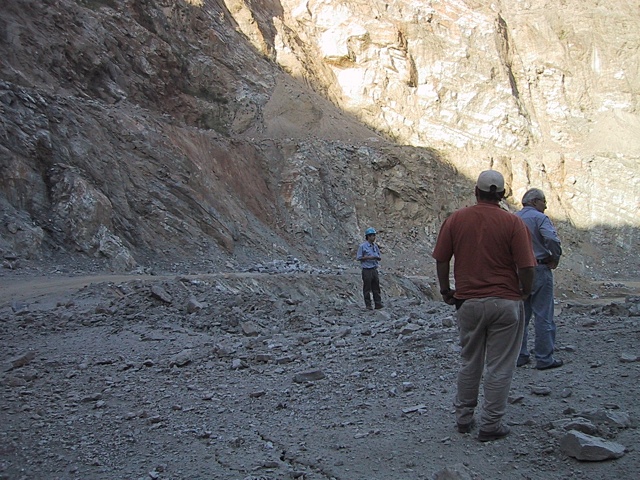
Everyone piled into the three vehicles that were in the quarry, except for the guy lighting the fuse. Once lit he jumped into one of the vehicles and all of us drove like hell to the far side of the quarry. I have no idea why we didn't go off the edge of the road at some point. There were times when we couldn't see anything because of the dust thrown up by the truck in front of us. We arrived at the vantage point in the picture below just seconds before the explosion went off. The area of dust was were we had come from in four minutes or less. What a ride. The timing of the explosion was good, but the explosion itself was not so good.
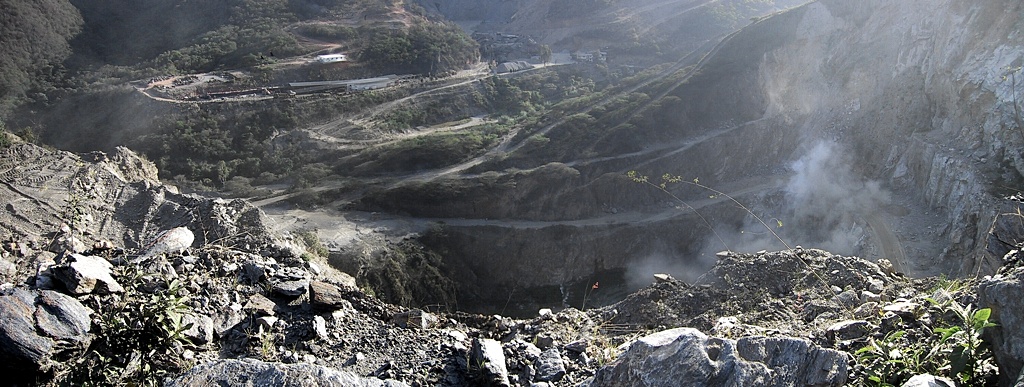
The area where everyone is standing in the picture below wasn't supposed to be there. That whole area was supposed to have been blown up. It was shaken, but not stirred. For whatever reason about 2/3 of the explosives didn't go off. It was probably a bad connection in the many meters of detonation cord that connected the many packets of explosives that were buried in the rocks.
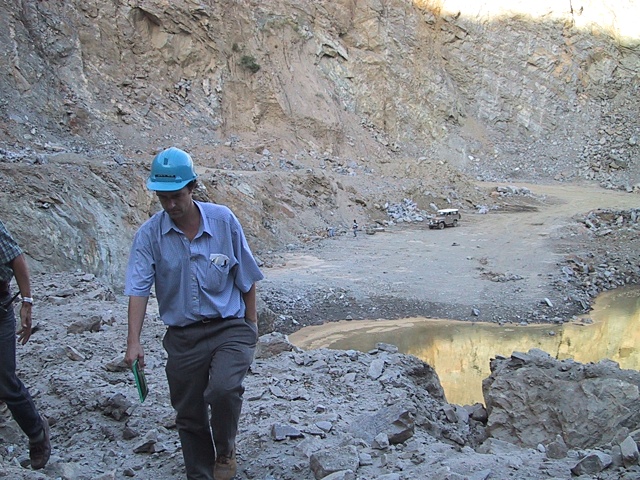
There were two Texans placed in the quarry. They are known as "down hole recorders". Since they measure the vibrations of the explosion first, being that they are the closest recorders to the explosion, they are used to determine the exact time of the explosion, which is then used later when the data is processed. One was behind where I am standing taking the picture below, and the other was down in the quarry, which you can see being retrieved.
2018-02-08