


I had never traveled by train before, and there were times while I was over
there when I had wished that I could have still claimed that. It wouldn't
have been quite so bad if only the announcements that they made at some of
the smaller stations that I had to deal with would have been in English. I'm
not an English snob or anything, but after any announcement was made I had
to look around to try and figure out from the expressions on people's faces
if what had been said was good news, or bad news, or if it even applied to
the train that I was waiting for. No one, of course, spoke English when you
needed them to.

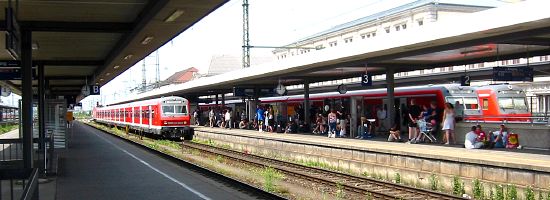
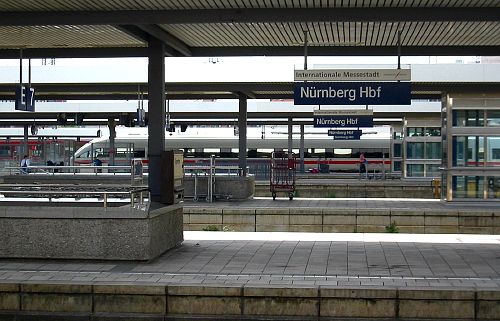
Below are three platforms with a tracks running down either side of them. Before you travel I'd suggest that you learn the foreign words for "platform","track", "arriving", "departure", and "time". You also should know how to tell time in a 24 hour manner (i.e. 15:00 = 3:00pm). That was the only part that I already knew.
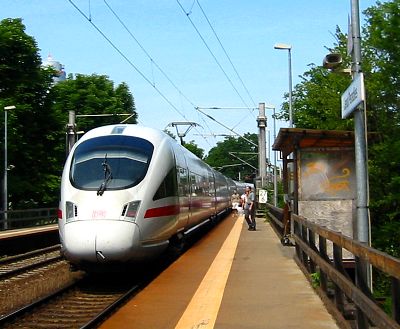
The Inter City Express (ICE) trains in Germany looked like bullet trains, were quite nice, and were capable of going at least 200 kilometers per hour, though the ones that I rode on spent most of their time at about 100 kilometers per hour or less. They had to keep slowing down for curves and small towns.
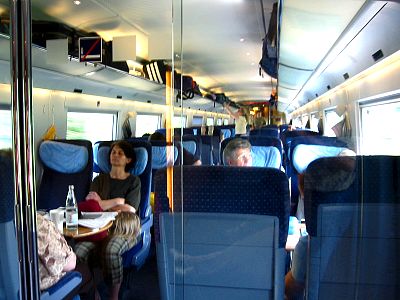
Now pay attention. Do you see the small dark rectangles above the windows in the picture below? You could reserve a seat on the ICE trains, but not any particular seat, just a seat. There are two lines of text displayed in those little rectangles. If there are any words, like something that looks like town names, in either of the two lines, it means that the corresponding seat is reserved. If nothing appears in one of the lines then it means that that seat is open. How you figure out where your reserved seat is I never figured out. I just had to keep looking until I found one that had my starting point, and my destination displayed. If you didn't buy a reserved seat ticket then you usually had to walk up and down through the cars until you found an open seat, then shoo someone's backpack out of it and put up with a dirty look or two. A couple of times I ended up just sitting on the floor in the entryways with the rest of the riffraff.
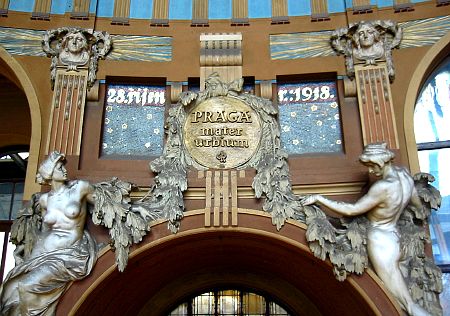
The original portion of the Praha train station was very nicely decorated and had a large, cathedral-like dome. Apparently something about it happened in 1918.
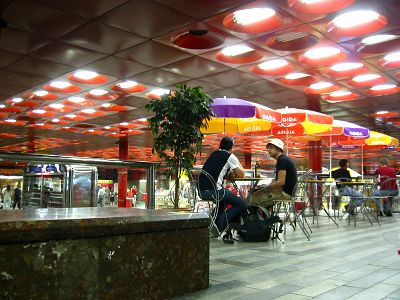
The newer part of the train station looked like a McDonalds made with dark concrete.
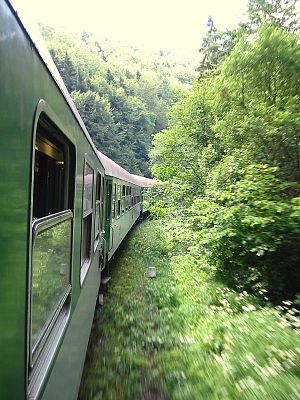
Some areas along the routes, mainly near the borders, were fairly mountainous and heavily forested. That's probably why the borders were there in the first place.
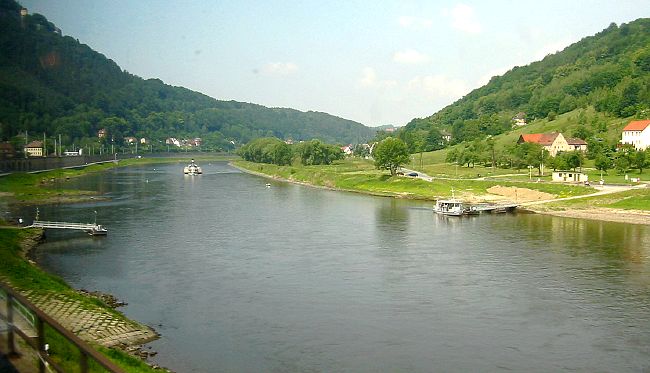
A long portion of the train trip from Praha to Jena, Germany followed the Elbe River which was pretty cool. Even I've heard of the Elbe...and I'm a dumb American! This river was also busy causing havoc during the flooding in 2002. I suspect, and you could see some evidence of it from the train as you went through towns, that most of what is in the picture below suffered some damage from the flooding.
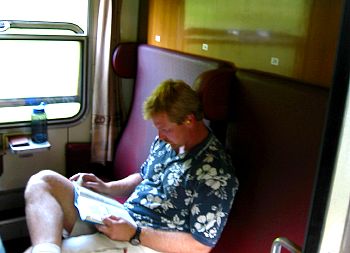
A seasoned traveler. Galen Kaip, from UTEP, had been in Europe several times before on projects, so he didn't even look out the window much during the trip I made with him to Poland.
2018-03-06